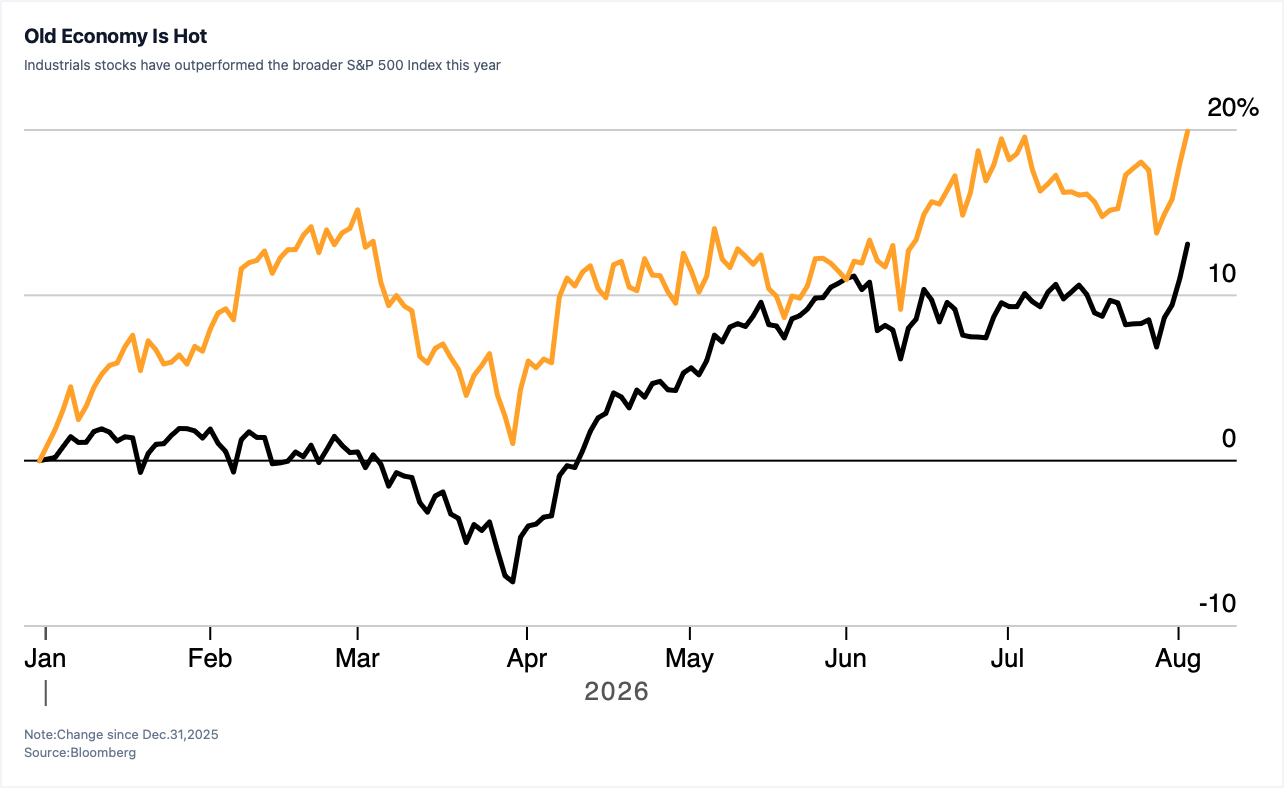
近几个月来,投资者对「旧经济」板块的兴趣大增,标普500指数的领涨格局随之转变,工业类股今年已上涨约20%,仅次于能源和资讯科技板块。建筑设备制造商卡特彼勒公司便是受惠者之一,其股价在第二季度因数据中心建设热潮带动获利成长而大幅上扬。
权五成估计,目前约有40座大型数据中心正在兴建中,另有超过100座处于规划阶段,主要集中在德州、乔治亚州、维吉尼亚州和宾州。然而,当地居民对能源成本、用水供应及社区影响的担忧日益加剧,政治阻力——尤其是在国会中期选举前——被视为数据中心大规模建设面临的最大风险。
Wells Fargo strategist Ohsung Kwon argues that massive AI spending by big tech is trickling down to the broader economy, positioning capital-goods firms as the leading AI-adjacent stocks. Manufacturing activity expanded at its fastest pace in over four years in July, non-AI capital expenditures rose 10% year-over-year, and commercial and industrial loan growth has accelerated—all signs that industrial companies are capturing spillover benefits from the AI investment wave.
Investors have increasingly rotated into old-economy sectors in recent months, reshaping S&P 500 leadership. The industrials sector has climbed roughly 20% year-to-date, trailing only energy and information technology. Caterpillar Inc. exemplifies this trend, with its shares surging after data-center construction fueled strong second-quarter profit growth.
Kwon estimates approximately 40 mega data centers are currently under construction and over 100 are planned, concentrated in Texas, Georgia, Virginia, and Pennsylvania, suggesting the trickle-down impact is still in its earliest stages. However, growing community opposition over energy costs, water usage, and local disruption poses a significant risk, and Kwon identifies political pushback—particularly ahead of the November midterm elections—as the greatest threat to the overall data-center buildout.