始于6月18日的严重欧洲热浪促使英国气象局发布了有史以来第二次“红色”高温预警,被迫取消了伦敦气候行动周上一次专注于极端高温的会议。从性质上讲,热浪的气象成因是典型的:一个被称为“欧米茄阻高”的马蹄形低压区将高压系统锁定在西欧上空,从东南部引入暖空气并阻止云层形成。然而,在数量上,这次事件是非同寻常的,法国和西班牙的温度记录超过了40°C,使58个法国省份和16个意大利城市处于红色预警之下,并在扰乱基础设施的同时威胁到德国的历史高温记录。
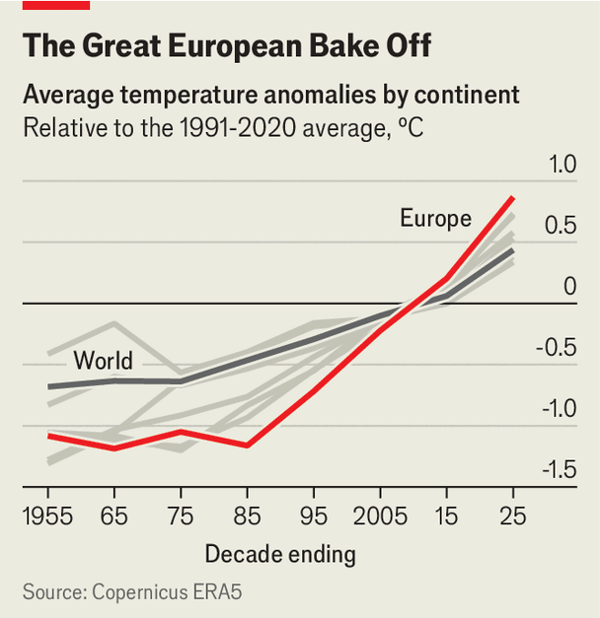
温室气体驱动的气候变化是这次异常高温的主要驱动力。科学联盟ClimaMeter的一项快速评估估计,与20世纪下半叶的相同天气条件相比,全球变暖使这次热浪的温度升高了2°C至4°C。尽管低纬度国家经历了更极端的高温且拥有的适应资源较少,但高纬度地区的变暖速度更快。欧洲的气温正以每十年0.56°C的速度上升,这是全球平均速度的两倍,且比其他任何大陆都快。
欧洲这种快速变暖是由极地放大效应驱动的(即融化的极地冰减少了反射率并放大了热量),并结合了欧洲在减少空气污染方面的成功(这使得更多阳光能够到达地表)。气候科学家强调,由于这些变化的条件,热浪正变得更加频繁、严重和持久。其健康后果是毁灭性的:过去的欧洲热浪在2003年导致超过7万人死亡,在2022年导致超过6万人死亡。虽然适应措施在2023年挽救了估计4万人的生命,但欧洲必须实施更积极的适应战略,以减轻气候快速变暖的风险。
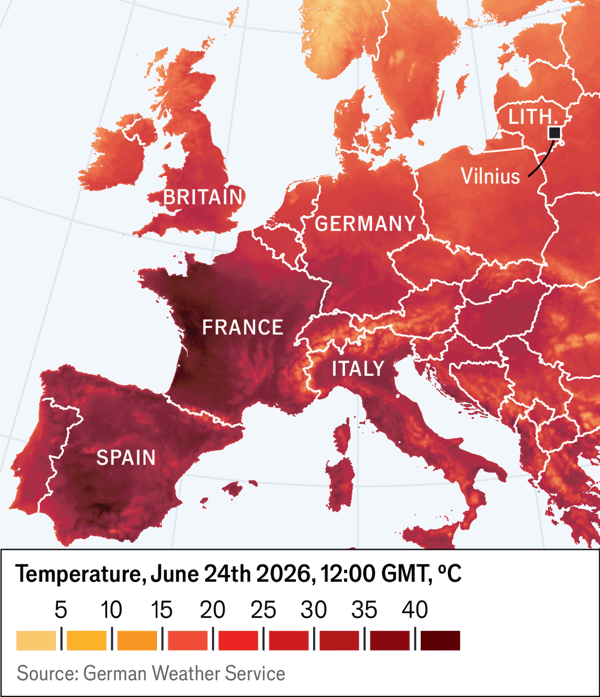
The severe European heatwave that began on June 18th led Britain's Met Office to issue only its second-ever "red" temperature warning, forcing the cancellation of a London Climate Action Week meeting focused on extreme heat. Qualitatively, the heatwave's meteorological cause is typical: a horseshoe of lower pressure, known as an omega block, trapped a high-pressure system over Western Europe, drawing warm air from the southeast and preventing cloud formation. Quantitatively, however, the event has been extraordinary, recording temperatures above 40°C in France and Spain, putting 58 French departments and 16 Italian cities under red alerts, and threatening Germany's all-time heat records while disrupting infrastructure.
Greenhouse-gas-driven climate change is the primary driver behind this exceptional heat. A rapid assessment by the ClimaMeter scientific consortium estimated that global warming has made this heatwave 2°C to 4°C hotter than a similar weather pattern would have been during the second half of the 20th century. Although low-latitude countries experience more extreme heat and possess fewer adaptation resources, higher latitudes are warming at a faster rate. Europe's temperatures are rising by 0.56°C per decade, which is twice the global average and faster than any other continent.
This rapid warming in Europe is driven by polar amplification, where melting polar ice reduces reflectivity and amplifies heating, combined with Europe's successful reduction in air pollution, which allows more sunlight to reach the surface. Climate scientists emphasize that heatwaves are becoming more frequent, severe, and long-lasting due to these changing conditions. The health consequences are devastating: past European heatwaves caused over 70,000 deaths in 2003 and more than 60,000 in 2022. While adaptation measures saved an estimated 40,000 lives in 2023, Europe must implement more aggressive adaptation strategies to mitigate the risks of a rapidly warming climate.
Source: Global warming has made Europe’s heatwave 2-4°C worse
Subtitle: The continent is warming faster than any other
Dateline: 6月 25, 2026 04:18 上午