唐纳德·特朗普与伊朗签署的初步和平谅解备忘录(MOU)在一个月内宣告破裂,战斗重新爆发,通过霍尔木兹海峡的油轮交通量骤减。自7月7日以来,经历了七个夜晚的针锋相对的袭击——包括伊朗对美国在巴林和科威特的军事设施的袭击,以及美国对伊朗南部和海峡沿岸的轰炸——油轮通行量已达到5月25日以来的最低水平。根据航运数据公司Windward的数据,7月12日仅有11艘船只通过该海峡,较一周前的36艘下降了69.4%。反映出这一混乱局面,布伦特原油价格在7月14日攀升至每桶87美元,随后稳定在84.50美元,比7月6日上涨了17.2%。
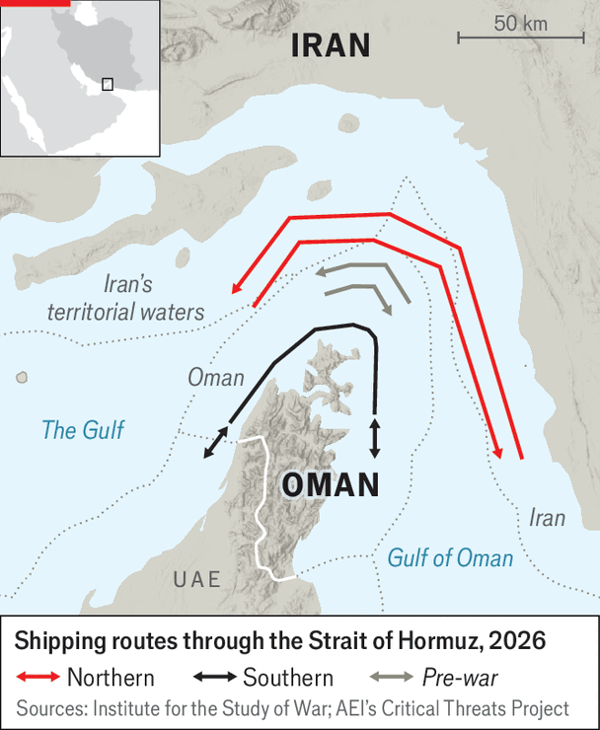
冲突的焦点在于谅解备忘录中关于“商业船只安全通行”的第5段,美国将其解读为伊朗有义务清除水雷并重新开放六英里宽的交通分道通航制通道,而伊朗则声称这赋予了其管理交通的权力。由于雷区的风险,船只被迫在穿过伊朗水域或通过阿曼的南部替代航线之间做出选择。作为对协议破裂的回应,特朗普撤销了对伊朗石油的制裁豁免,恢复了对伊朗航运的封锁,并威胁要袭击其基础设施。急需资金来修复估计达2700亿美元经济战争损失的伊朗政权,目前在理解经济危机严重性的务实派与决心控制霍尔木兹的极端强硬派之间存在政治分歧。
特朗普在重新开放海峡上面临有限的选择,因为美国在七个夜晚里进行的300多次袭击未能改变伊朗的行为,而且伊朗保留了利用射程超过1000公里的导弹和无人机从内陆攻击船只的能力。而升级冲突的选择,例如夺取600多公里外的哈尔克岛或轰炸基础设施,不仅面临引发更广泛冲突的风险,而且缺乏国际支持,因为欧洲和亚洲盟友对部署海军力量仍然犹豫不决。由于伊朗无法从关闭的海峡中获利,特朗普也无法通过轰炸开辟海峡,重返这个存在缺陷的谅解备忘录仍是双方唯一的出路。
A preliminary peace memorandum of understanding (MOU) signed between Donald Trump and Iran has unraveled within a month, with fighting resuming and tanker traffic through the Strait of Hormuz collapsing. Following seven nights of tit-for-tat strikes since July 7th, including Iranian attacks on US installations in Bahrain and Kuwait and US bombardment of southern Iran, tanker transit has reached its lowest level since May 25th. According to Windward, only 11 vessels transited the strait on July 12th, down 69.4% from 36 vessels a week earlier. Reflecting this disruption, Brent crude oil prices rose to $87 a barrel on July 14th before settling at $84.50, marking a 17.2% increase from July 6th.
The conflict centers on Paragraph 5 of the MOU regarding the "safe passage of commercial vessels," which America interprets as an obligation for Iran to clear mines and reopen the six-mile-wide Traffic Separation Scheme corridor, while Iran claims it permits them to administer traffic. Due to mining risks, ships are forced to choose between passing through Iranian waters or southern routes through Oman. In response to the breakdown, Trump has revoked sanctions waivers on Iranian oil, resumed a shipping blockade, and threatened infrastructure strikes. Iran, desperate for cash to repair an estimated $270 billion in economic war damages, remains politically divided between pragmatists and hardliners.
Trump faces limited options to reopen the strait, as over 300 US strikes over seven nights have failed to alter Iranian behavior, and Iran retains the ability to target shipping from inland using missiles and drones with ranges exceeding 1,000 km. Escalation options, such as seizing Kharg Island (600 km away) or bombing infrastructure, risk wider conflict and lack international support, as European and Asian allies remain hesitant to deploy naval assets. Since Iran cannot profit from a closed strait and Trump cannot bomb it open, returning to the flawed MOU remains the only viable path for both nations.
Source: Donald Trump has no good options for reopening the Strait of Hormuz
Subtitle: Yet the stand-off has costs for cash-strapped Iran, too
Dateline: Jul 16, 2026 09:21 AM | Dubai