Hanchuan是中国中部一个主要是农村的小城,人口约100万,但其1月刚开的麦当劳店使其成为跨国快餐链条在更小城市中前进的新标志。 在2025年已有7000家门店的基础上,麦当劳计划未来三年再新增3000家;肯德基计划在其12600家店基础上再增加逾4000家,而汉堡王、达美乐、必胜客、星巴克和赛百味也有同样激进的扩张计划。
中国约三分之二人口居住在50个最大城市之外,这些地区的快餐市场更稀疏,瑞银估算约70%的肯德基店与另一家肯德基在10分钟共享单车骑行距离内,麦当劳的“自我蚕食率”约为60%。 麦当劳和肯德基在华经营权逐步本土化:麦当劳中国主要由具有国家背景的中信资本持有,百胜在2016年将中国业务剥离为“百胜中国”独立上市(纽约和香港),星巴克11月将其中国业务60%出售给博裕资本,汉堡王同月也与一家具国企关联的投资人达成了类似交易。
在经济放缓、消费者悲观和本土竞争激烈的背景下,许多西方品牌减速或收缩扩张,而中国资本却愿意在半农村地区持续投入,押注其成为新的消费前沿。 这依然是高风险博弈:本土品牌如Tastien和Wallace更便宜且已深耕小城镇,外资店若要竞争需降价并建立可靠供应链,但大量城镇缺少可供大型快餐店使用的商业空间,汉堡和咖啡门店的选址压力明显上升,Hanchuan的开业得益于新建现代化商场提供了关键场地。
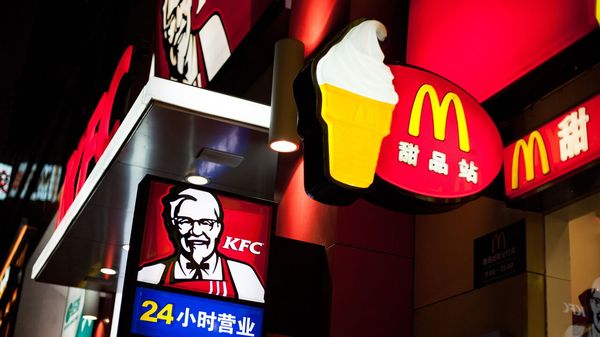
Hanchuan is a largely rural city in central China of around 1 million people, yet its first McDonald’s opening in January has become a marker of multinational fast-food chains moving into smaller Chinese cities. Building on 7,000 outlets in 2022? wait year; "in 2025": yes "in 2025". In the next three years, McDonald’s plans to add 3,000 stores, while KFC plans to add more than 4,000 to its 12,600, and Burger King, Domino’s, Pizza Hut, Starbucks and Subway have similarly aggressive plans.
About two-thirds of China’s population lives outside the 50 largest cities, where fast-food density is already high, and UBS estimates around 70% of KFC outlets are within a ten-minute bike-ride of another KFC; McDonald’s cannibalization share is also around 60%. Control has shifted toward local ownership: McDonald’s China is mostly owned by state-backed Citic Capital, Yum split China operations into Yum China in 2016 (listed in New York and Hong Kong, based in Shanghai), Starbucks sold 60% of China operations to Boyu Capital in November, and Burger King made a similar state-connected investor deal the same month.
As growth slows, consumer sentiment weakens, and local competition intensifies, many Western firms have slowed expansion, while Chinese investors are funding thousands of outlets in semi-rural markets as a bet on the next phase. It is a gamble because local chains like Tasten and Wallace are cheaper and already entrenched in smaller cities; Western brands must lower prices and build stronger local supply chains, while also facing limited suitable real-estate space, since many towns lack malls large enough for modern fast-food operations and Hanchuan succeeded largely because a new modern mall made entry possible.
Source: Why McDonald’s and KFC are growing like wildfire in China
Subtitle: Western fast-food brands are expanding into the countryside
Dateline: 4月 09, 2026 03:38 上午 | Hanchua