1968年圣诞节,迈克尔·柯林斯Junior问“是谁在驾驶阿波罗8号”,柯林斯高级官员把问题转给了船员比尔·安德斯,后者打趣说“现在主要是艾萨克·牛顿在开船”;从离开月球轨道到计划在12月27日溅落入海,飞船轨道几乎完全由万有引力决定,像一块下落的石头。阿波罗8号为了安全进入月球轨道必须点火主引擎约4分钟,飞行员吉姆·洛维尔后来称其为“我度过的最长四分钟”,而“完整”号到目前为止只点火两次——一次用于提高地球轨道,另一次离开地球——并走出一道像8字形的轨迹掠过月球,飞得比以往任何载人任务更远。
4名乘员中有3名美国人、1名加拿大人,尤其在飞越月球背面时仍十分忙碌;从地面观察几乎难以分辨的玛丽·奥里恩塔莱(Mare Orientale)在他们几乎正上方时,呈现为同心山脉环绕的暗色靶心,其尺度约等于德州休斯顿约翰逊航天中心到佛罗里达卡纳维拉尔角肯尼迪航天中心的距离。像佩拉佐克(Pierazzo)这样约9公里宽、以撞击坑专家伊丽莎白·佩拉佐(Elisabetta Pierazzo)命名的地貌更多是“专家级”关注,团队预计短暂掠过几乎不会带来新科研成果,而此前未被记录的月球背面新坑拟命名为“Carroll”则更偏向象征性纪念,连“失重环境下的泪液行为”这类情感信号也被置于研究产出之上。
因此,这次任务更像是把“惊奇”与共鸣放在首位,而非突破性科学发现;其影响与阿波罗8相似,那场热度后来被越战、石油危机和水门事件等事件遮蔽,而纯粹靠可重复的任务节点难以重现那种时代性惊叹。只要再入轨道不发生失败,这种“重识”效应会持续,但马斯克与SpaceX在后续阿尔忒弥斯任务中的角色可能会让部分批评者感到情绪受挫;下一阶段建造月球基地的任务从“头条事件”转向常态化运行后,维持十年以上公众支持,恐怕必须依赖新的发现、新论述或新梦想来承接。
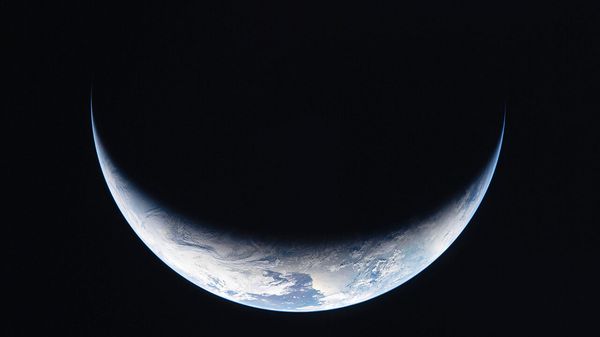
On Christmas Day in 1968, Michael Collins Jr. asked who was piloting Apollo 8, and Collins senior passed the question to Bill Anders, who quipped that Isaac Newton was doing most of the steering; from lunar-orbit departure to the planned splashdown on December 27, the spacecraft followed a path almost entirely determined by universal gravitation, like a falling rock. Apollo 8 needed a main-engine burn of about four minutes to enter lunar orbit safely—Jim Lovell later called it “the longest four minutes”—while Artemis II’s Integrity has used its main engine only twice so far: once to raise Earth orbit and once to leave it, then followed a graceful figure-eight path past the Moon that took it farther than any previous crewed mission.
Four astronauts—three American and one Canadian—remained active, especially over the Moon’s far side: Mare Orientale, hard to spot from Earth, appeared as a dark bullseye ringed with concentric mountains and was roughly the same size as the distance between Johnson Space Center in Houston and Kennedy Space Center in Florida. Features such as Pierazzo, a roughly 9 km crater named for Elisabetta Pierazzo, were mainly specialist interest, and the crew expected little new science from the brief pass, while a fresh, previously unrecorded far-side crater proposed as “Carroll” served mainly as symbolic remembrance, with emotional signals—such as tears in weightlessness—taking precedence over scientific output.
So the mission traded breakthrough science for emotional impact, echoing Apollo 8, whose excitement was later overshadowed by Vietnam, oil shocks, and Watergate; routine program milestones alone are unlikely to recreate that era’s wonder. If re-entry does not fail, the rediscovery effect is likely to endure, though SpaceX and Elon Musk’s role in later Artemis missions may dampen sentiment for some critics; as lunar-base missions shift from headline events to routine operations, sustaining public support for a decade or more will likely require new discoveries, arguments, or dreams.
Source: Artemis II has offered Earth inspiratio
Subtitle: But rekindled Space Age enthusiasm will need new foundations if it is to endure
Dateline: 4月 09, 2026 06:22 上午