为使全球气温重新降至1.5°C以下,各国不仅需要迅速大幅削减化石燃料带来的温室气体排放,还必须借由造林等自然途径与直接空气捕集等科技手段移除大气中的二氧化碳,让排放达到负值区间。然而,专家与报告明确警告,碳移除绝非万灵丹,且海平面上升和生物多样性丧失等部分气候影响可能永远无法逆转。
报告同时强调减缓排放与气候调适必须相辅相成,若灾害因高排放不断加剧,调适工作将难以进行。此外,历史碳排放量较高的国家应承担更多引领与行动责任,而报告也刻意未将未经证实的地球工程(如平流层反射化学物质或云层增亮技术)纳入解决方案,认为其科学研究仍处初期阶段,不可盲目依赖。
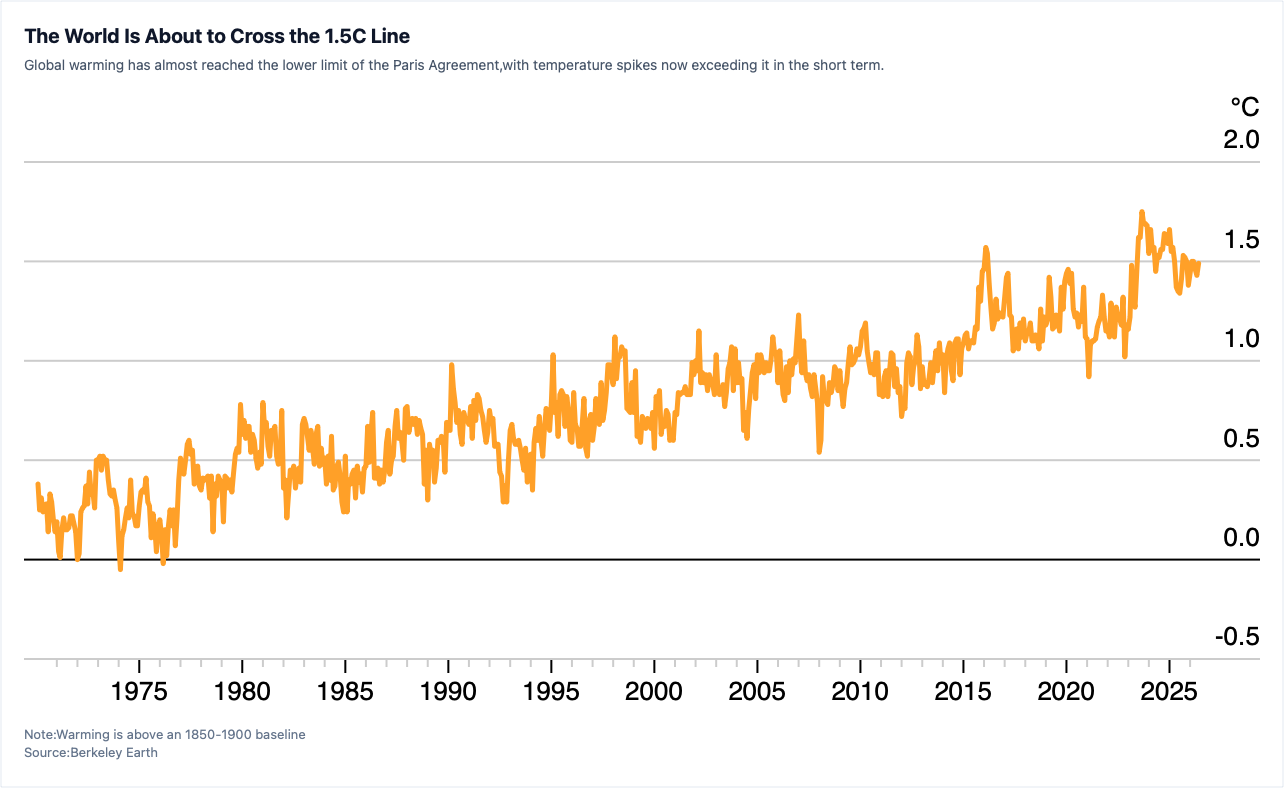
A landmark report published by the UN Environment Programme warns that the world is set to exceed the 1.5C global warming threshold within the next few years, with warming projected to peak at around 1.8C under the best-case scenario and potentially reach 2.6C under current policies. This shift marks the start of a new era where climate goals must prioritize an 'overshoot, peak, and decline' trajectory to put global warming in reverse by the end of this century.
Lowering global temperatures back below 1.5C will demand aggressive reductions in fossil fuel emissions alongside atmospheric carbon dioxide removal via both natural reforestation and technological direct air capture to achieve net-negative emissions. However, climate scientists emphasize that carbon removal cannot serve as a substitute for deep emissions cuts, particularly as damages like sea-level rise and biodiversity loss threaten to become irreversible.
The report underscores that mitigation and adaptation are mutually reinforcing, warning that adaptation becomes far more challenging if escalating emissions continue driving frequent and severe climate disasters. Historical polluters are urged to take the lead in these efforts, while unproven geoengineering concepts such as solar radiation modification were excluded as dependable climate solutions due to their nascent scientific understanding.