在7月30日,一场突如其来的移民潮冲向位于北非海岸的西班牙飞地休达,导致这个原本仅有8.4万人口的小镇人口短期内翻倍。在此期间,至少有141名移民在试图绕过从摩洛哥出发的主要过境防波堤游泳入境时不幸溺水身亡。然而这场紧急危机退潮极快,截至8月4日,西班牙内政部证实,在涌入休达的7.2万名移民中,已有7万名返回摩洛哥,另有约1100名无人陪伴的未成年人将被转送至西班牙本土。虽然社交媒体上关于西班牙最高法院禁止海路边境即时遣返裁决的传闻推动了此次涌入,但多方证据表明摩洛哥边防人员在前期纵容甚至协助移民过境,随后又合作参与了遣返。
这场危机在欧盟内部引发了剧烈的政治恐慌与阵营对立。意大利在丹麦和芬兰的支持下一度威胁暂停与西班牙在申根区内的合作,并开始在港口和机场实施抽查;瑞典首相则公开警告“决不能让2015年的欧洲移民危机重演”。部分保守派政治家将移民激增归咎于西班牙此前对非法移民的特赦政策,引发西班牙首相佩德罗·桑切斯的强烈反击,指责部分成员国被政治偏见与虚假信息驱使。到8月4日的欧盟内政部长紧急会议上,各方最终达成一致并重申对西班牙的全面支持,政策重心重新回到加强欧盟外部边境管控、打击走私网络以及加速将不合规求庇者遣返回第三国等常规路径。
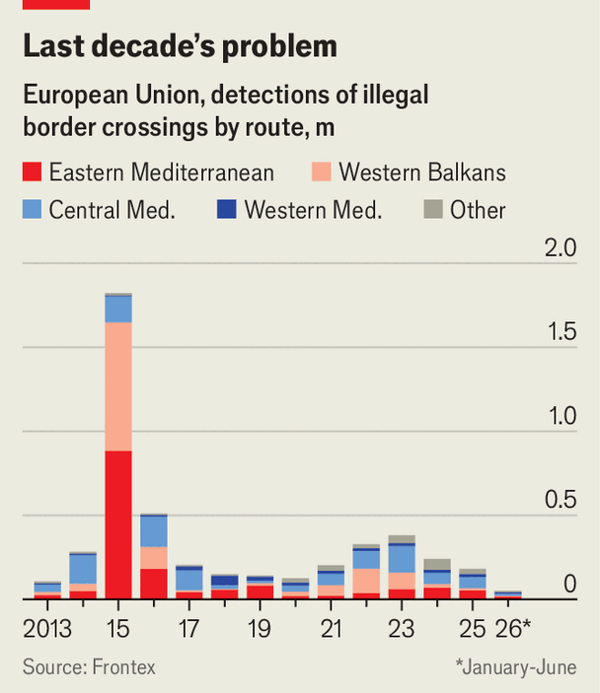
尽管统计数据表明前往欧盟的非正常移民数量相比三年前的高位已大幅下降且仍在持续减少,但欧洲各国的恐慌反应凸显了其政坛的脆弱性。过去十年间,欧盟通过与土耳其及北非国家签署一系列协议来外包边境管控,虽然短期内缓解了入境压力,却也向周边国家传递了极具危险性的信号:移民潮画面能够轻易撕裂欧盟内部统一。历史上从利比亚的卡扎菲、土耳其的埃尔多安到白俄罗斯,周边政权屡次利用移民作为外交筹码;欧洲对外部托管者的高度依赖,反而变相鼓励了周边国家制造并操纵移民危机,以此对高度敏感且易生分歧的欧洲进行政治与经济勒索。
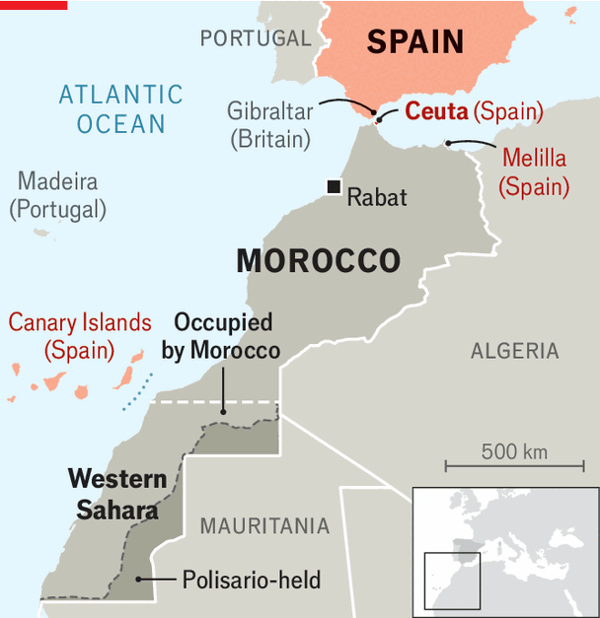
On July 30th, a sudden mass migration surge temporarily doubled the population of Ceuta, a small Spanish exclave on the North African coast with an original population of 84,000. At least 141 migrants drowned while attempting to swim around the main breakwater crossing point from Morocco. However, the crisis subsided remarkably quickly: by August 4th, Spanish authorities reported that 70,000 of the 72,000 migrants who had entered Ceuta had already returned to Morocco, with approximately 1,100 unaccompanied minors designated for transfer to mainland Spain. Although social media rumors regarding a recent Spanish Supreme Court ruling against border pushbacks played a role, evidence indicated that Moroccan border guards initially facilitated or ignored the crossing before assisting in repatriations.
The vivid imagery of the crossing triggered widespread political alarm and internal friction across the European Union. Italy, supported by Denmark and Finland, initially threatened to suspend Schengen cooperation with Spain before resorting to spot checks at ports and airports, while Sweden's prime minister warned against repeating the European migration crisis of 2015. Conservative figures blamed Spain's recent amnesty for illegal immigrants as a key pull factor, prompting Spanish Prime Minister Pedro Sánchez to denounce the panic as politically driven. By August 4th, EU interior ministers held an emergency conference to reaffirm solidarity with Spain, reaffirming standard policy priorities centered on fortifying external borders, dismantling smuggling networks, and accelerating deportations of failed asylum seekers to third countries.
Despite data showing that irregular migration to the EU is currently at a fraction of its volume from three years ago and continuing to decline, European leaders remain vulnerable to border instability. Over the past decade, the EU has increasingly outsourced migration enforcement to neighboring nations through bilateral deals, starting with Turkey in 2016 and extending across North Africa. While this strategy reduces immediate arrivals, social scientists warn that it creates dangerous incentives for neighboring regimes—such as past precedents in Libya, Turkey, Morocco, and Belarus—to stir up border emergencies as a form of migration blackmail to extract financial or geopolitical concessions from a divided Europe.
Source: Europe encourages its neighbours to practise migration blackmail
Subtitle: The surge in Ceuta is over, but the EU’s panic leaves scars
Dateline: 8月 06, 2026 05:12 上午 | Ceuta and Madrid