自2019年开始生产以来,圭亚那油田繁荣使其成为全球增长最快的经济体之一,即使2025年油价仅每桶69美元、如今约100美元。油田现金流已从每周约3.7亿美元升至约6.23亿美元,且埃克森联盟计划将产量提高2.5%到每日本田油日产94万桶,在接近每桶100美元的情况下2026年可带来约330亿美元收入,较战争前预测高约75%;其中三分之二油品销往欧洲,在市场价基础上每桶再加10美元后,战争红利高达90%。
国家目前仅拿到每桶约14.5%,其余约85.5%由运营商获得,但更高油价预计将于2026年底前(提前一年)回收既有成本,之后国家份额应上升;若不再扩产,国家最终可拿到52%。扩张在加速:四个既有项目各由一台约20亿美元的FPSO运作,第五台计划数月内上马,第六台在建,第七台在赶工,目标2028年提前一年投产,3月还提交了首个天然气项目,预计一年内再报第九个。
经济高度外溢依赖油气:2025年化石燃料收入约占年度预算的一半、油气占GDP约3/4,而自2021年以来食品和住房成本已上涨75%。国际货币基金组织仍称核心通胀和财政赤字受控,但上岸天然气发电项目长期拖延且超支六倍、以及对民营加油商的限价压力,显示资源诅咒风险仍在,前财政部长温斯顿·乔丹主张将这波风暴利润大多存入主权财富基金以抵御后续财政冲动。
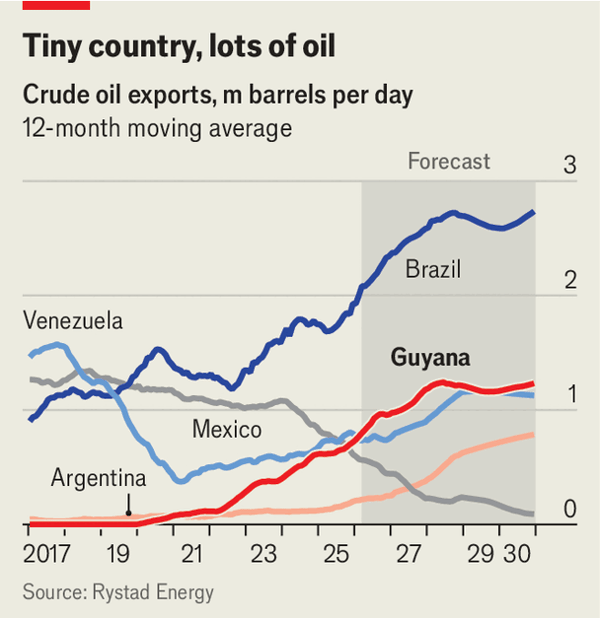
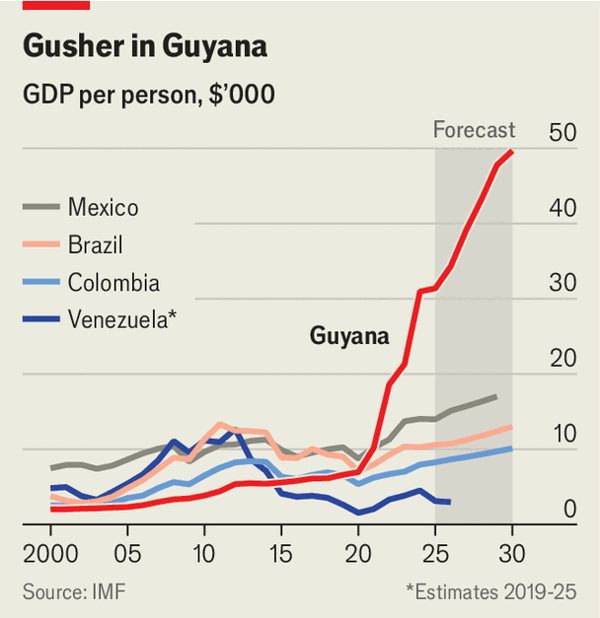
Since production began in 2019, Guyana’s oil boom has made its economy the fastest-growing in the world even though 2025 prices averaged $69 per barrel and have since moved back toward $100. Cash flow from oilfields has risen from about $370m a week to roughly $623m a week, and Exxon’s consortium wants output raised 2.5% to 940,000 barrels per day, which could generate about $33bn in 2026—about 75% above pre-war forecasts—with two-thirds sold to Europe and another $10 per barrel premium lifting the war windfall above 90%.
The state currently captures only about 14.5% of each barrel value versus roughly 85.5% to operators, but higher prices are expected to repay legacy costs by end-2026 (one year early), after which state take should rise and could reach 52% if no further expansion occurs. Expansion is speeding up: four existing projects run on $2bn FPSOs, a fifth is coming online soon, a sixth is being built, a seventh is being rushed for early 2028, and a first gas project was filed in March with a ninth expected within a year.
Dependence is already extreme, with fossil-fuel revenue about half of the 2025 budget and oil making up three-quarters of GDP, while food and housing costs are up 75% since 2021. The IMF still notes controlled core inflation and deficits, yet a delayed and six-times-over-budget onshore gas-to-power project, plus pricing pressure and subsidy management, show the resource-curse risk is real, and former finance minister Winston Jordan says the windfall should mostly go into the sovereign wealth fund before spending temptation rises.
Source: The South American petro-state profiting from the Iran war
Subtitle: The boom is raising the risk that oil money devours the economy
Dateline: 4月 09, 2026 06:19 上午 | Georgetow