英国在减排方面取得了显著进展,但未完全兑现其所许诺的繁荣与能源安全收益:可再生能源发电占比从2004年的4%上升到2024年的50%以上,而家庭电价则从低于几乎所有欧盟成员国上升为仅次于德国和比利时的第三高。天然气依赖仍然很高,2025年天然气占电力发电的31%,而法国仅为3%,超过四分之四家庭仍以天然气采暖,导致IMF警告其对伊朗等冲突高度脆弱。
长期看,前景更强:国家能源系统运营商估计,在低碳路线下,交通、供暖和电力相关的能源总成本可从2025年的GDP的10%降至2050年的不足6%,且若到2050年已深度脱碳,类似2022年冲击对能源账单的影响可从1.8%GDP降到0.3%。然而,气候变化委员会认为到2050年天然气仍可能占总初级能源的13%,仅较2025年的39%下降,因此硬性追求2030年前95%清洁电力的路线仍存在系统性风险;维持一定的北海产量并增加储备可降低战时供应短缺风险,也可在化石燃料价格飙升时形成财政对冲。
2030年的推进预计会迅速抬高成本:本·詹姆斯估算,仅网络升级到2030年就会使账单每年增加£135(约$178),比当前网络成本高约三分之二,且仅当批发价从约70英镑降到约40英镑/兆瓦时时,家庭电费才会低于2025年水平;与此同时,离岸风电20年固定价为£91/兆瓦时,高于陆上风电£72和太阳能£65,且按现行方案其到2030年约占全部发电一半。若延后目标并允许区域化电价等市场改革,可降低成本、加快更便宜的电气化(家庭采暖是最大天然气用途),并避免高电价抑制电热泵采用(现有电价约为天然气的四倍),从而在2050年实现更低成本、更安全的结果。
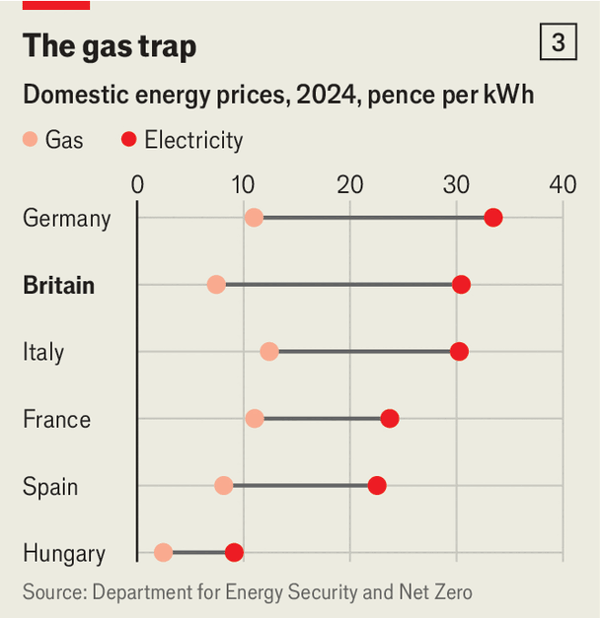
Britain has achieved major decarbonisation progress yet not the broader prosperity and energy-security gains promised: renewable electricity rose from 4% in 2004 to over 50% in 2024, while household prices moved from below nearly every EU member to third-highest in the bloc after Germany and Belgium. Gas dependency remains high, with gas accounting for 31% of power generation in 2025 versus 3% in France, and over four-fifths of homes still heated by gas, which underpinned IMF warnings of high vulnerability to conflicts such as Iran.
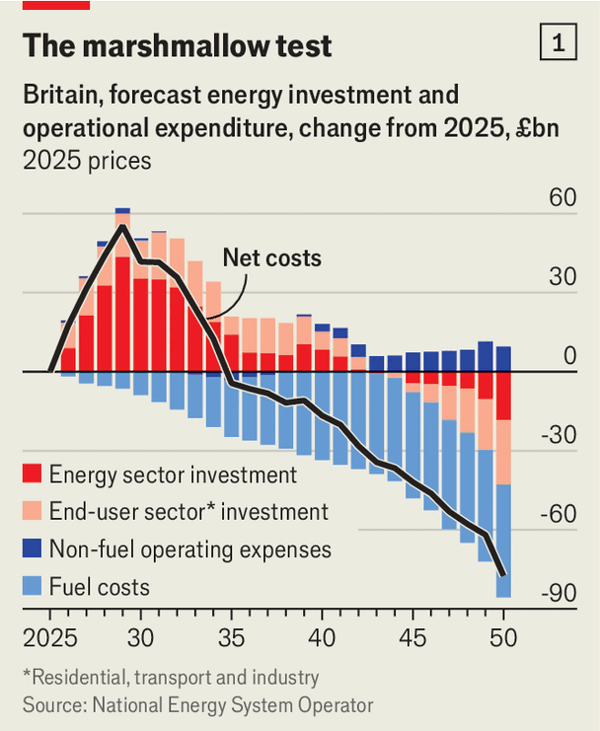
Long term, the fundamentals are stronger: the National Energy System Operator projects energy-related costs (transport, heating and power) could fall from 10% of GDP in 2025 to under 6% by 2050, and a comparable shock in a deeply decarbonized economy would add only 0.3% of GDP versus 1.8% in 2022 conditions. But the Climate Change Committee still sees gas at 13% of total primary energy in 2050, down from 39% in 2025, so a rigid 2030 push to 95% clean electricity carries system risk; more domestic North Sea output plus storage could reduce wartime shortage risk and provide a fiscal hedge when fossil prices spike.
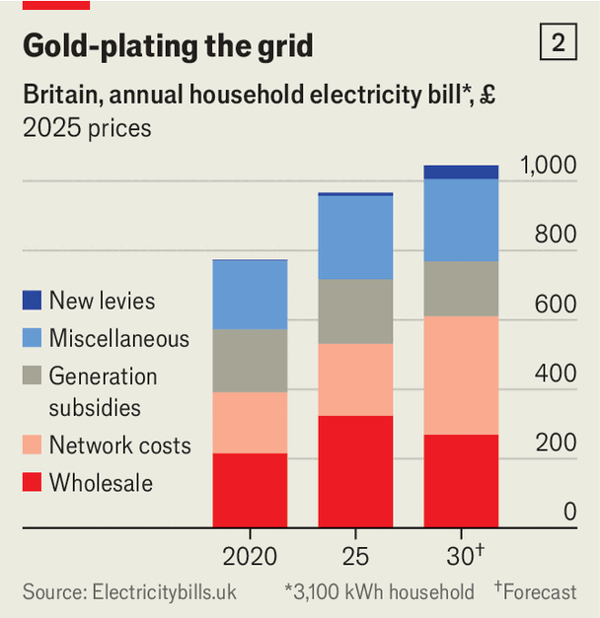
The 2030 acceleration is projected to raise costs quickly: Ben James estimates grid upgrades alone add about £135 ($178) per year to bills by 2030, roughly two-thirds above today’s network costs, and bills only become cheaper than 2025 if wholesale prices drop from about £70 to around £40/MWh; offshore wind fixed prices of £91/MWh are above onshore wind (£72) and solar (£65), and current plans make it roughly half of generation by 2030. Delaying the target and enabling reforms like locational pricing can cut costs, speed affordable electrification (as household heating is the biggest gas use), and avoid suppressing heat-pump adoption when electricity is already about four times more expensive than gas, while still allowing a cheaper, more secure 2050 outcome.
Source: Labour needs to slow down its clean-power missio
Subtitle: Or it will put the party’s entire low-carbon project at risk
Dateline: 4月 01, 2026 08:24 下午