中国目前约有3400万年轻人在职业教育体系中学习,每年有600多家公司为杭州技师学院等学校提供技能需求预测,直接影响课程设置。尽管社会和家长长期将职业类学校视为“差生聚集地”,部分学生依然能在毕业后获得良好就业。此外,2023年10月,16-24岁非在校中国青年失业率约为17%,显示高等教育学历与就业机会之间的联系正在弱化。
2022年中国修订职业教育法,强调“实践资格与学术资格同等重要”。教育部2024年宣布增设40个新职业课程,并计划到2027年提升3000万名工人的技能,优先发展急需的工业领域,包括深海技术和低空经济。部分省份已制定再培训计划,并开始探索“本升专”,即允许大学毕业生转向职业技术学习。去年Zhaopin调查显示,52%的大学毕业生认为附加技术培训有助于就业。
社会观念正逐步转变。一些学生,像在北京的沈克成,虽主修职业课程但仍计划考取本科学历,以增加就业竞争力。另一名在西安的何力则通过校企合作找到轨道交通维护等实际岗位机会。他表示“每个人都成为管理者不现实”,反映了年轻群体对适应技术性就业趋势的务实态度。整体上,中国正在削弱学术与职业路径的分界,推动融合型人才培养,以满足经济转型对技术工人的巨大需求。
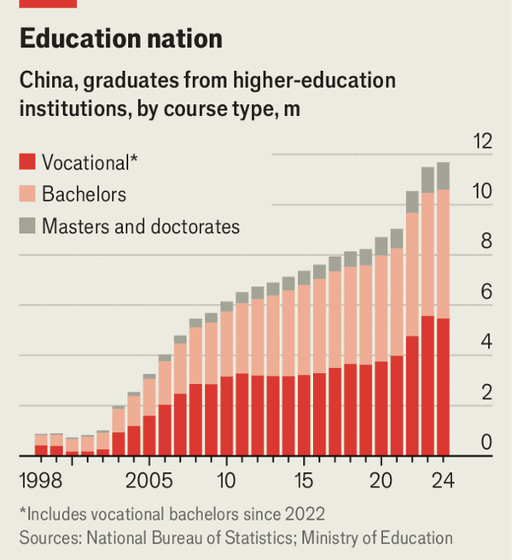
Roughly 34 million young people are currently enrolled in China’s vocational education system; annually, over 600 companies help institutions like Hangzhou Technician Institute determine course offerings based on industry needs. Despite longstanding perceptions of vocational tracks as havens for underperformers, many graduates still find good jobs. As of October 2023, the unemployment rate for non-student Chinese aged 16-24 was about 17%, revealing a weakening link between academic credentials and employment.
In 2022, China revised its vocational education law, granting “equal importance" to practical and academic qualifications. The education ministry announced 40 new vocational courses in 2024, and by 2027 the government aims to upskill 30 million additional workers, targeting urgent industrial needs like deep-sea tech and the low-altitude economy. Several provinces have started retraining programs and are piloting “benshengzhuan,” allowing university graduates to pursue technical skills. A 2023 Zhaopin survey found that 52% of university graduates believe additional technical training would improve their employment prospects.
Societal attitudes are gradually shifting. Students like Shen Kecheng in Beijing pursue vocational courses but still seek bachelor’s degrees to boost employability. Others, like He Li in Xi’an, secure practical jobs via strong college-employer ties and recognize the necessity of adapting to a technical labor market. He notes, “It’s impossible for everyone to be in management,” echoing a growing pragmatism among youth. Overall, China is working to blur the line between academic and vocational paths and foster blended talent pipelines to meet economic transformation’s demand for technical workers.