研究人员使用截至2025年11月的数据估计,2025年前8个月中约94%的关税成本转嫁给了美国企业与消费者。到11月时,外国出口商吸收的比例略有增加,10%的关税与出口价格下降1.4%相关,但转嫁率仍为86%。作者将其描述为:10%的关税仅使外国出口价格下降0.6个百分点,意味著大部分价格影响仍留在美国一侧。
研究发现,2025年4月2日之后,美国平均关税税率从2.6%升至13%,其中4月与5月出现主要激增,原因是对中国商品征收了陡峭但暂时性的上调;豁免与供应转移降低了有效税负,但负担大多仍由美国人承担。较高成本也与供应链从中国转向墨西哥与越南等国的变化同时出现。在方法上,团队比较外国出口价格的12-month变化与关税税率的12-month变化,并控制产品层级与全球价格趋势,并指出该方法与他们先前针对2018与2019年关税的研究相似。
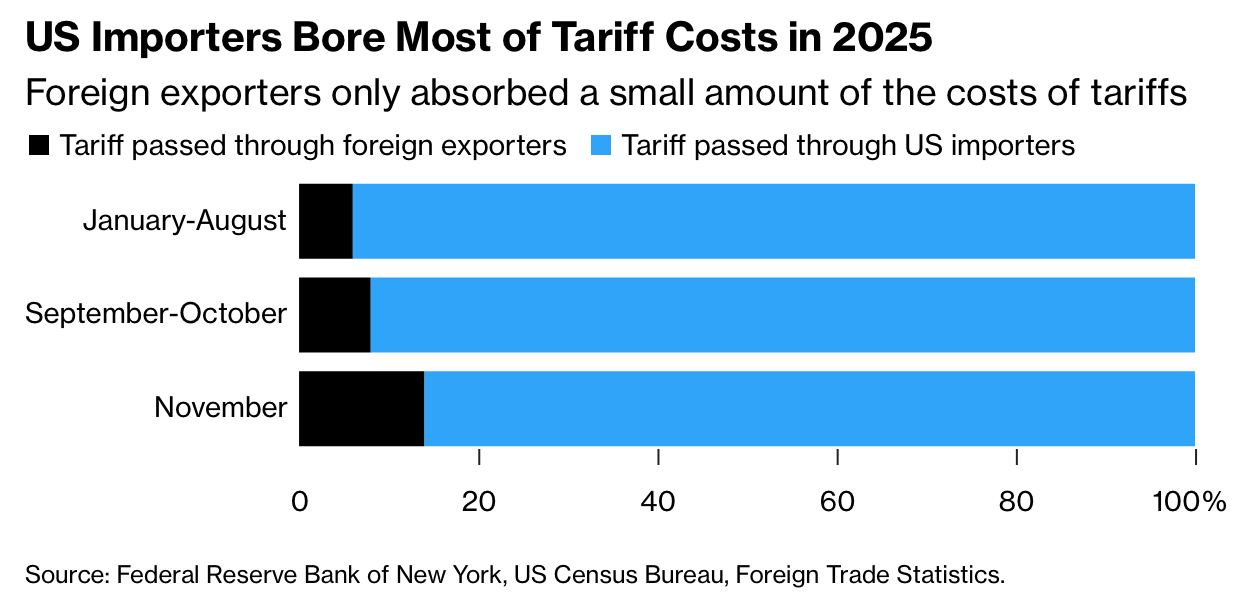
A Federal Reserve Bank of New York study reported that nearly 90% of the economic burden from 2025 US tariffs was borne by US companies and consumers, based on monthly trade data through November 2025. The analysis focuses on how much tariff costs were passed through to US importers versus absorbed by foreign exporters, in the context of a sharp rise in US tariff rates following April 2, 2025, when President Donald Trump announced broad new import levies.
Using data through November 2025, the researchers estimated that about 94% of tariff costs were passed through to US firms and consumers in the first 8 months of 2025. By November, foreign exporters were absorbing slightly more, with a 10% tariff associated with a 1.4% decline in export prices, yet pass-through still measured 86%. The authors characterized this as a 10% tariff causing only a 0.6 percentage point decline in foreign export prices, implying most of the price impact remained on the US side.
The study found the average US tariff rate rose from 2.6% to 13% after April 2, with a major spike in April and May driven by steep but temporary increases on Chinese goods; exemptions and supply shifts lowered the effective duty, but the burden largely stayed with Americans. The higher costs also coincided with supply chain shifts away from China toward countries such as Mexico and Vietnam. Methodologically, the team compared 12-month changes in foreign export prices with 12-month changes in tariff rates, controlling for product-level and global price trends, and noted the approach parallels their earlier work on the 2018 and 2019 tariffs.