澳洲房地产开发商 Robert Magid 及其妻子 Ruth 近日将位于雪梨派珀角(Point Piper)的豪宅指导价调降 1,000 万澳元至 7,500 万澳元,反映出当地房市繁荣期正迅速降温。这座拥有五间卧室且坐拥雪梨港景观的沃尔斯利新月(Wolseley Crescent)庄园,最初于 8 月挂牌时开价 8,500 万澳元,相较于他们在 1998 年以 735 万澳元购入的成本仍有可观增长,但此次大幅降价已显示出高端物业正面临定价压力。
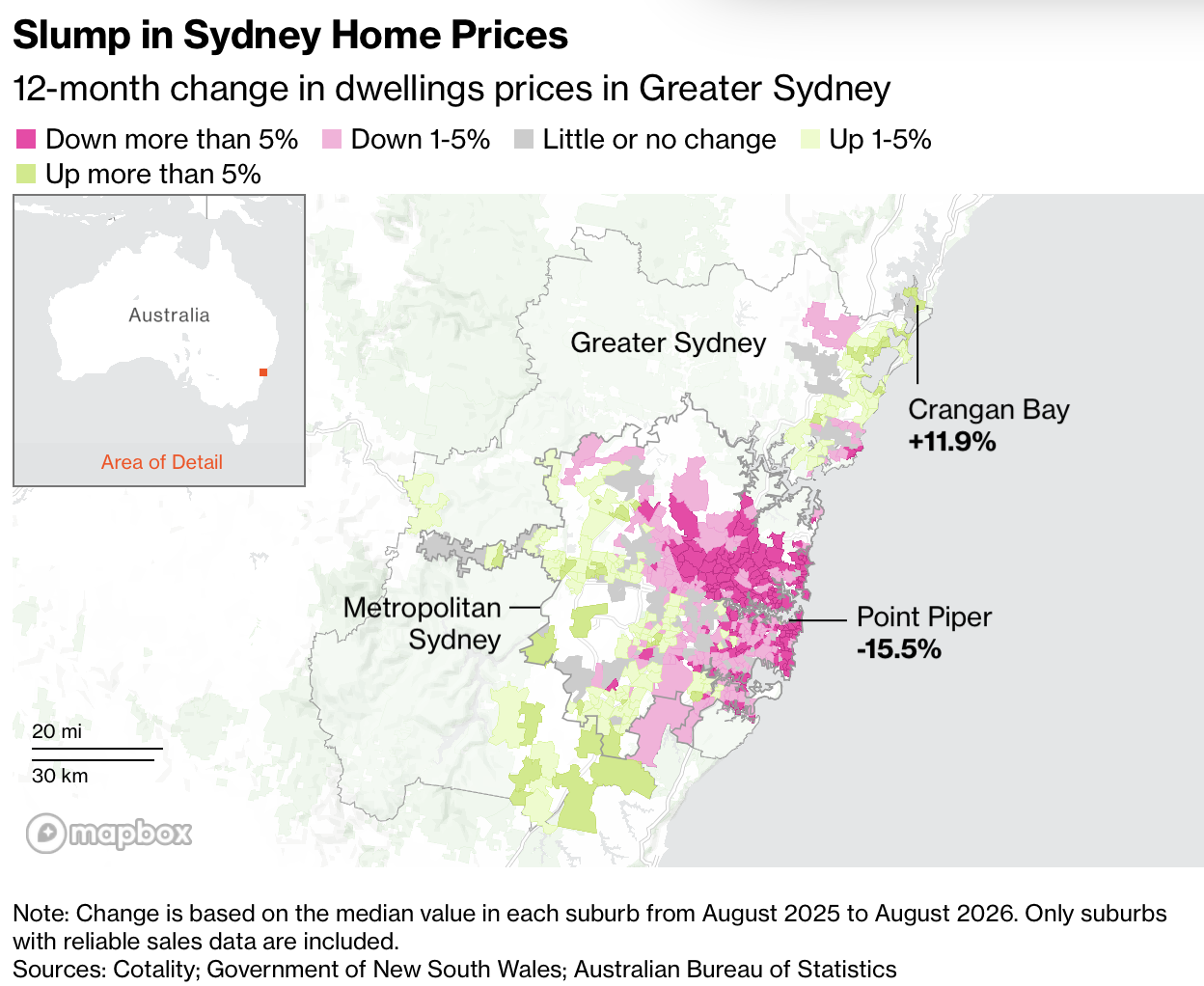
随著借贷成本攀升以及政府取消住宅物业投资的税收优惠,雪梨顶级豪宅区的房价跌幅尤为显著。房产咨询机构 Cotality 数据显示,截至 8 月的一年内,派珀角的房价重挫 15.5%,远高于全市平均 7% 的跌幅。与美国普遍采用的 30 年期固定利率房贷不同,澳洲仅有不到 5% 的房贷为固定利率,因此官方利率的任何上调都会迅速转化为屋主每月的还款负担。
经济学家普遍预期澳洲央行将持续升息,澳盛银行与高盛预测现金利率可能升至 4.85%,创 2008 年以来新高,国际货币基金组织也敦促央行维持鹰派立场。汇丰控股已将澳洲房价跌幅预测从 8% 扩大至 13%,加上建筑商 Bathla 集团破产引发的连锁担忧,市场信心跌入深度悲观,分析师认为未来几年低利率无望,房市将迎来较长期的结构性疲软。
Australian property developer Robert Magid and his wife Ruth have reduced the guide price of their Sydney mansion in Point Piper by A$10 million to A$75 million, reflecting a rapid cooling in the local housing boom. The five-bedroom Wolseley Crescent estate, boasting expansive views of the harbor and city, was originally listed in August for A$85 million compared to their A$7.35 million purchase price in 1998, but the significant price cut highlights mounting pricing pressures on prime real estate.
Sydney's prestigious neighborhoods are experiencing steep price declines amid the broader market downturn driven by rising borrowing costs and the removal of residential investment tax incentives. According to consultancy Cotality, property values in the eastern suburb of Point Piper plunged 15.5% in the twelve months through August, outpacing the 7% citywide drop. Unlike in the United States where 30-year fixed mortgages dominate, fewer than 5% of Australian home loans are fixed, ensuring that policy rate hikes directly increase monthly repayment burdens.
Economists widely anticipate further interest rate increases from the Reserve Bank of Australia, with ANZ and Goldman Sachs forecasting the cash rate to climb to 4.85%, the highest level since 2008, supported by the IMF's calls to prioritize inflation reduction. Consequently, HSBC has deepened its projected national home price decline to 13% from 8%, while the insolvency of builder Bathla Group and weakening consumer sentiment suggest the property market faces prolonged structural weakness with little prospect of low borrowing costs returning soon.