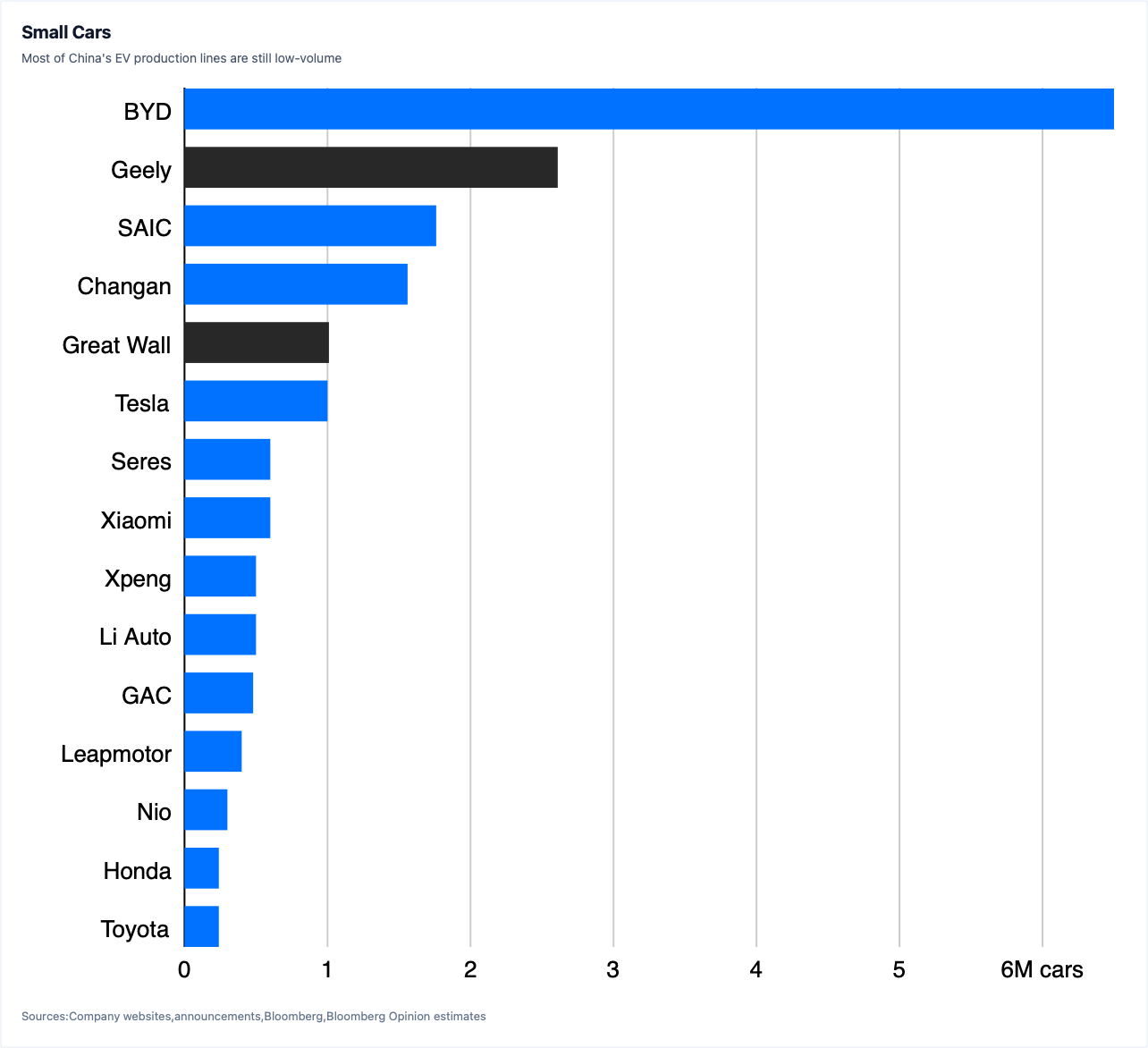
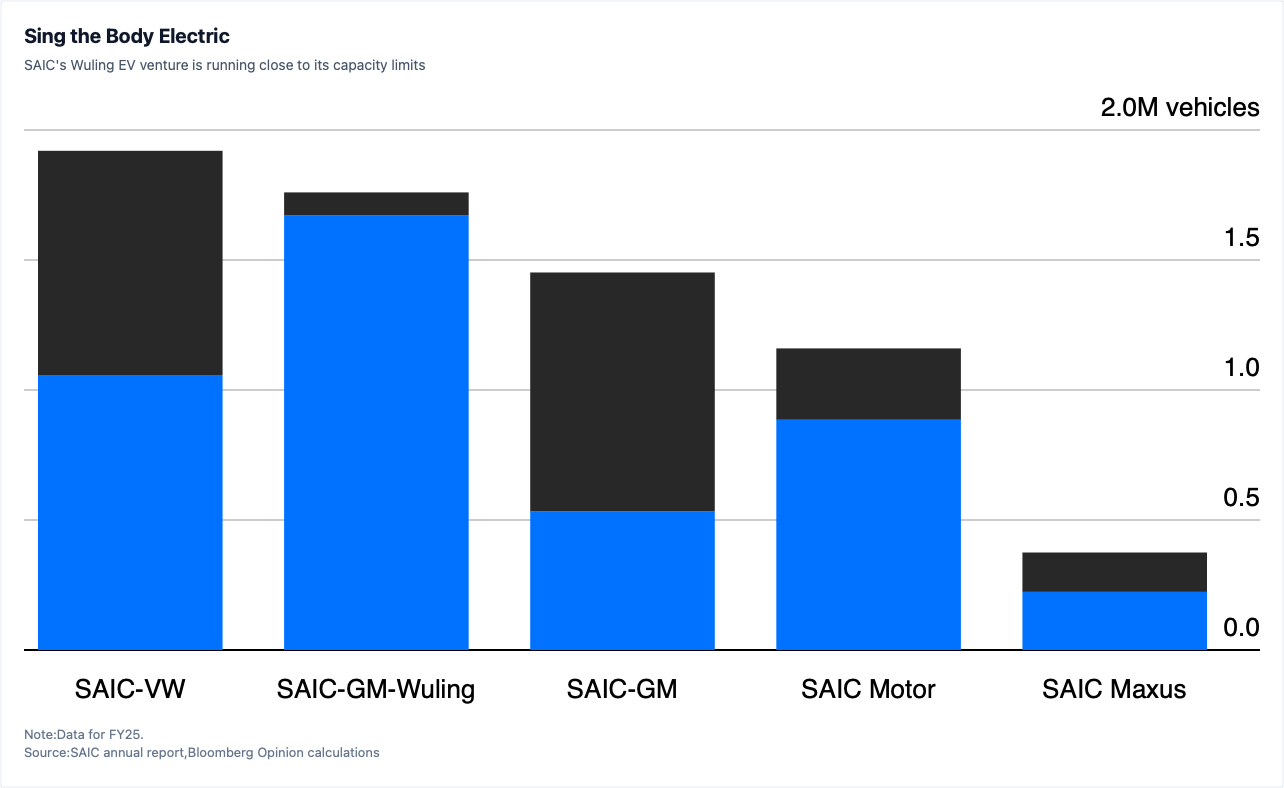
数据显示,中国的电动汽车专用生产线及混合工厂的总产能约为2500万辆,而今年国内电动汽车销量预计将达到1700万至2000万辆,产能利用率处于非常健康的水平。事实上,小米、蔚来等新兴电动车厂甚至面临供不应求的局面,这说明电动车领域并不存在普遍的产能过剩。
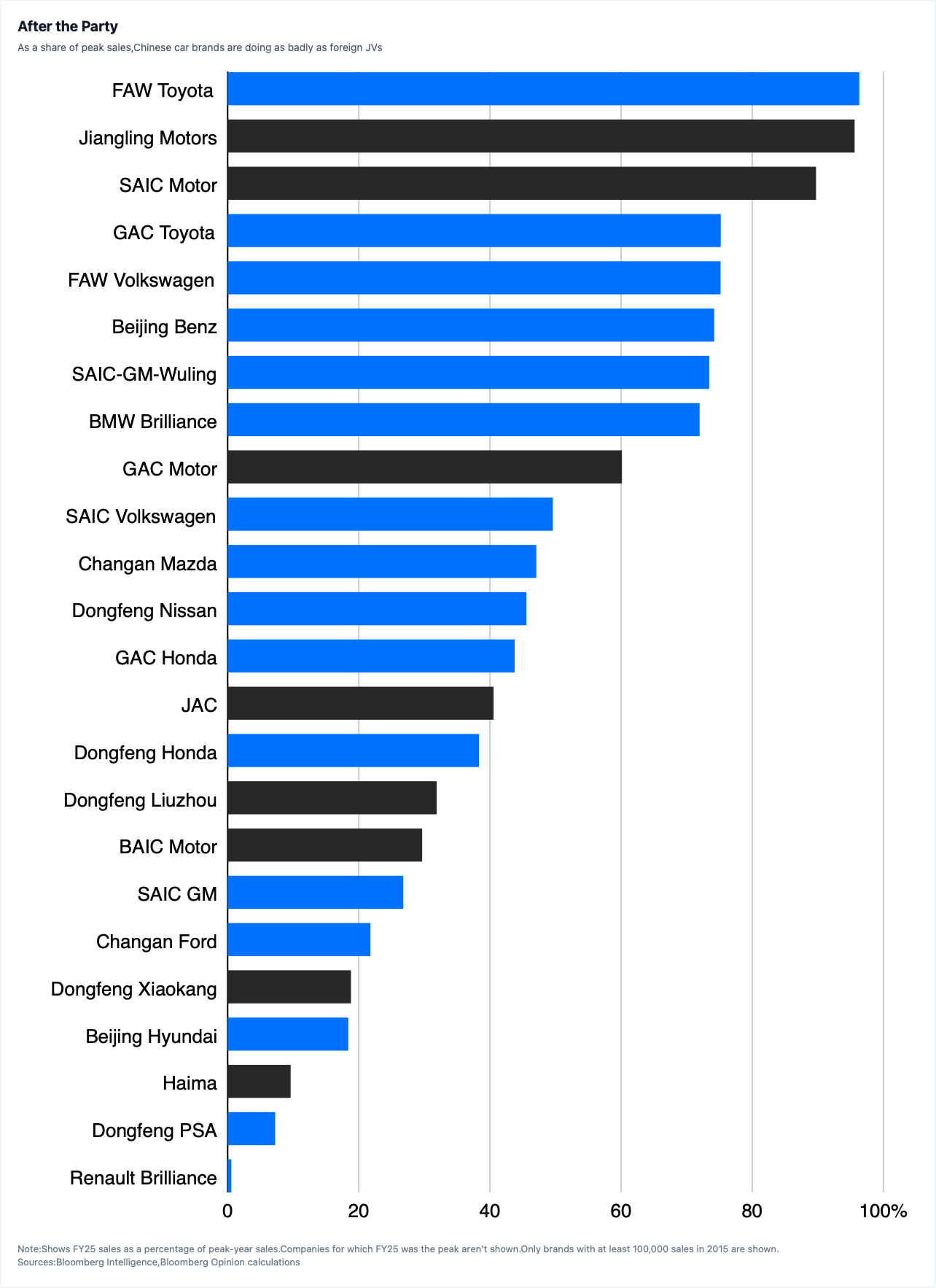
真正的产能过剩存在于转型缓慢的传统国有企业及中外合资企业的燃油车工厂。随著消费者停止购买汽油车,这些工厂的产能利用率暴跌,这实质上是新技术取代旧技术的正常资本主义「创造性破坏」过程,而非国家产业政策所致。
Many Western analysts and policymakers accuse China of having severe overcapacity in electric vehicles and exporting excess production to solve domestic market saturation. However, this view ignores the dramatic shift in China's automotive market structure, where consumer demand for conventional gasoline cars has plunged while demand for EVs has grown rapidly.
Data shows that China's total EV capacity from dedicated and mixed lines is around 25 million vehicles, while domestic EV sales this year are expected to reach 17 to 20 million, keeping utilization rates at a very healthy level. In fact, emerging EV makers like Xiaomi and Nio are struggling to meet high demand, indicating that there is no general overcapacity in the EV sector. (Key numbers: 2500, 1700, 2000)
The real overcapacity lies in the gasoline vehicle factories of traditional state-owned enterprises and foreign joint ventures that were slow to transition to EVs. As consumers stop buying gasoline cars, the utilization rates of these plants have plummeted, reflecting a typical process of creative destruction where new technology displaces the old.