这波信用危机的主要原因可追溯至2020至2021年低利率时期所促成的高额投资与收购热潮。随著近年来利率不断攀升,许多企业现在难以负担高昂的债务利息,导致违约和破产重组事件频传,一些知名基金甚至被迫大幅减记贷款价值或重组其投资组合以应对危机。
尽管部分基金面临股价下跌与资金外流的困境,但业界内部仍存在不同声音,部分高管对其资产质量保持乐观,认为市场问题被媒体过度放大。然而,分析师警告指出,许多基金过去的贷款审查标准不够严格,这意味著私募信贷市场未来仍将面临持续的波动与不确定性。
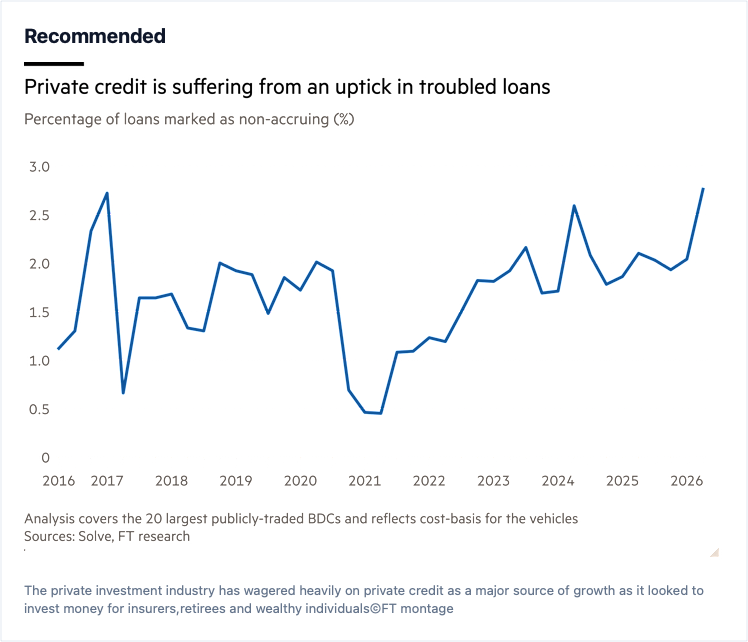
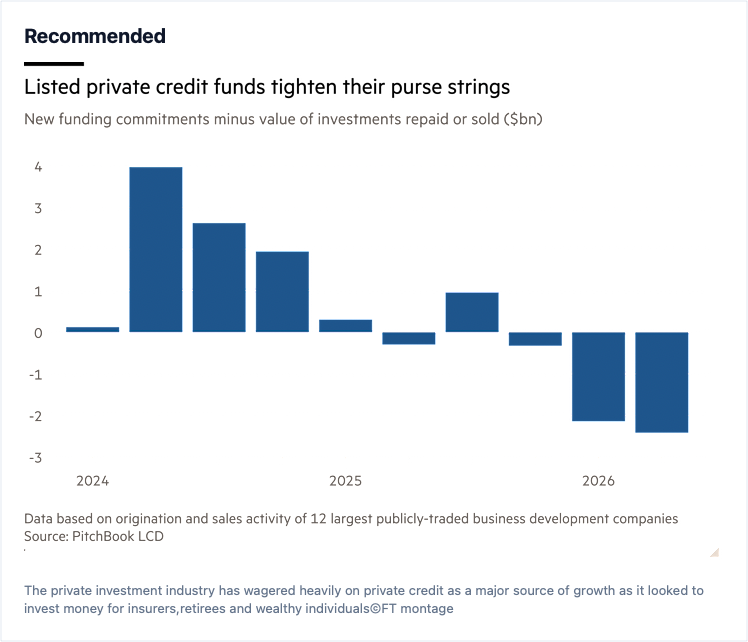
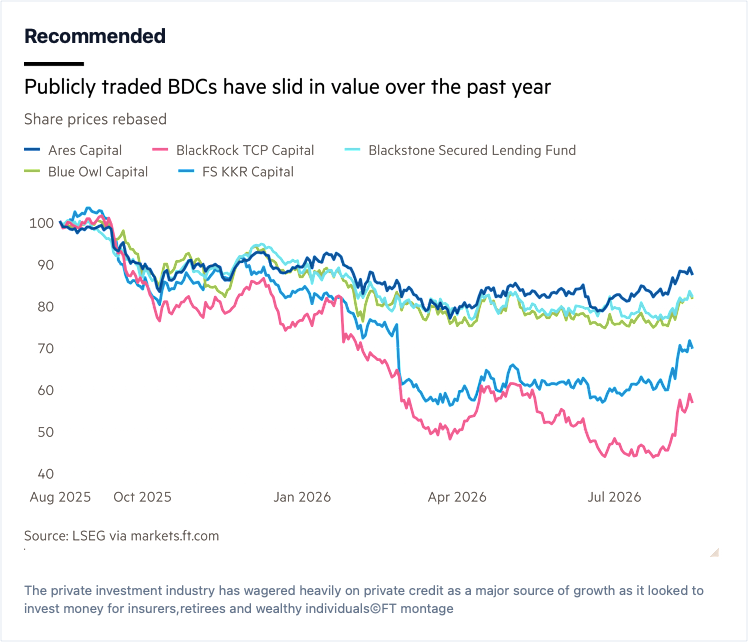
The private credit market is currently facing severe stress, with the rate of troubled loans reaching its highest level since 2017. Publicly traded business development companies (BDCs) saw a significant rise in non-accrual loans during the second quarter, indicating heightened default risks for borrowers and representing the biggest challenge the industry has faced in almost a decade.
The primary cause of this credit crisis traces back to the hefty investments and buying binges facilitated during the low-interest-rate environment of 2020 and 2021. As interest rates have climbed in recent years, many companies are now struggling to service their expensive debt, leading to increased defaults and bankruptcies, and forcing several prominent funds to significantly mark down loan values or restructure their portfolios.
While some funds are grappling with falling share prices and capital outflows, there are mixed reactions within the industry, as certain executives remain optimistic about their asset quality and argue that the problems are exaggerated by the media. However, analysts warn that past underwriting standards were not strict enough, suggesting that the private credit market will continue to face ongoing volatility and uncertainty in the future.