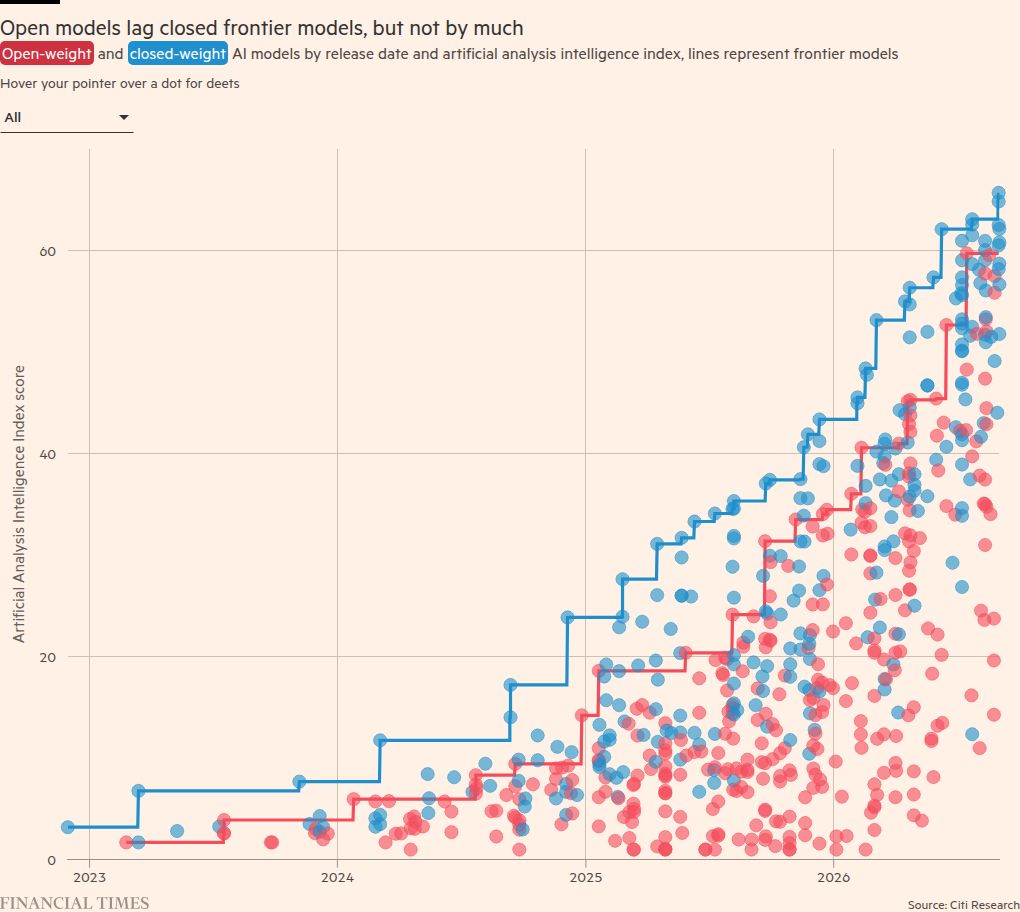
除了本地端小型模型外,云端托管的大型开源权重模型也正对封闭生态构成严峻挑战。根据模型路由平台OpenRouter的数据,流向专有闭源模型的查询份额已大幅下滑,包括AT&T、西门子与Airbnb等企业纷纷转向开源模型以大幅削减开支。此外,对于数学界争议所凸显的专利外泄忧虑,律师事务所与资产管理公司等注重资安的机构也更倾向自主托管开源模型,以保护机密数据免受云端厂商训练使用。
开源模型的崛起直接冲击了依赖高价授权与循环融资支撑的前沿AI实验室,如OpenAI与Anthropic等持续承受庞大资金消耗的未上市企业。尽管超大规模云端运算业者拥有稳健本业与资料中心资产可承受部分投资失利,但前沿实验室若无法实现预期获利以偿还巨额租赁与电力协议承诺,恐将引发连锁骨牌效应,国际清算银行亦警示若AI回报低于预期,可能导致整体金融市场的严重动荡。
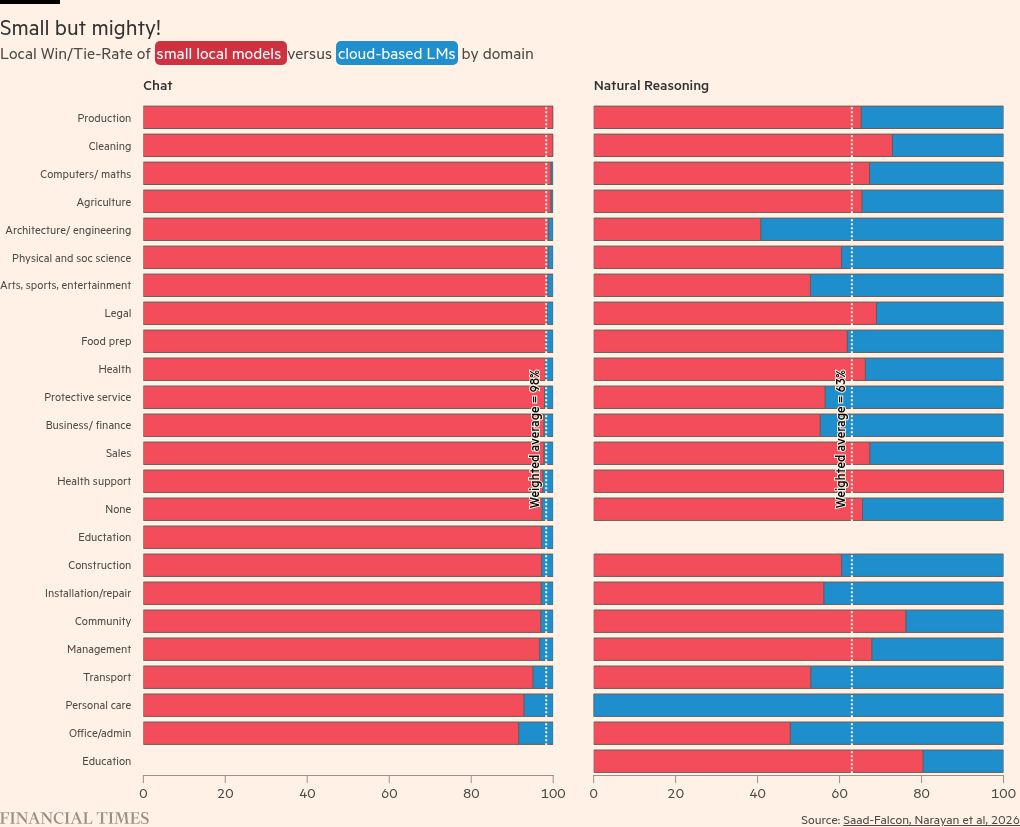
As highlighted by Singapore's Foreign Minister Vivian Balakrishnan deploying an AI assistant locally on a Raspberry Pi, small language models (SLMs) and open-weight architectures are rapidly closing the performance gap with expensive frontier models. Stanford researchers have demonstrated that SLMs can effectively handle the vast majority of everyday queries while reducing compute and energy costs by 60 to 80 percent, encouraging enterprises to reroute simpler workloads away from centralized cloud infrastructure.
Beyond localized setups, large cloud-hosted open-weight models are significantly challenging closed proprietary systems, as evidenced by OpenRouter routing a dwindling share of requests to closed models. Major corporations like AT&T, Siemens, and Airbnb are aggressively pivoting to open models to achieve major cost savings, while growing data privacy and intellectual property concerns—amplified by recent disputes over frontier models ingesting proprietary findings—are driving sensitive legal and financial institutions toward sovereign, self-hosted deployments.
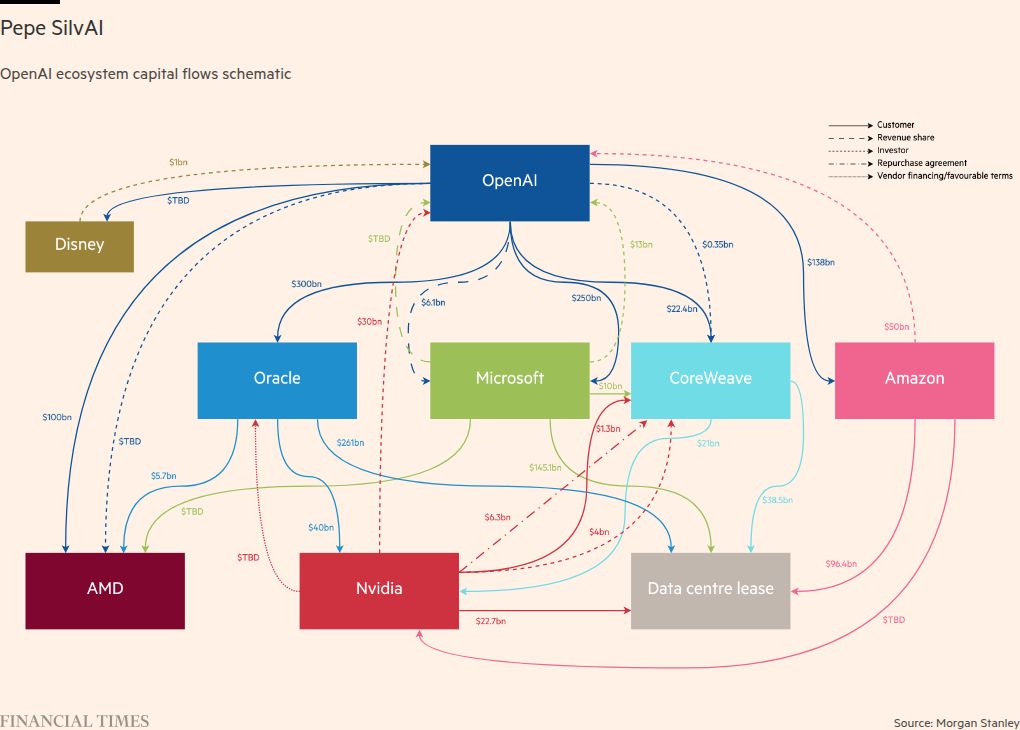
The ascendancy of open models poses a critical commercial threat to cash-burning frontier AI labs like OpenAI and Anthropic, which rely heavily on circular financing and investor confidence to monetize their innovations against massive computing costs. While hyperscalers hold profitable legacy businesses and resilient physical infrastructure, the inability of frontier developers to meet monetisation expectations could trigger severe credit strains, mirroring warnings from the Bank for International Settlements regarding a potential macroeconomic investment shock.