土耳其股市的投机泡沫骤然破裂:此前数家资产管理机构交出匪夷所思的回报率,例如特拉(Tera)旗舰基金在短短三年内暴涨逾60,000%,德斯泰克(Destek Finans Faktoring)上市仅17个月股价飙升7,000%跃升为土耳其第二大上市公司。随着特拉等机构出现兑付危机并被曝涉嫌庞氏骗局,土耳其基准股指在9月16日暴跌逾5%,短短两天内蒸发了约300亿美元市值。为此,监管机构紧急勒令清算持有约180亿美元资产的131只投资基金,导致至少45万名投资者面临巨额本金损失,包括特拉董事长在内的数十名金融高管已被警方拘捕。
这场危机早有预兆:涉案基金长期通过对倒交易自身子公司及低流动性股票来虚增资产净值,并以此为抵押进一步加杠杆操纵市场,甚至促使明晟(MSCI)在6月警告可能将土耳其从新兴市场降级至前沿市场。然而监管层反应迟缓,直到8月下旬才限制基金控盘个股,直接引发了基金抛售踩踏与流动性冻结;此前揭发特拉违规行为的金融犯罪监管机构前副主管甚至曾两度遭到警方拘留。虽然财政部长穆罕默德·希姆谢克(Mehmet Simsek)于9月18日坚称危机已被遏制且不存在系统性风险,外逃资金也多转向高息里拉存款而非外汇,但市场对监管环境的信任已被严重削弱。
这起丑闻给埃尔多安总统将伊斯坦布尔打造为国际金融中心及吸引海湾避险资金的宏图带来了沉重打击。从宏观根源来看,这场闹剧是土耳其长期恶性通胀的直接副产品——该国通胀率在2022年曾突破80%,目前仍徘徊在每年30%左右的极高水平。为抵御资产贬值,大批缺乏经验的普通民众在超高收益诱惑下涌入高风险股市,最终沦为市场操纵的牺牲品,为土耳其资本市场监管缺失和政治庇护疑云留下了惨痛教训。
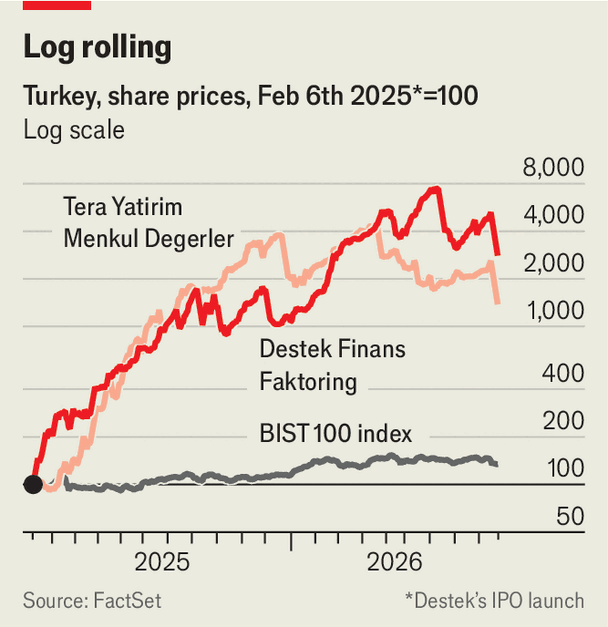
Turkey’s equity market bubble has abruptly imploded following years of implausible reported gains, exemplified by asset manager Tera’s flagship fund skyrocketing over 60,000% in three years and Destek Finans Faktoring surging 7,000% within 17 months of listing to become the country’s second-largest public company. The collapse began when Tera and peer managers halted investor redemptions amid allegations of Ponzi-style market manipulation, triggering a fall of over 5% in the benchmark equity index on September 16th that erased roughly $30bn in market value in just two days. In response, regulators moved to liquidate 131 investment funds controlling an estimated $18bn in assets, leaving at least 450,000 retail investors facing deep haircuts while police detained dozens of executives, including Tera’s chairman.
The unraveling followed months of unheeded warning signs involving fund managers ramping illiquid shares and their own corporate subsidiaries to report inflated returns and secure margin borrowing. This egregious manipulation prompted MSCI in June to warn of a potential downgrade of Turkey from emerging to frontier market status. Regulators delayed decisive intervention until late August, when limits on cornering individual equities triggered widespread fire sales and trapped investors; earlier whistleblowers, including a former financial-crimes watchdog official, had even been detained by police. While Finance Minister Mehmet Simsek insisted on September 18th that systemic risk was contained as capital rotated into high-yield lira deposits rather than foreign exchange, regulatory credibility suffered immense damage.
The debacle severely impairs President Recep Tayyip Erdogan’s strategic ambition to establish Istanbul as a regional financial hub capable of attracting foreign capital fleeing Middle Eastern conflicts. Fundamentally, the scandal reflects macroeconomic distortions driven by runaway inflation, which surpassed 80% in 2022 and persists at roughly 30% annually. Seeking refuge from relentless currency debasement, hundreds of thousands of novice retail investors piled into highly speculative equities, learning a devastating lesson about the structural vulnerabilities, market illiquidity, and pervasive governance deficits embedded within Turkey’s financial system.
Source: Turkey’s investment-fund fiasco
Subtitle: The country could lose its status as an emerging market
Dateline: Sep 24th 2026\n