如今,Meta Platforms 于9月初推出的 Muse 等人工智慧代理程式,正对旅游产业掀起新一轮颠覆。当这款软体迅速登上应用程式商店排行榜榜首时,Meta 股价飙升,而 Expedia Group 和 Booking Holdings 等线上旅游巨头的股价则应声下挫,引发市场投资者的高度关注。
彭博行业研究分析师 Nicole D’Souza 指出,Muse 在测试中倾向直接向航空公司或信用卡入口网站订票,以避开中间商加价,即便比价后仍判定直接预订最为划算。若此类人工智慧代理人普及且持续规避中介机构,当前线上旅游平台将必须重新寻求创造价值的新途径以维持市场竞争力。
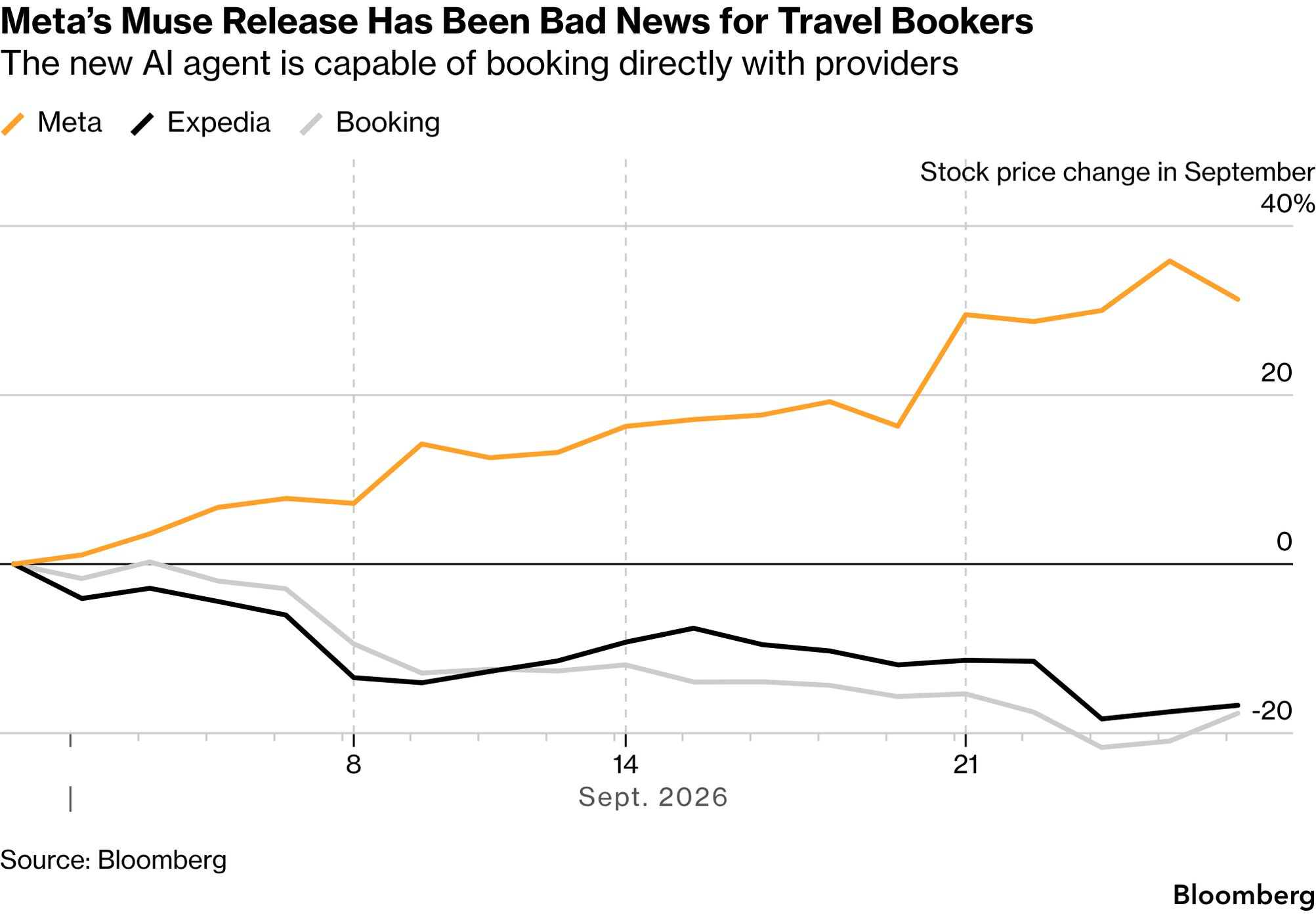
During the rise of e-commerce in the 2000s, the number of American travel agents plunged by roughly 50% as online platforms democratized bookings. Although traditional travel advisers experienced a modest resurgence catering to affluent travelers, mainstream consumers shifted almost entirely to digital channels, cementing online travel agencies as the dominant market force.
Now, AI services like Meta Platforms' Muse, launched in early September, threaten to disrupt the industry once again. As Muse quickly zoomed to the top of app store charts, Meta shares soared while stocks of online giants like Expedia Group and Booking Holdings tumbled under investor scrutiny. (Key numbers: 9)
Bloomberg Intelligence analyst Nicole D’Souza observed that Muse prioritizes direct bookings with airlines and credit-card portals over online travel agencies to avoid middleman markups. If such AI agents gain widespread adoption and persistently bypass intermediaries, established travel websites will face severe risks and must innovate to remain relevant.