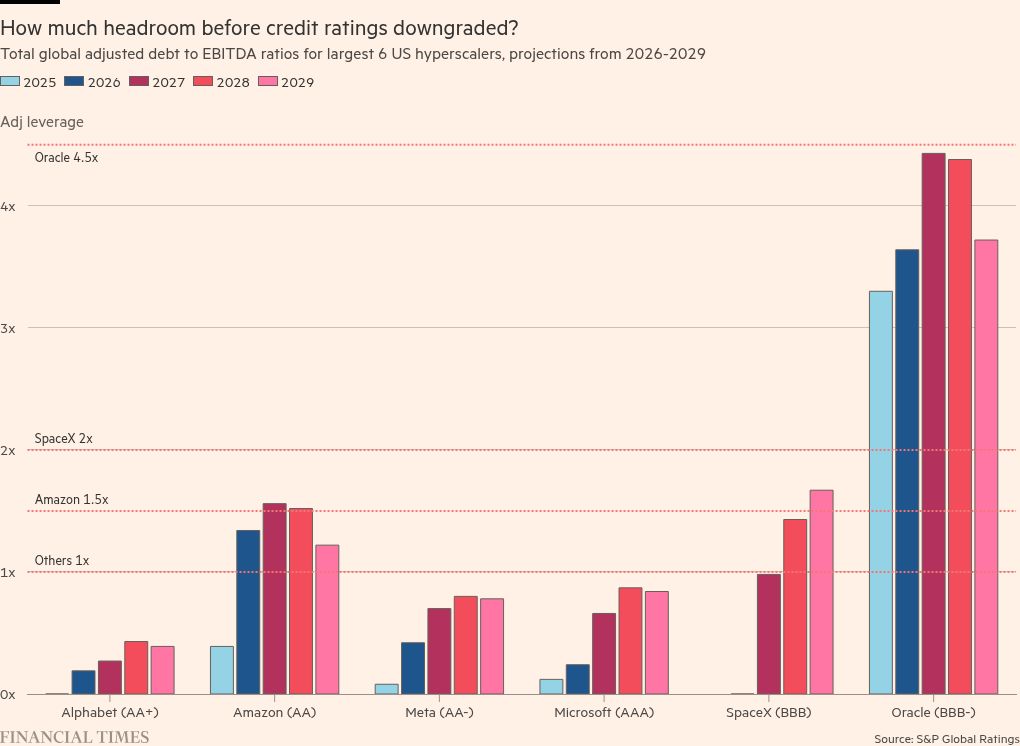
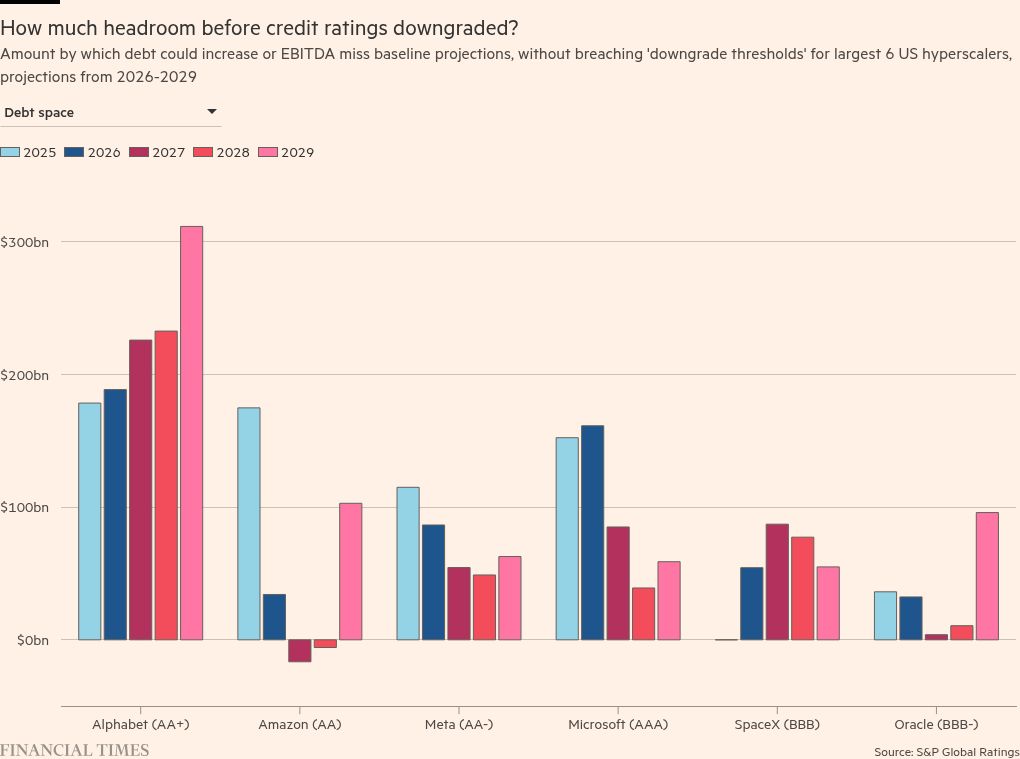
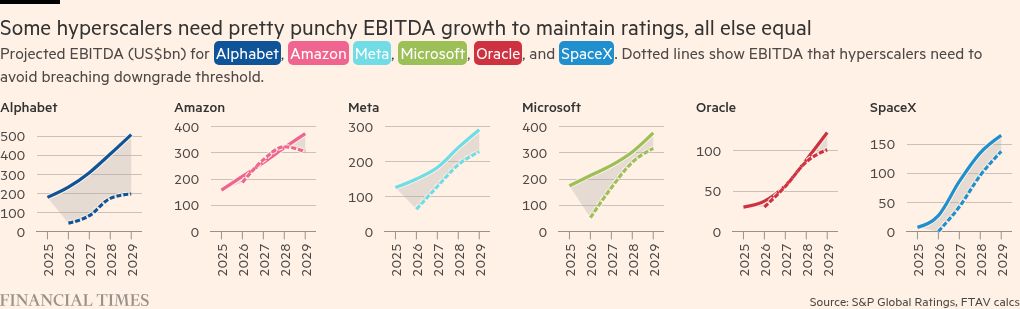
各大超大规模企业在维持既有信用评级上所具备的缓冲空间各不相同。微软因其 AAA 评级要求极严格,债务及租赁承诺仅能达到约 1 倍 EBITDA;相较之下,Alphabet 拥有充裕的评级缓冲,但甲骨文(Oracle)已处于 BBB- 的边缘,一旦遭降评将直接落入垃圾债等级,影响其约 1,170 亿美元的合资格美元债券。同时,亚马逊若无法加速获利或缩减资本开支,亦面临降评压力,这意味著标普的基本假设对各公司的 EBITDA 成长设定了相当严苛的衡量标准。
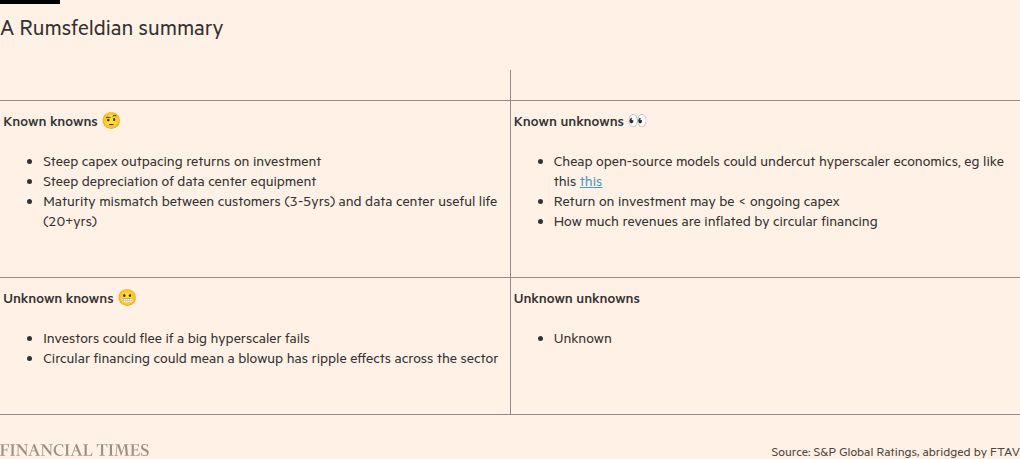
报告同时警告高度相互连结的循环融资(Circular Financing)潜藏著系统性连锁风险,包含剩余价值保证、照付不议合约、晶片融资、购电协议及直接股权投资等复杂安排。此类重叠且紧密交织的融资网络在个别层面看似可控,但若整体 AI 需求意外转弱或关键实体发生违约,相关杠杆风险将高度联动并放大市场波动,即便资本雄厚、获利稳健的龙头企业在景气下滑时也恐面临巨大冲击。
S&P Global Ratings released a temperature check on the top six US hyperscalers, noting that half of US private sector growth over the past year was tied to AI activities, with projected five-year capital expenditures exceeding $7 trillion through 2030. However, analysts cautioned that capex is escalating faster than anticipated, financing structures are increasingly complex and opaque, and the tech giants have not quantified their return on investment from AI, forcing the agency to assume that these firms know what they are doing and that these massive investments will eventually bear fruit.
The credit downgrade headroom varies significantly across hyperscalers based on their current rating tiers. Microsoft has strict leverage limits near 1x EBITDA to preserve its pristine AAA rating, while Alphabet holds substantial breathing room at its AA+ grade. Conversely, Oracle is near its downgrade threshold at BBB-, where a downgrade would push its roughly $117 billion in index-eligible US dollar bonds into junk territory, and Amazon faces potential rating pressure unless earnings outpace capital spending, demonstrating that S&P's base case establishes demanding EBITDA growth hurdles for these corporations.
The rating agency also raised concerns about interconnected circular financing structures, including residual-value guarantees, take-or-pay agreements, chip financing, lease liabilities, power purchase agreements, and direct equity stakes. While these commitments may be manageable for individual entities, the extensive overlap means a sudden drop in AI demand or the failure of a key counterparty could trigger correlated financial distress, potentially inflicting significant pain across even the most profitable and well-capitalized hyperscalers.