面对子女毕业后求职困难的窘境,家长们正积极寻找财务支持的方式。最直接的做法包括让子女免费住在家中或代付房租,资助实习与职业培训费用,以及给予他们寻找合适工作的喘息空间。在投资方面,专家建议家长可为子女开设养老金帐户(每年最高可获720英镑税务减免)、个人储蓄帐户(ISA)或终身ISA(政府提供25%的额外补贴)。部分家长也考虑替子女偿还学生贷款,以减轻其心理负担并释放未来收入用于储蓄,但专家提醒这并非总是最佳策略,因为未来收入和还款时间线难以预测。
专家强调,家长在提供求职建议时应注意劳动市场的快速变化,过时的经验可能适得其反。例如,现今雇主不仅看重学历和工作成就,也关注求职者的兴趣与广泛经历;过度使用生成式AI撰写求职申请反而会被筛除。专家建议青年每周花15至30分钟学习AI工具,善用招聘机构发掘隐藏的工作机会,并利用大学终身就业服务。最重要的是,家长应避免施加时间压力,让年轻人理解求职并非一次定生死的机会,时间站在他们那边。未来的解决之道在于政府、产业界与教育机构携手合作,将技术培训与学术教育并重,尽早开展职业规划。
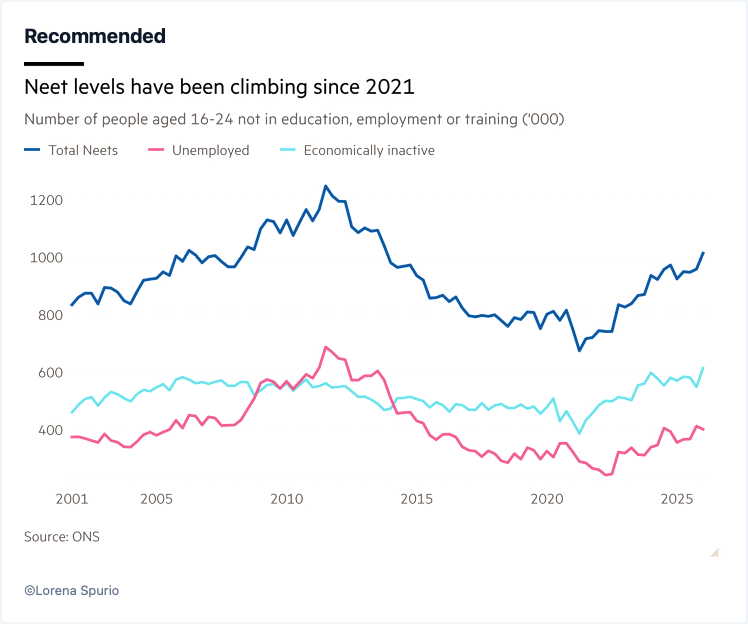
The UK is facing a deepening youth unemployment crisis, with over one million 16- to 24-year-olds classified as Neet (not in education, employment, or training), one in seven of whom hold a university degree. A weakening economy has driven job openings to a five-year low, while entry-level positions have collapsed over the past decade due to rising employment costs and the encroachment of AI on junior roles. Government projections warn that without reform, Neet numbers could swell to 1.25 million within five years. Among those currently Neet, roughly 60 per cent are economically inactive, and the proportion reporting a disability has doubled since 2013-14 to 45 per cent, with mental health conditions such as anxiety, depression, and ADHD being the most prevalent. The government is reviewing benefits like Personal Independence Payments, which cost over £3 billion annually for this age group, in an effort to redirect spending toward employment support.
Parents are scrambling to find ways to support their unemployed graduate children financially. Practical measures range from offering rent-free accommodation and funding internships or training programmes to making pension contributions and ISA investments on their children's behalf. Some families have paid for overseas teaching qualifications to help their children gain work experience abroad. Wealthier parents may consider paying off student loans to ease psychological burden and free up future earnings, though experts caution that the financial merits depend on unpredictable future income trajectories. However, the strain on parents is real: a 2024 report found that half of family members who provided financial support felt less secure about their own finances, and one in ten said it had negatively impacted their standard of living. (Key numbers: 720, 25)
Experts urge parents to update their understanding of the labour market before offering career advice, as guidance from even five years ago may now be outdated or counterproductive. Modern employers value passions and broad experiences alongside academic credentials, and excessive reliance on generative AI in applications can backfire as recruiters increasingly filter out AI-generated content. Young adults are encouraged to spend small amounts of time each week experimenting with AI tools, leverage recruitment agencies to access unadvertised roles, and make use of university careers services that offer lifelong employability support. Above all, experts recommend easing time pressure on graduates, reminding them that landing the right role is not a make-or-break moment. Longer-term solutions require collaboration among government, industry, educators, and training providers to create visible career pathways and elevate technical training alongside academic education. (Key numbers: 15, 30)