这种影片生成技术的领先优势,为中国建立「世界模型」提供了重要的战略基础。世界模型不仅需要理解语言,还必须掌握物理学、物体运动及因果关系,以便预测现实环境中的互动与变化。
研究人员与企业领袖认为,从影片模型发展而来的世界模型,未来将成为人形机器人与自动驾驶技术的大脑。结合中国在机器人硬体制造上的既有优势,这项核心进展可能决定谁能引领下一个人工智慧时代。
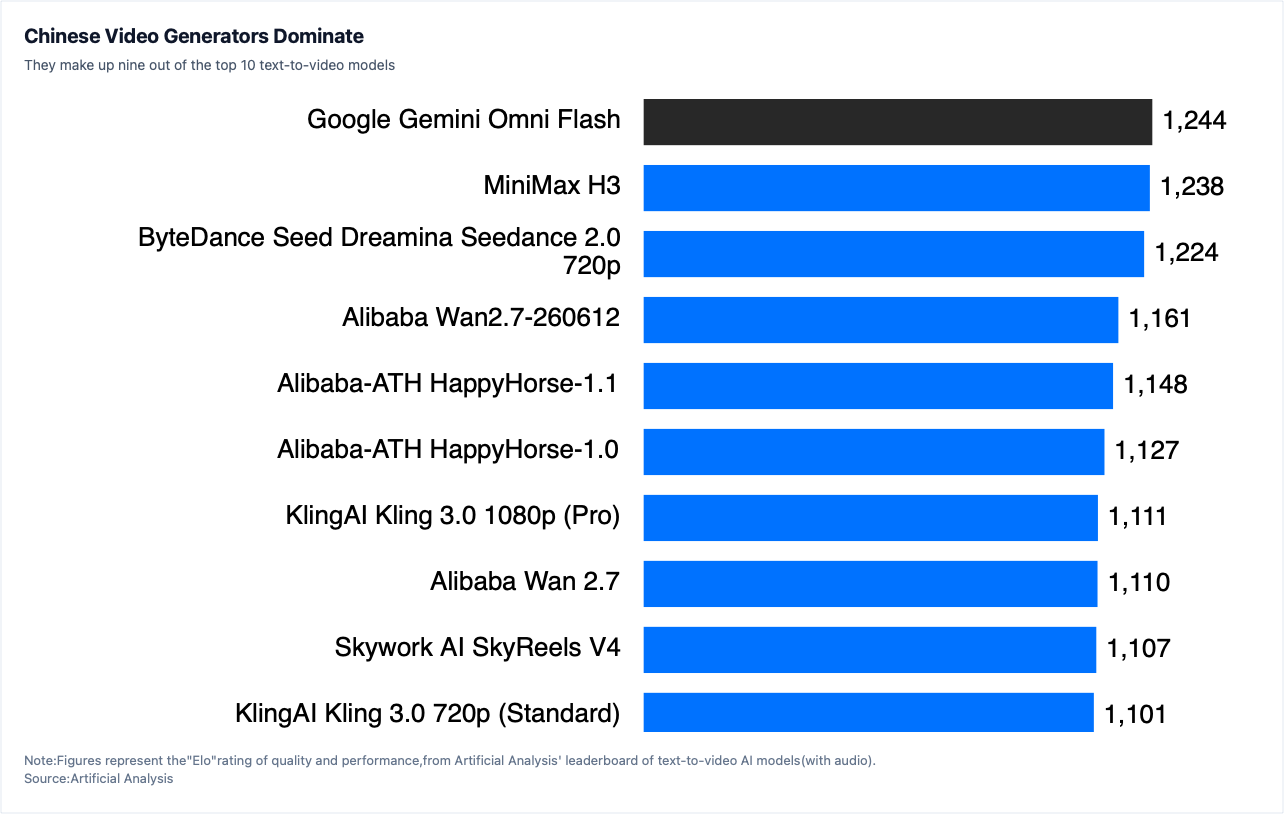
According to recent data, Chinese companies dominate the generative AI video sector, accounting for nine of the top ten text-to-video models on benchmarking leaderboards. Firms including ByteDance, Alibaba, and Kuaishou have rapidly emerged in a video generation market that leading US players have largely deprioritized.
This commanding lead in video generation technology provides China with a crucial strategic foundation for building "world models." World models must understand more than just language; they are required to grasp physics, object motion, and causality in order to predict interactions and changes in real-world environments.
Researchers and business leaders believe that world models evolved from video generation will eventually serve as the brains for humanoid robots and autonomous vehicles. Combined with China's existing advantages in robot hardware manufacturing, this core progress could determine who leads the next era of artificial intelligence.