食品供应链与相关餐饮业受到全方位冲击,鸡肉与蛋商因饲料价格单月翻倍而不得不调涨售价,乳制品及烹饪用的液化石油气价格亦显著上升。然而,餐饮业者面临激烈的平价摊贩竞争,难以将持续攀升的食材成本完全转嫁给消费者,担心顾客流失。随著即将迎来用糖与食用油需求达到顶峰的排灯节等传统节庆,国内物价压力预计将面临更严峻的考验。
高涨的食品成本已成为推动印度整体零售通膨的核心因素,促使8月份消费者物价指数创下波段新高,并连续三个月超出印度储备银行4%的中期目标。面对气候干旱风险与广泛物价上涨威胁,央行官员已示警通膨不再温和,经济学家普遍预期原本维持利率不变的中央银行可能最早于10月启动升息以抑制物价预期心理。
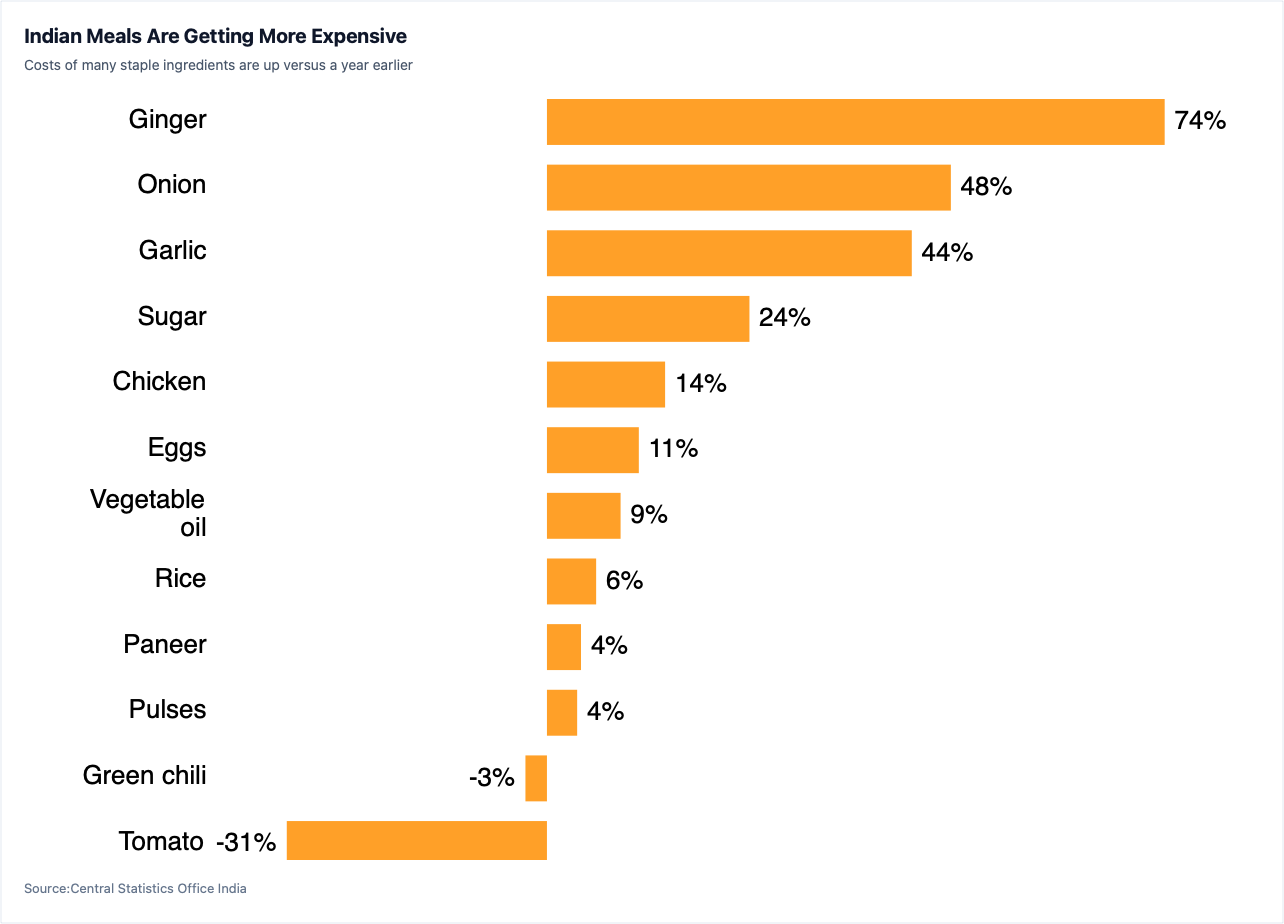
Food inflation has surged across India this year, hitting household budgets severely as food constitutes nearly half of monthly spending for rural families and about 40% in cities, with prices of staples like onions, ginger, and cooking oil climbing sharply. The primary drivers include subpar monsoon rains caused by El Niño, unseasonal downpours damaging crops in key growing regions, an aggressive government mandate to accelerate 20% ethanol blending by 2025 that diverts grains toward biofuel, and global crop and fuel price spikes stoked by international conflicts.
The inflationary pressure is rippling through the wider supply chain and food services, forcing poultry vendors to raise prices due to doubling feed costs, while milk, paneer, and cooking gas have also grown significantly more expensive. Small restaurant owners and food stalls struggle to pass on mounting ingredient costs to consumers amid intense street competition and fears of eroding customer demand. The strain on households is poised to intensify further with the arrival of the major festive season culminating in Diwali, which typically triggers a massive surge in demand for sweets and fried treats.
Because food accounts for more than a third of the retail inflation basket, its sustained rise pushed August headline inflation to multi-month highs, exceeding the Reserve Bank of India's 4% medium-term target for the third consecutive month. With central bank officials warning that price pressures are no longer benign and risk de-anchoring inflation expectations, economists increasingly project that the central bank may abandon its rate pause and implement an interest-rate hike as early as October.