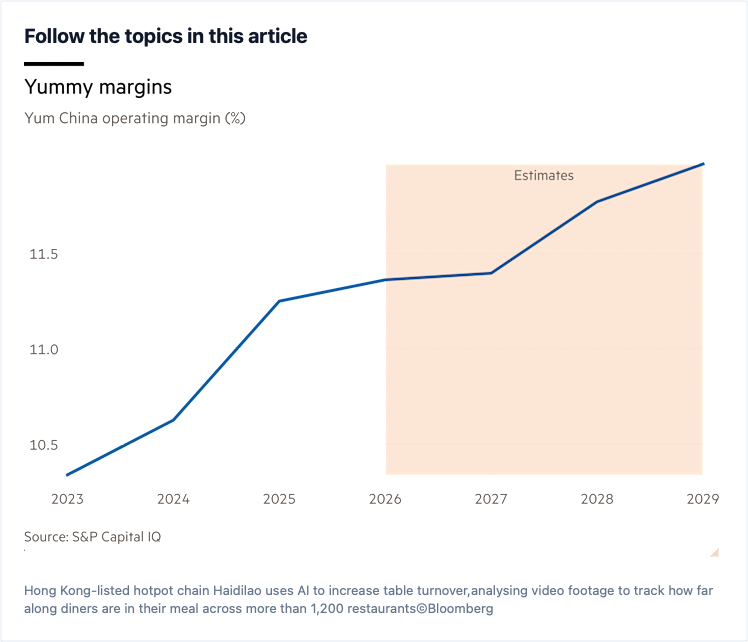
中国最大餐饮营运商百胜中国同样深入导入 AI 技术,透过数位助理协助经理处理排班、库存与食安管理,并应用于新店选址、销售预测及物流配送路线最佳化。这些科技投资带来了实质的财务回报,海底捞海外业务与百胜中国的营业利益率均呈现显著成长,证明效率提升正在显现成效。
在消费情绪低迷的市场环境中,AI 所带来的食材与人力成本节省为连锁餐饮企业提供了关键的财务缓冲。这也预示了市场投资趋势的转变:过去一年资金主要集中于晶片与基础设施供应商,而下一阶段的受益者将是善用 AI 提升既有资产营运效率的传统实体企业。
Chinese restaurant operators are emerging as early beneficiaries of artificial intelligence. Haidilao, the leading hotpot chain, uses AI to analyze video footage across more than 1,200 outlets to monitor dining progress and accelerate table turnover, alongside deploying delivery robots, automated kitchen equipment, and intelligent inventory systems to minimize food waste and maximize revenue per store.
Similarly, Yum China, the nation's largest restaurant operator, has integrated AI digital assistants into routine operations to assist managers with scheduling, inventory, and food safety, while also leveraging the technology for store site selection, demand forecasting, and logistics routing. These technological implementations have yielded concrete financial gains, driving noticeable operating margin expansions for both Haidilao's overseas entity and Yum China.
Amid weak consumer sentiment, AI-driven reductions in food waste and labor costs provide a valuable financial buffer for restaurant chains. More broadly, this shift signals the next phase of the AI investment cycle: while capital previously focused heavily on chipmakers and infrastructure providers, the subsequent wave of beneficiaries will likely be traditional businesses that utilize AI to enhance the productivity of their existing physical assets.