Alphabet第二季度财报有效缓解了市场对AI热潮可持续性的最新一轮担忧。美国科技巨头在数据中心基础设施上的大规模支出,持续推动亚洲晶片制造商的产品价格上涨和利润创新高。Evercore ISI分析师指出,Alphabet基本达到了市场的高预期,这对AI交易构成正面信号。日本半导体设备商Advantest和Lasertec也表现亮眼。
Google自主研发张量处理器(TPU)的计划提振了被视为受益者的相关公司股价,包括联发科,投资者正在AI早期龙头如辉达之外寻找新的赢家。彭博行业研究分析师认为,Alphabet的TPU与垂直整合策略为其带来成本优势,预计该公司在2027年的资本支出上将比其他超大规模云端业者更为积极,其自研晶片优势正有力支撑获利能力。
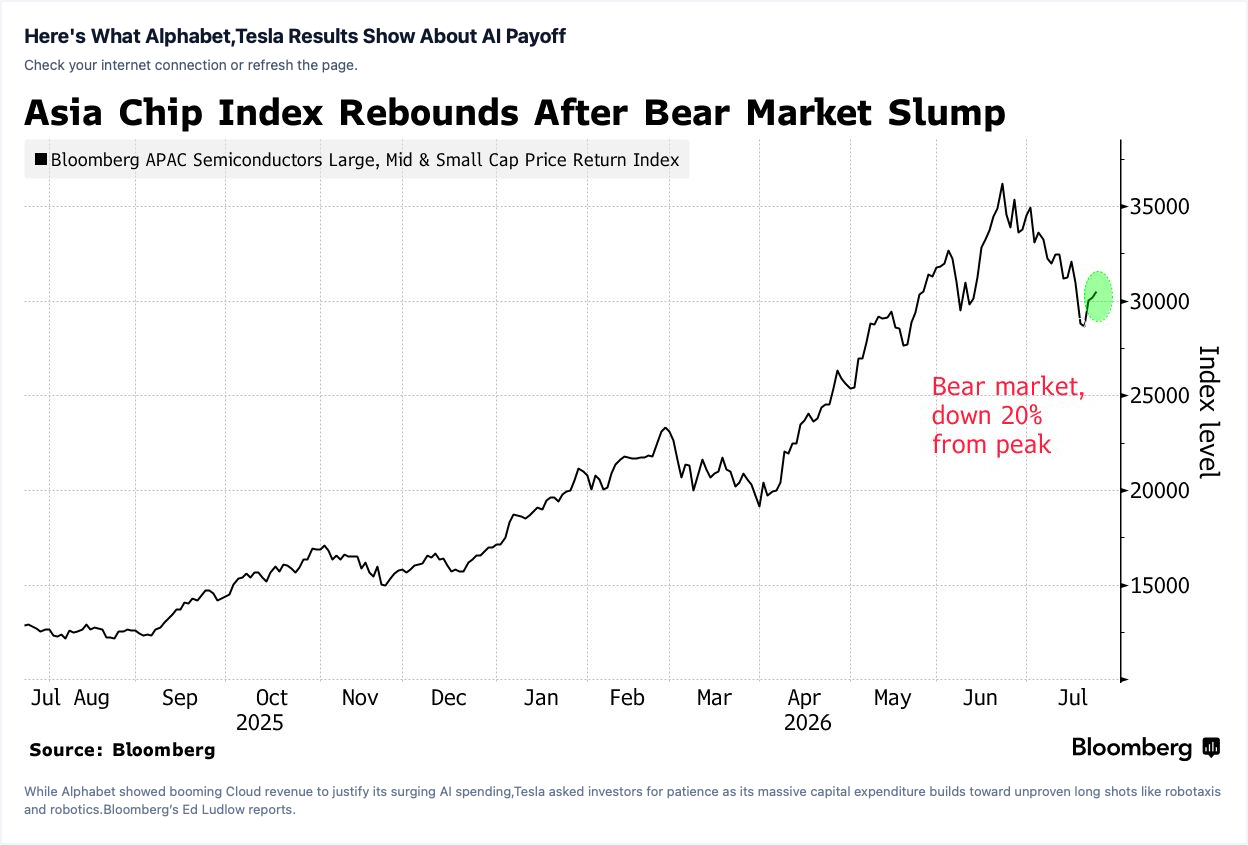
Asian semiconductor stocks rallied broadly after Alphabet announced plans to spend up to $200 billion this year on AI computing infrastructure, reigniting optimism about trickle-down benefits across the chip supply chain. Memory maker SK Hynix surged as much as 6.5% in Seoul, while Taiwanese chip designer MediaTek gained up to 5.2%. A Bloomberg gauge of Asian chip shares extended its rebound for a third consecutive day after sliding into bear-market territory last week.
Alphabet's second-quarter earnings helped ease the latest wave of concerns about the sustainability of the multi-year AI rally. Massive spending on data center infrastructure by US tech giants continues to drive product price increases and record profits for Asia's chipmakers. Evercore ISI analyst Mark Mahaney noted that Alphabet largely cleared the high bar set by expectations, calling it a positive read-through for the AI trade. Japanese chip-equipment makers Advantest and Lasertec were also among notable advancers.
Google's plans to develop its own tensor processing units have boosted shares of companies seen as beneficiaries, including MediaTek, as investors search for new winners beyond early AI leaders like Nvidia. Bloomberg Intelligence analysts noted that Alphabet's TPU and vertical integration strategy underpins a cost advantage over other foundation-model providers, and the company will likely be more aggressive than other hyperscalers in raising capital spending for 2027, as its custom-silicon advantage continues to support profitability.