记忆体价格飙涨不仅冲击财力雄厚的超大规模云端业者,也波及消费电子厂商,导致智慧型手机、个人电脑和游戏主机面临大幅涨价。运动相机厂商GoPro甚至因记忆体成本暴增而发出持续经营警告。苹果公司将iPad和Mac约两成的涨幅归咎于记忆体成本,非AI客户正游说美国官员确保资料中心不会吞噬所有DRAM供应。已有消费者和小型企业在美国提起集体诉讼,指控三大厂商联手限制供应、哄抬价格。(关键数字:20)
面对外界压力,三大记忆体厂商警告不应干预市场定价与产能决策,其行业协会建议华府以减税方式缓解高价冲击。美光宣布至2035年将在美国投资逾2,500亿美元兴建新厂及技术研发,同时有望获得64亿美元政府补贴及35%投资税额抵减。苹果则试图从中国厂商长鑫存储和长江存储采购以缓解短缺,但这些企业已遭美国国防部列入黑名单。文章最终指出,当寡头垄断企业以牺牲其他所有人的代价赚取空前利润时,冲突几乎无可避免。
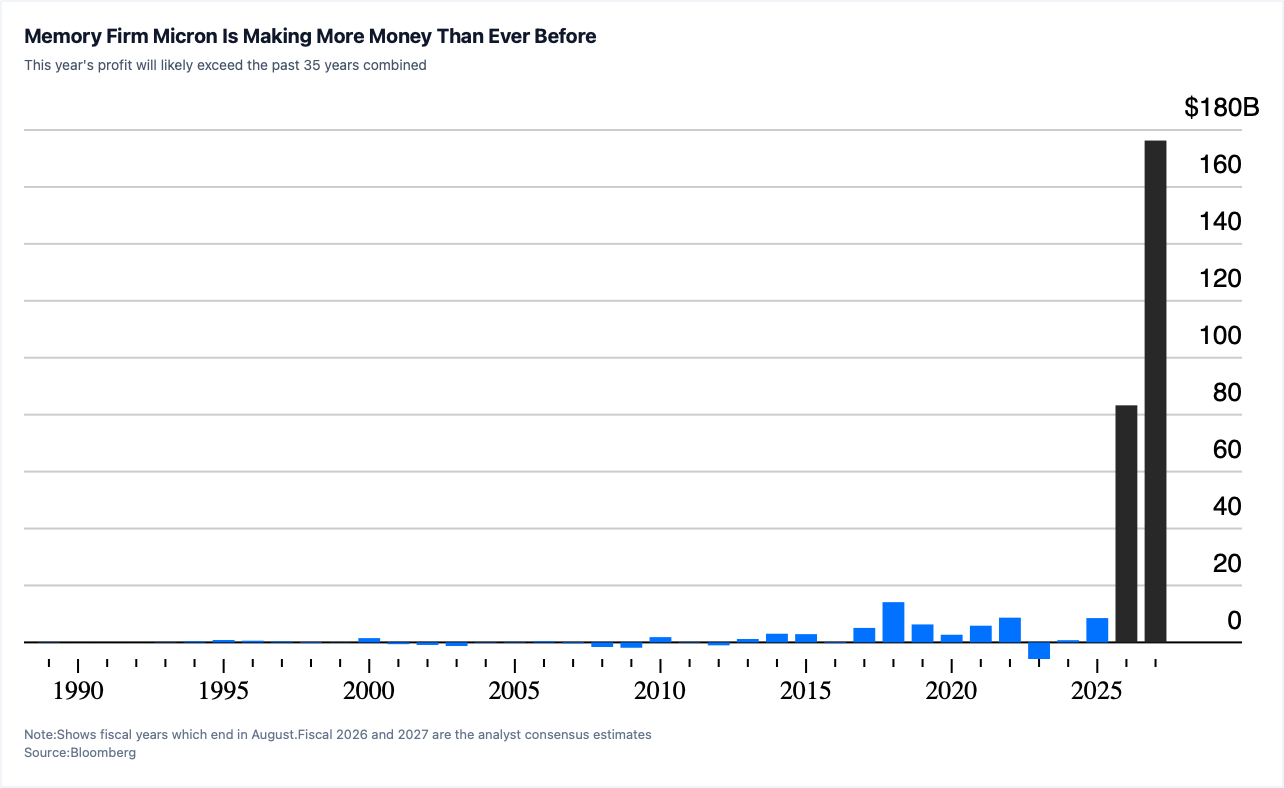
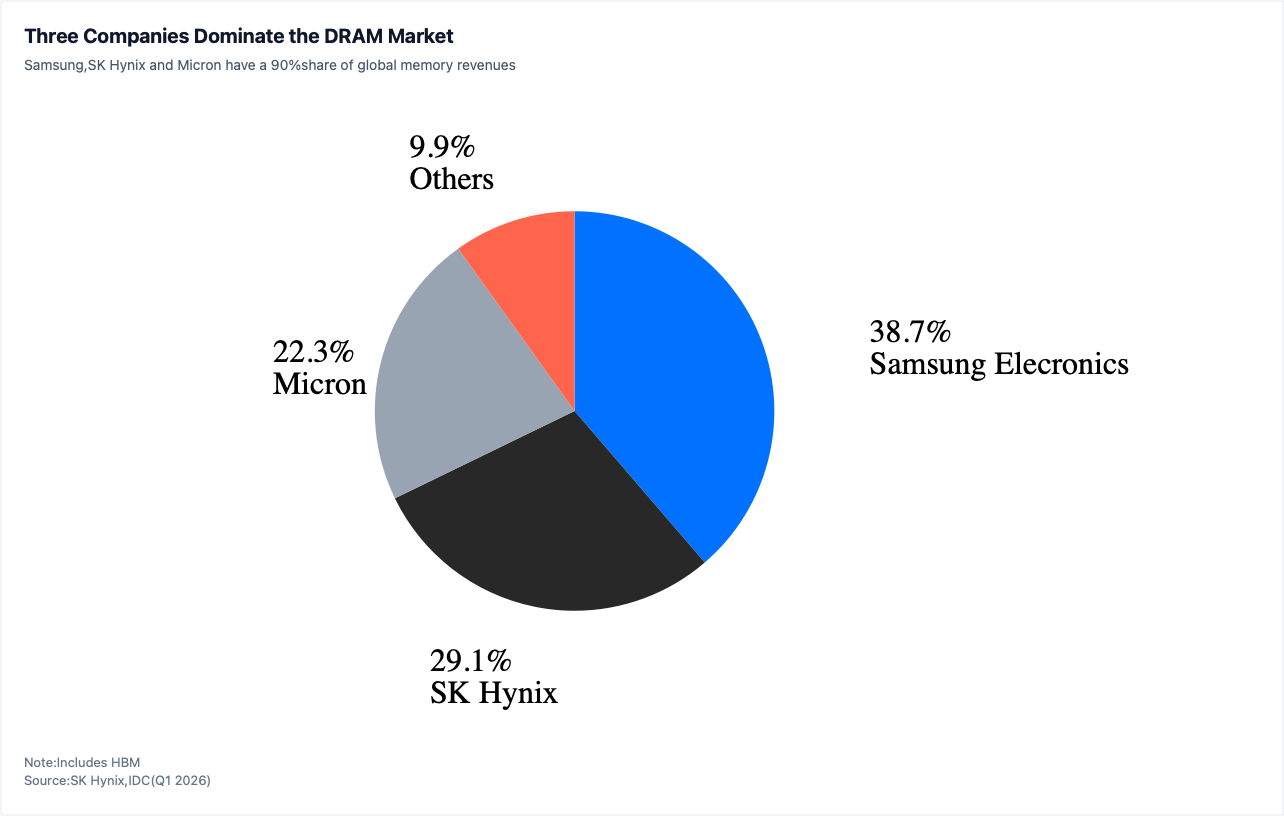
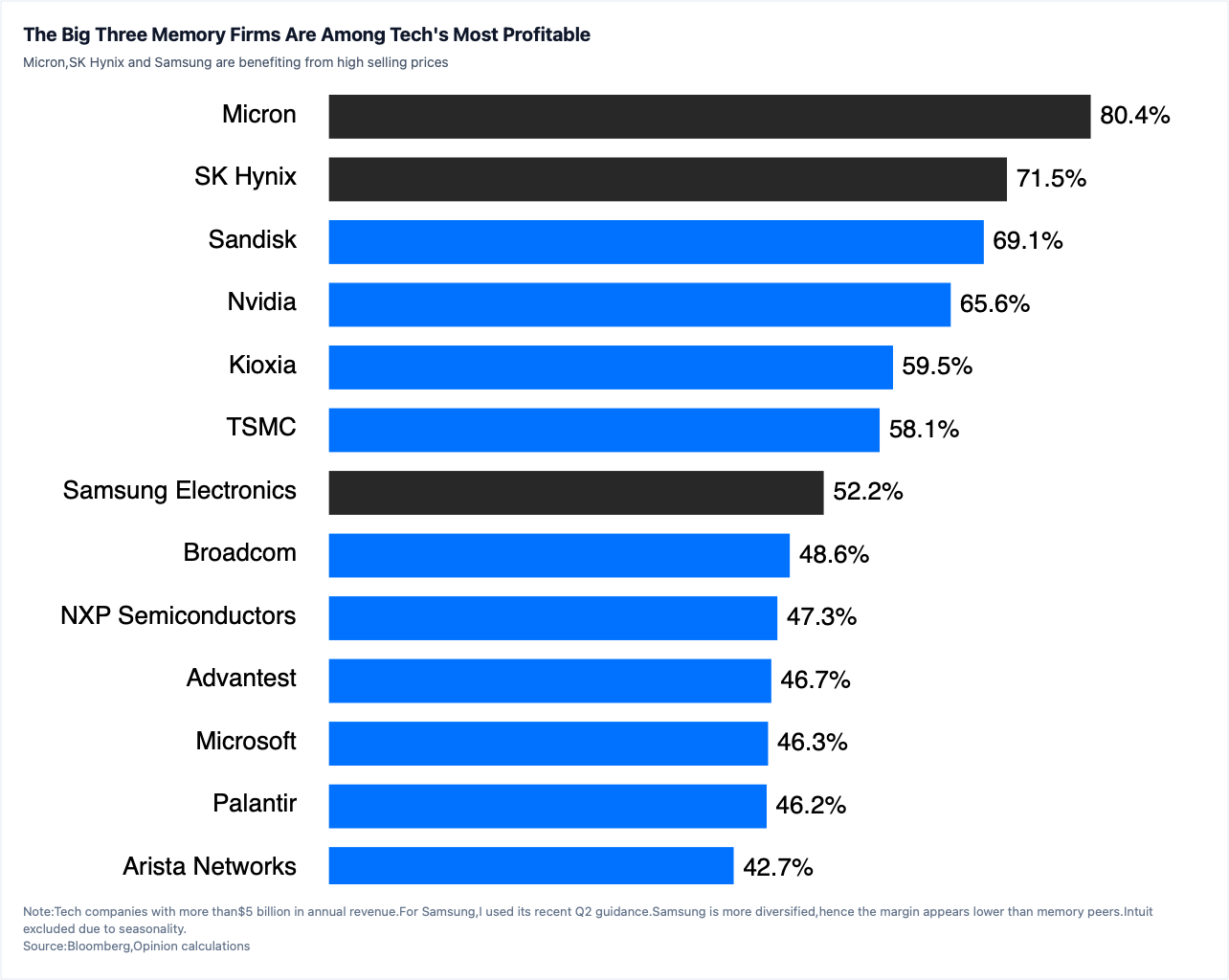
Micron Technology and its South Korean rivals SK Hynix and Samsung Electronics face an unprecedented memory chip shortage driven by surging AI data-center demand. The three companies control 90% of the DRAM market and virtually all high-bandwidth memory production. Micron's fiscal 2026 net profit is estimated at roughly $83 billion—exceeding its combined profits over the past 35 years—with operating margins reaching 80%, the highest among major tech firms. Because new fabrication plants take at least two years to build, the shortage is expected to persist until around 2028.
Soaring memory prices are squeezing not only hyperscale cloud operators, for whom memory will soon represent over a third of capital expenditure, but also consumer-electronics makers. Smartphones, PCs, and gaming consoles face significant price increases, and GoPro has issued a going-concern warning due to memory cost surges. Apple attributes its approximately 20% iPad and Mac price hikes to memory expenses. A putative class-action lawsuit has been filed in the US alleging that the three firms coordinated to restrict DRAM supply and inflate prices, while non-AI customers are lobbying US officials to prevent data centers from monopolizing available chips.
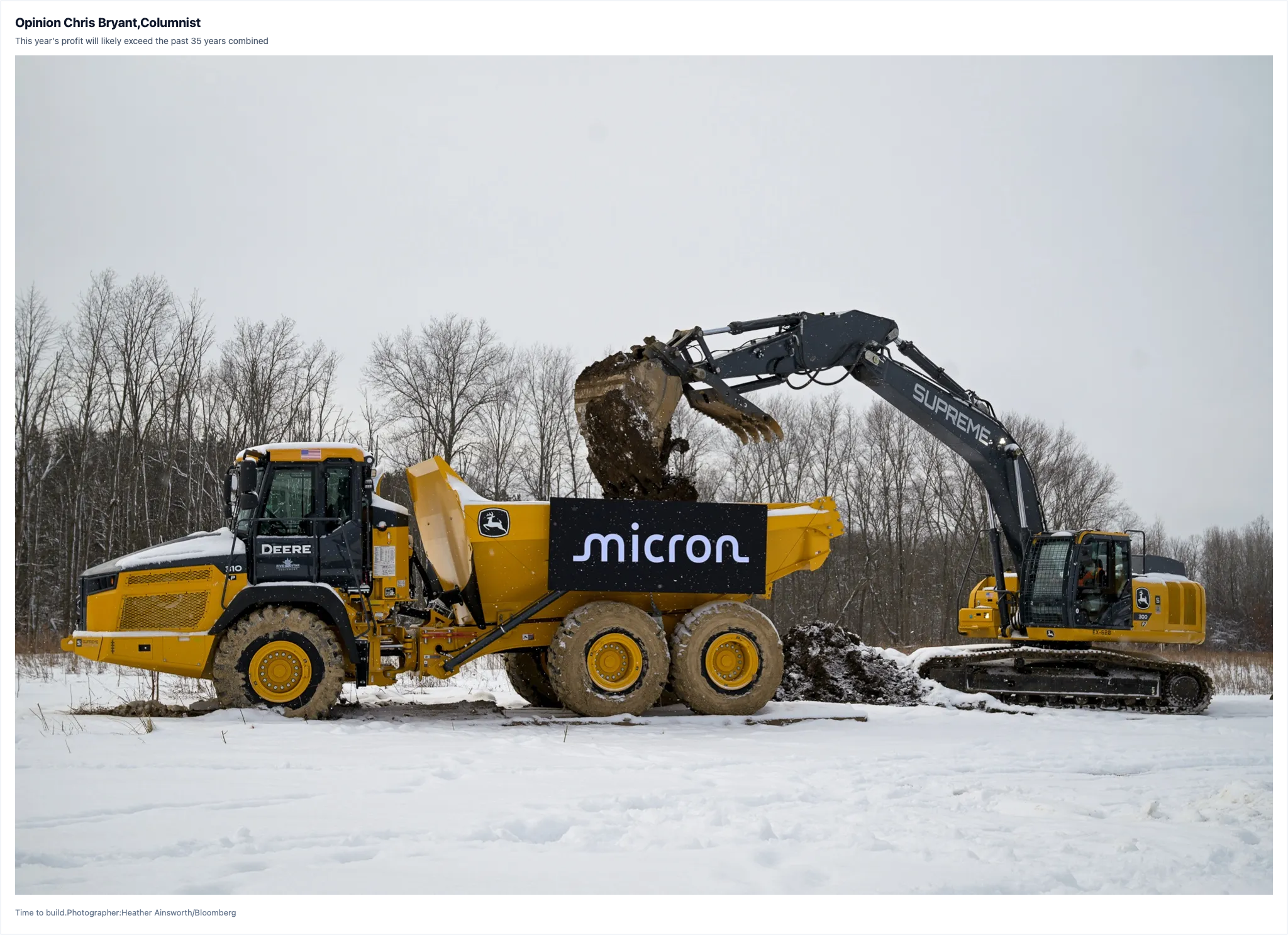
Under mounting scrutiny, the memory giants caution against government interventions that could distort pricing and capacity planning, while their trade group proposes tax relief to offset higher costs for end users. Micron has announced over $250 billion in US factory and R&D investment through 2035 and stands to receive $6.4 billion in government subsidies plus a 35% investment tax credit—raising questions about whether such assistance is warranted given its projected profits. Meanwhile, Apple is seeking permission to source chips from blacklisted Chinese manufacturers for devices sold in China. The article concludes that when an oligopoly earns record profits at everyone else's expense, conflict is virtually inevitable, though market forces such as memory-efficient data-center innovations may ultimately prove more effective than regulatory action.