将数据中心迁至太空在理论上可规避许多地面障碍:无需解决用地规划、取得通行权或等待电力接入,模组化设计使扩展更为灵活,在真空环境中不消耗水资源、不产生噪音,也不会引发市政争议。能源方面更具优势——在有利轨道上,卫星可获取近乎连续的高强度太阳能,效率可达地面同等阵列的五倍。此外,轨道数据中心对重型火箭发射的持续需求可能推动火箭量产与成本大幅下降,进而开启更广泛的太空商业与科学机会。
然而,太空数据中心仍面临诸多挑战:散热需要在太空中部署大规模散热器,这在技术上尚未经过验证;辐射可能损坏晶片或造成数据中断;数百颗卫星才能匹敌一座大型地面数据中心的产能,还可能加剧轨道拥挤和太空碎片问题。社论认为,即便太空数据中心可能在商业上不可行,决策者仍应积极建设太空发射基础设施、扩大太空港容量、简化发射审批流程并资助相关技术研发,因为这些举措无论数据中心计划成败,都将推动美国的太空探索与创新。
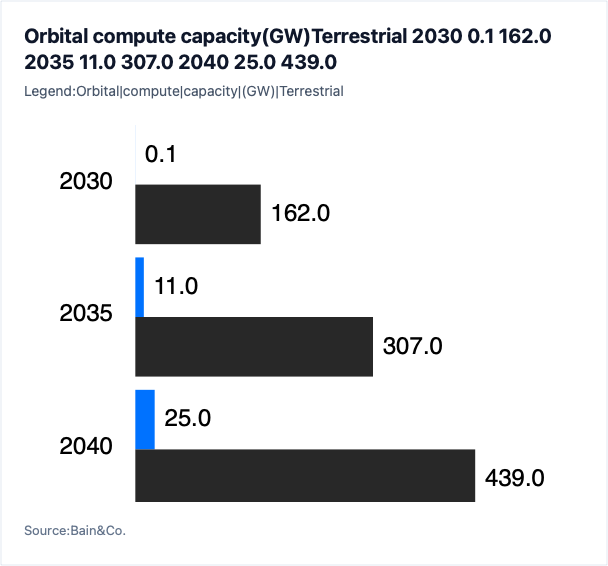
As data centers grapple with escalating costs, resource constraints, and mounting political resistance, prominent entrepreneurs such as Jeff Bezos, Elon Musk, and Eric Schmidt have floated the idea of processing and storing data on satellites in low-Earth orbit, powered by large solar arrays. Data centers are critical digital infrastructure, but building them requires vast amounts of land, energy, and water, along with navigating complex permitting, litigation, and public opposition—prompting some politicians to call for moratoriums or outright bans.
Relocating data centers to space could theoretically bypass many terrestrial hurdles: no zoning battles, no water consumption, no noise complaints, and modular scalability. Energy is a particularly compelling advantage—satellites in favorable orbits can harness near-continuous, high-intensity solar power at roughly five times the efficiency of ground-based arrays. Furthermore, the sustained demand for heavy-lift launches to service orbital data centers could drive rocket mass production, standardization, and dramatic cost reductions, potentially unlocking broad scientific and commercial opportunities in orbit.
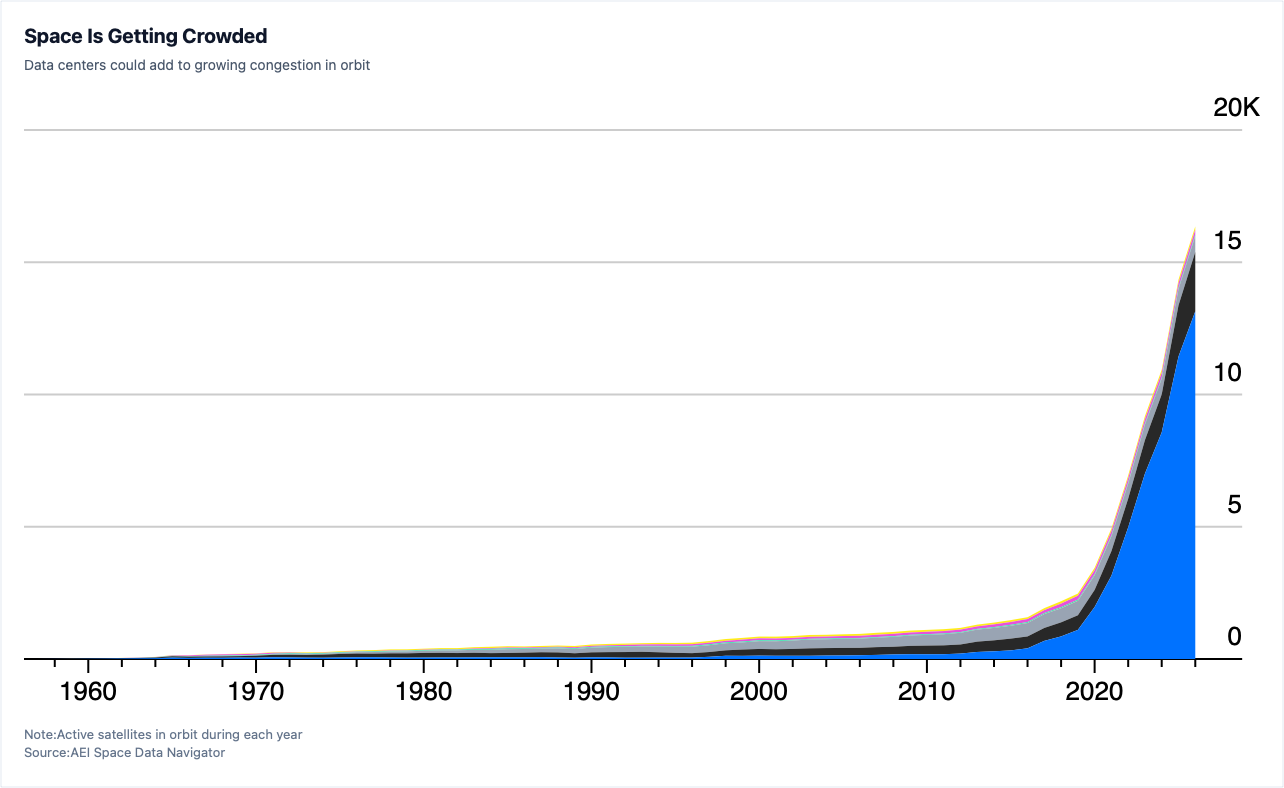
Nevertheless, significant challenges remain. Cooling at scale in space requires unproven large radiator systems; radiation threatens chip integrity and data reliability; and matching a single terrestrial data center's capacity could require hundreds of satellites, raising concerns about orbital congestion and debris. The editorial argues that even if orbital data centers prove commercially unviable, policymakers should invest in space-launch infrastructure—expanding spaceport capacity, cutting regulatory red tape, and funding R&D on enabling technologies like lightweight radiators and optical laser links—as these steps will accelerate American spacefaring and innovation regardless of the data-center outcome.