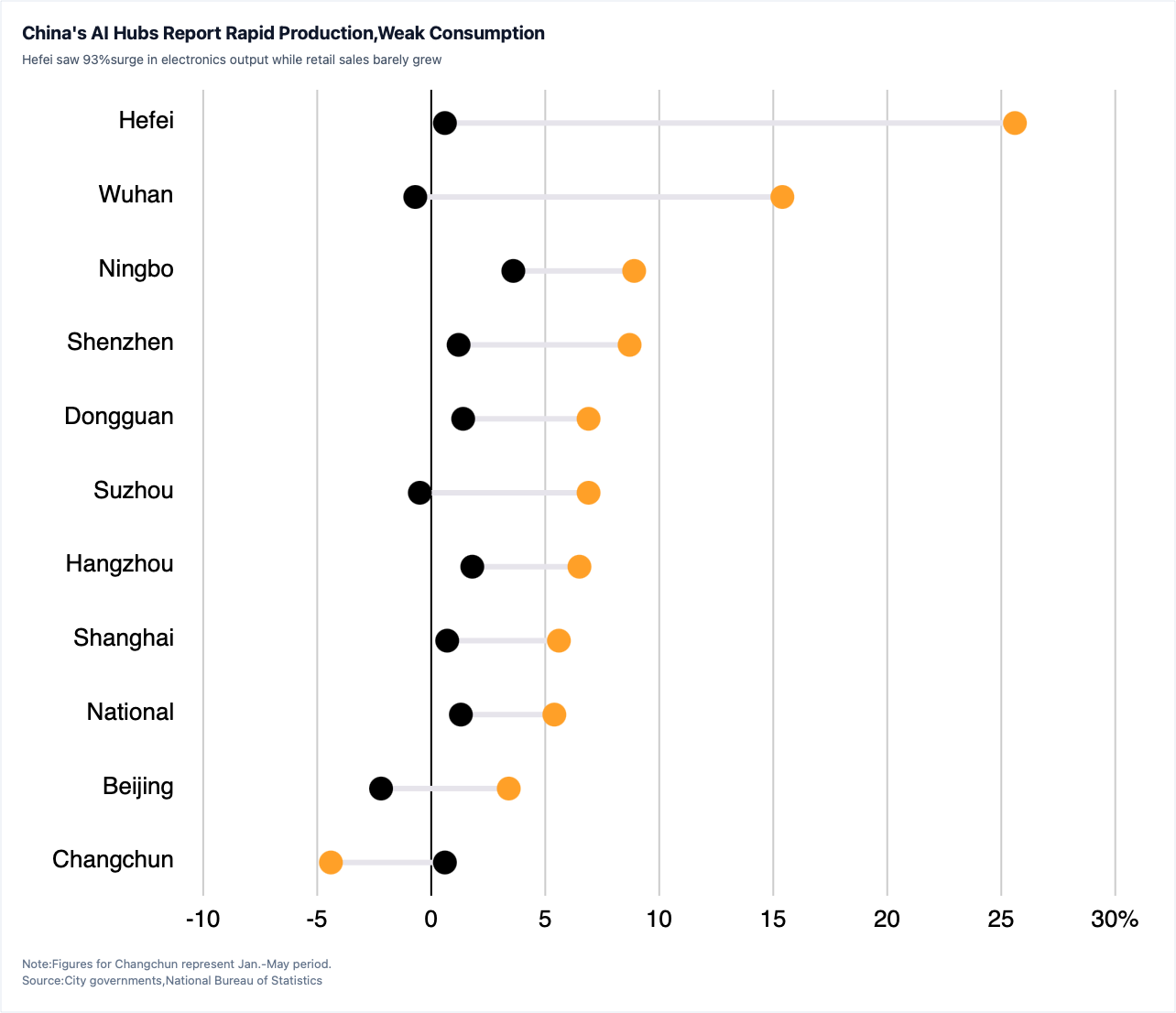
然而,这种由人工智慧驱动的经济红利并未普遍惠及一般家庭,由于自动化技术和临时劳工的广泛使用,许多新兴科技城市的零售销售额反而呈现萎缩态势。
科技重镇与依赖传统产业地区(如长春)之间日益扩大的经济鸿沟,可能会使中国的政策应对变得更加复杂,高层官员已暗示将对整体经济放缓采取审慎的态度。
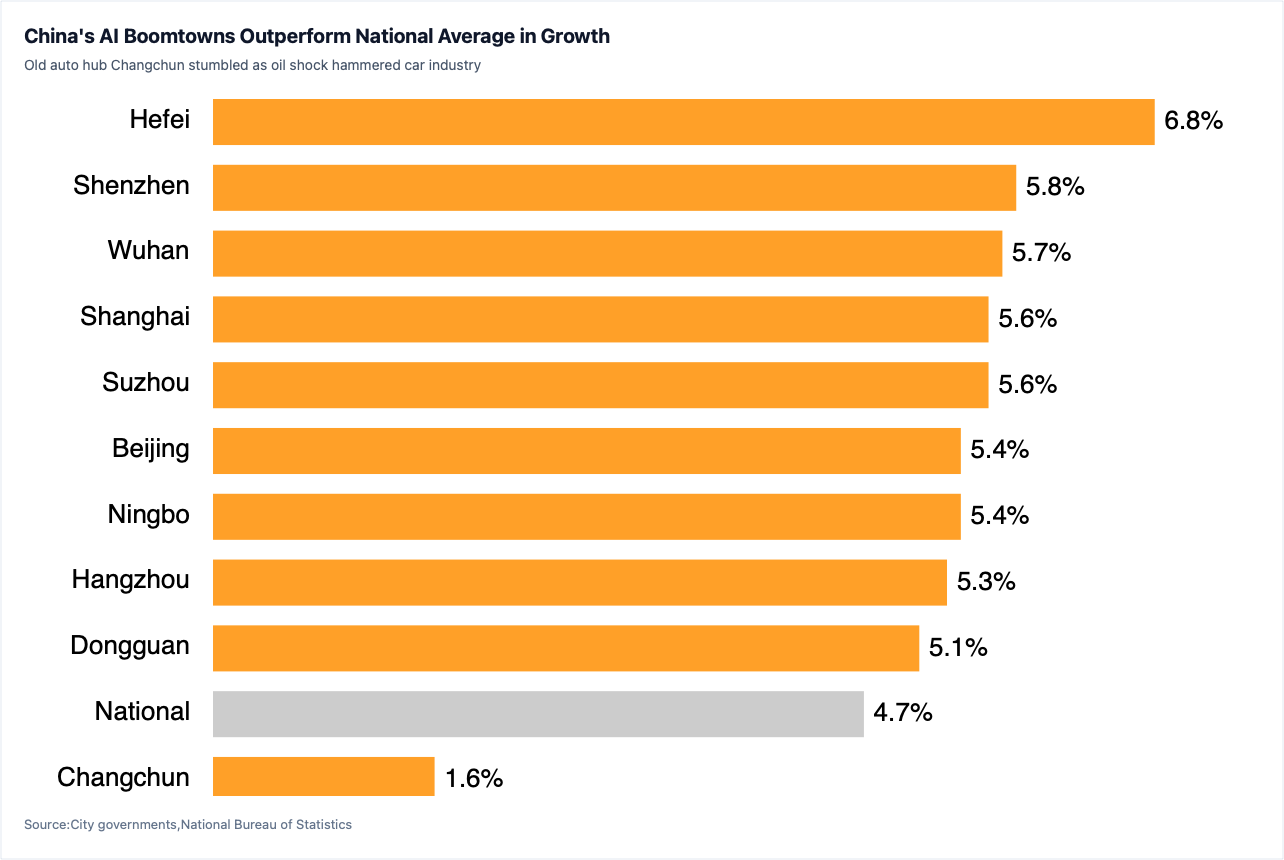
The global artificial intelligence boom is driving economic growth in a handful of Chinese tech hubs, with cities like Hefei contributing their largest share of China's growth in at least two decades during the first half of the year.
However, this AI-driven economic windfall has hardly reached ordinary households, as retail sales are actually shrinking in many of these boomtowns due to the widespread adoption of automation and reliance on temporary labor.
The widening economic divide between tech hubs and regions reliant on traditional industries, such as Changchun, could complicate China's policy response, with top officials already signaling a measured approach to the broader economic slowdown.