研究表明,AI对就业的冲击取决于其应用模式:在主要自动化任务的职位上,就业呈现疲软,而AI作为辅助工具的职位则相对稳定。金融业由于包含大量行政与客户服务等易受自动化影响的办公支援职务,因而显得特别脆弱,且相关失业申领数据在AI高曝险族群中已出现上升迹象。
尽管宏观经济学家认为目前评估AI的广泛影响仍为时过早,且部分影响主要透过放缓招聘与自然减员而非大规模裁员来体现,但企业将AI视为削减成本手段的趋势明显。对于相关从业人员而言,求职周期大幅拉长与就业市场的不确定性已带来实质压力。
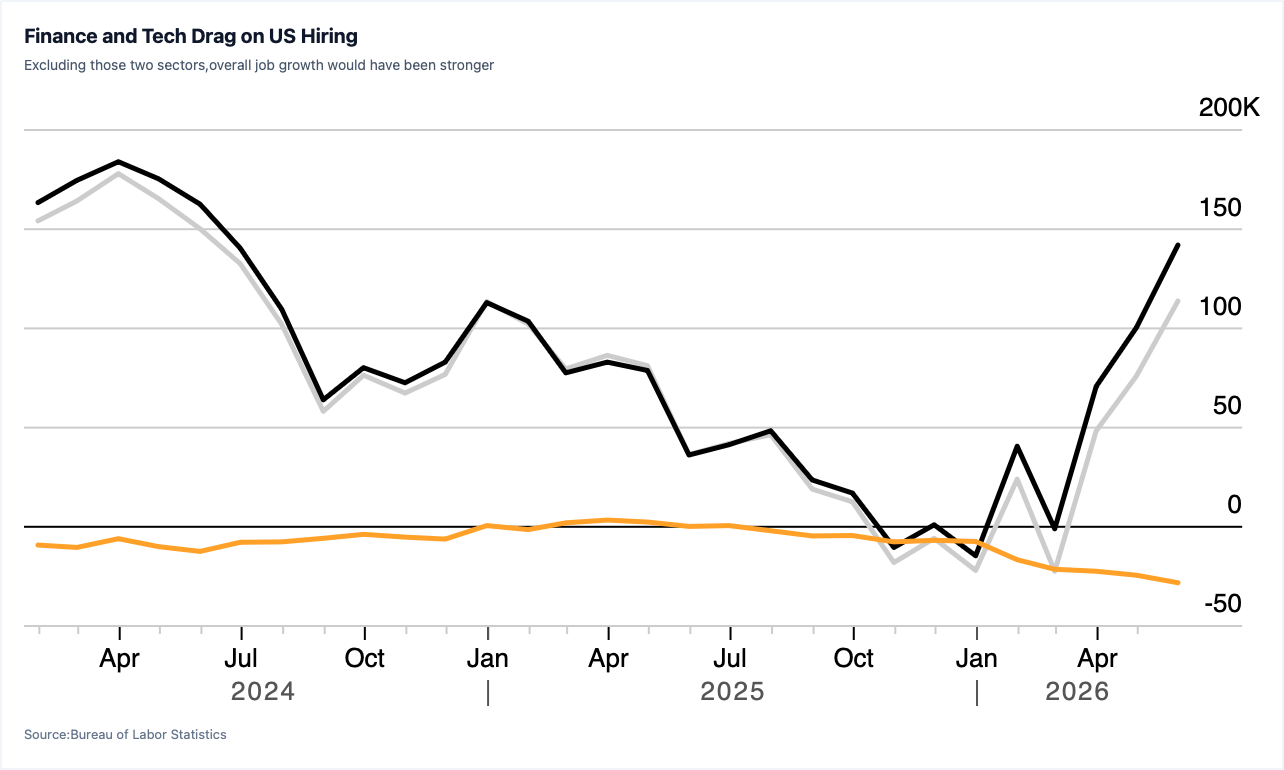
In 2026, payroll declines in the US financial-activities and information sectors accelerated to an average loss of 28,000 jobs per month, dragging down an otherwise robust broader labor market. Following substantial AI investments, tech companies and top banks are increasingly citing the technology as a primary factor in cutting headcounts and eliminating roles.
Research indicates that AI's labor impact hinges on deployment methods, weakening employment where tasks are automated while sustaining roles where it augments human work. The financial sector appears particularly vulnerable due to its high proportion of administrative and support jobs, with state-level data already showing elevated unemployment claims among workers with high AI exposure.
While macroeconomists note it is still early to detect widespread impacts—with effects possibly emerging through slower hiring and attrition rather than sudden layoffs—firms are actively using AI to cut costs following heavy investments. For industry workers, this translates into noticeable hiring slowdowns, extended job search timelines, and heightened career uncertainty.