一项发表于《自然》期刊的研究指出,现代宇宙学的基石可能正在动摇,因为观测数据显示宇宙在最大尺度上可能并非在每个方向都表现一致。研究团队发现,巨大的星系丝状结构与长城在数十亿光年的尺度上依然保持对齐与互连,挑战了宇宙在足够大尺度上会趋于均匀的传统假设。
研究人员分析了暗能量光谱仪(DESI)观测到的近4700万个星系的位置,利用新型统计方法测量大尺度结构。他们发现,即使在接近32.6亿光年(约1个吉秒差距)的尺度上,数百万对星系的取向仍保有连贯的图样,并未如预期般随观测范围扩大而融入均匀的无特征背景中。
尽管这项发现并非意指宇宙拥有单一的特定轴线或「宇宙之箭」,但它显示宇宙网在大尺度上仍具有高度组织性。如果此结果获得未来研究与更大型数据集的独立证实,宇宙学家将需要重新思考大尺度均匀性是如何产生的,并重新审视现有的暗物质与重力模型。
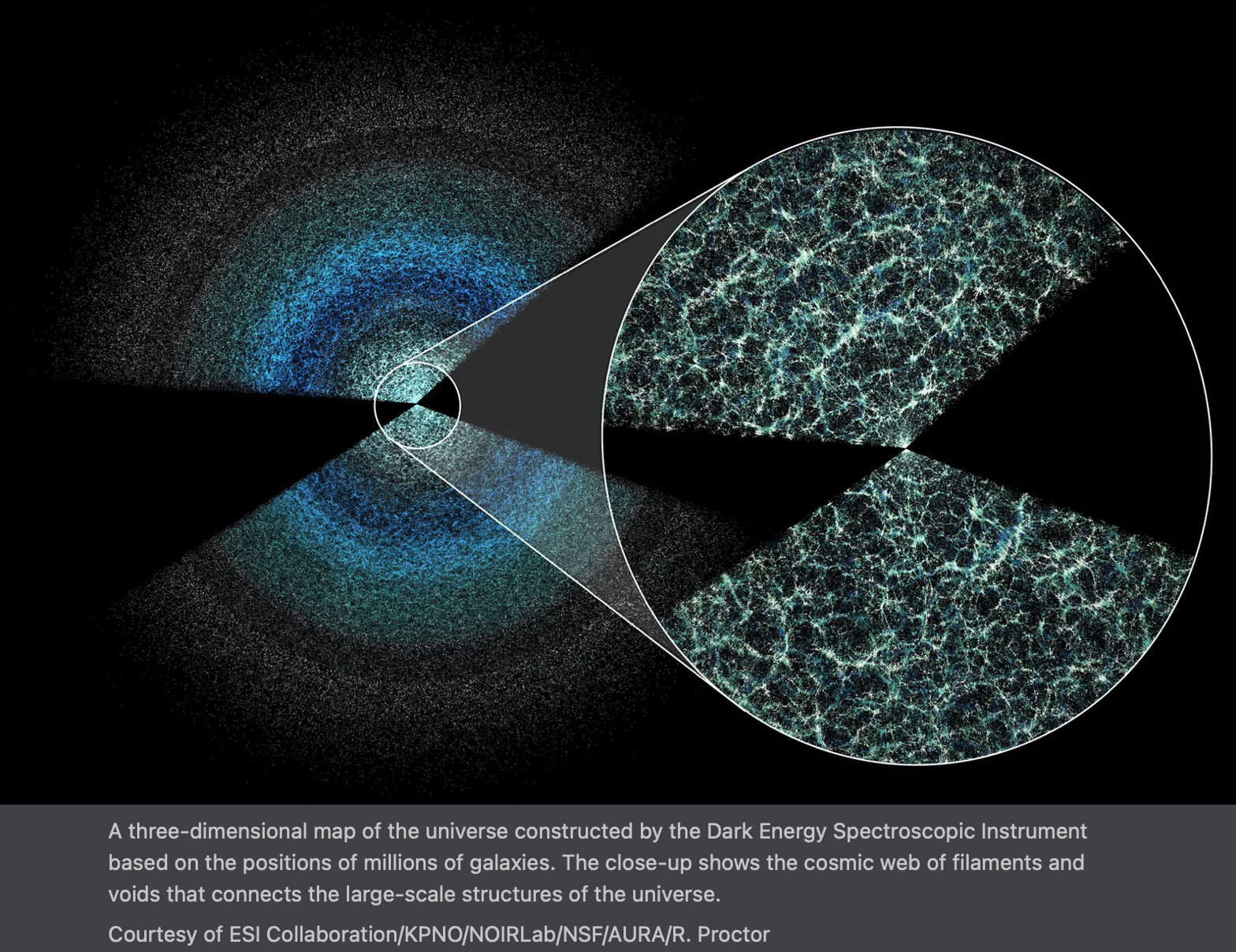
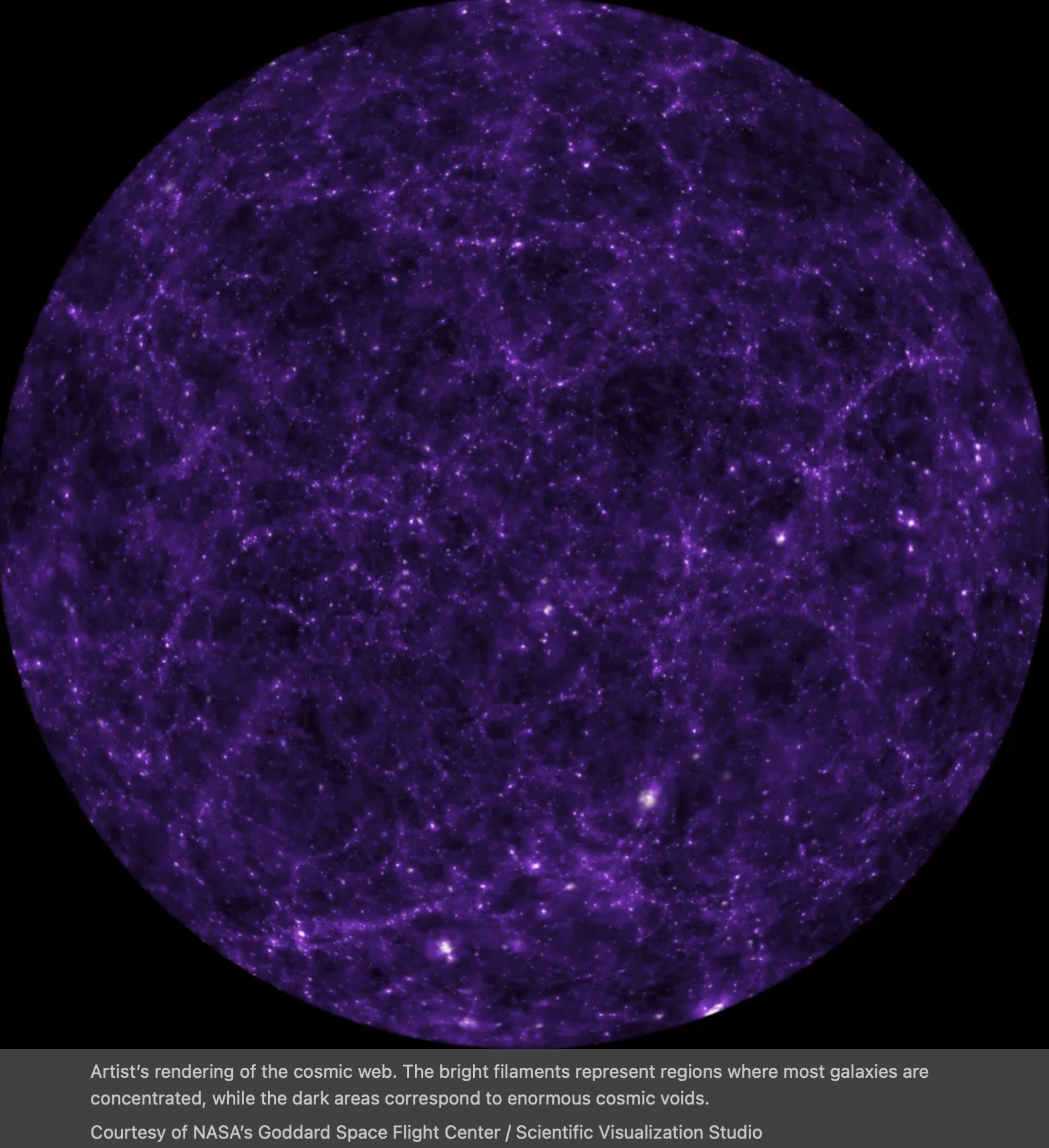
A study published in Nature suggests that the fundamental pillars of modern cosmology may be beginning to wobble, as evidence reveals the universe may not behave the same way in every direction on the largest observable scales. The research team discovered that enormous filaments and walls of galaxies remain aligned and interconnected across billions of light-years, challenging the traditional assumption that the universe becomes uniform on sufficiently large scales.
The researchers analyzed the positions of nearly 47 million galaxies observed by the Dark Energy Spectroscopic Instrument (DESI) using a new statistical method to measure large-scale structure. They found that the orientations of millions of galaxy pairs retain coherent patterns even on scales approaching 3.26 billion light-years (about one gigaparsec), rather than fading into a featureless, uniform background as the field of view expands.
Although this finding does not imply that the entire universe has a single preferred axis or "cosmic arrow," it demonstrates that the cosmic web remains organized on progressively larger scales. If these results are independently confirmed by future studies and larger datasets, cosmologists may need to reconsider how large-scale uniformity emerges and reassess current models of dark matter and gravity.