仅亚马逊和 Alphabet 本半年度就发行了约相当于 700 亿美元的债务,而全球由人工智慧驱动的债券发行规模已超过 4450 亿美元,超大规模云端巨头正实质上对新兴市场形成排挤效应。与此同时,新兴市场主权债券发行量大幅腰斩,开发中国家到年底前还有约 277 亿美元的美元与欧元外债即将到期,其中沙乌地阿拉伯和土耳其的再融资需求最为迫切。
随著低利率时代划下句点,债券投资人纷纷在获利丰厚的高科技企业债券与新兴市场主权债之间做权衡,特别是投资等级新兴市场主权债面临较大的借贷成本压力。虽然部分追求资产多元化的投资者仍会配置优质新兴市场债券,但对于财政赤字庞大且经济成长疲弱的政府而言,在资本日趋稀缺且资金昂贵的环境下,融资代价将更为高昂。
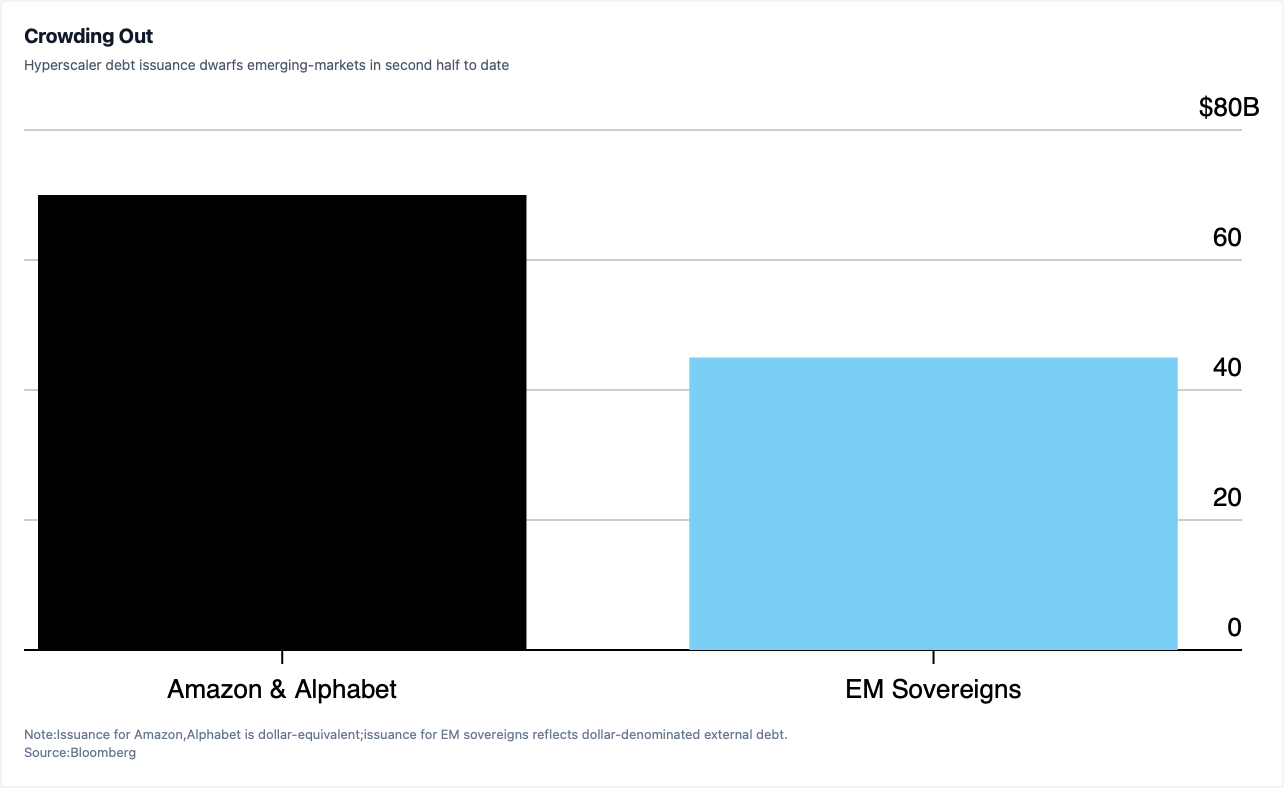
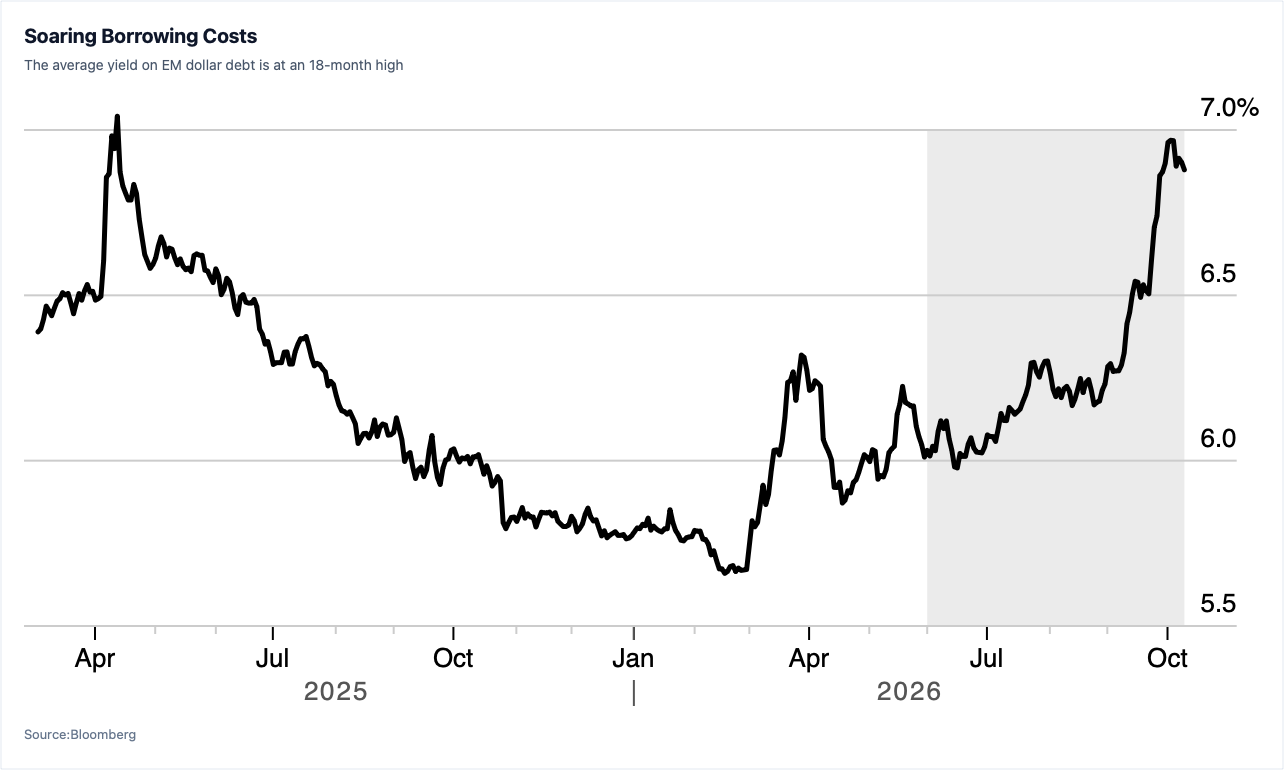
A debt binge by technology giants to finance artificial intelligence infrastructure is pitting them against governments in a race for capital, driving up borrowing costs for developing economies. The average yield on emerging-market dollar bonds has jumped significantly this half to reach its highest level since April last year, creating substantial hurdles for governments seeking to refinance maturing debt.
Hyperscalers like Amazon and Alphabet alone have issued roughly 70 billion dollars in debt this half, contributing to global AI-driven debt issuance exceeding 445 billion dollars this year and threatening to crowd out emerging-market sovereign borrowers. In contrast, emerging-market eurobond sales have fallen by half, adding pressure as developing nations face roughly 27.7 billion dollars in dollar- and euro-denominated debt maturing by year-end, led by Saudi Arabia and Turkey.
As the era of cheap capital comes to an end, bond investors are increasingly forced to be selective between high-yielding debt from profitable AI leaders and emerging-market sovereigns, putting particular pressure on investment-grade emerging-market nations. While high-quality emerging sovereign debt still attracts demand as a portfolio diversifier away from heavy hyperscaler concentration, governments with weak economic growth and fiscal instability will face steep borrowing costs in an environment of scarce capital.