尽管出口表现强劲,中国国内需求与投资却持续疲软。随著以旧换新补贴效应消退与汽车销量大幅下滑,9月份零售销售年增率预计仅微升0.5%,创下现代史上最疲弱的纪录之一;同时,受房地产低迷及私营企业悲观情绪影响,前九个月固定资产投资预计将萎缩7.3%。
为稳定经济,中国政府自9月下旬以来加速发行公债支持基础设施建设,并推出房贷补贴、扩大央行对科技与基建的资金支持,以及向地方省份提供额外820亿美元的支出额度。然而,多数经济学家认为若缺乏支持家庭收入与消费的决定性政策转向,现有措施仅足以勉强达成今年的成长底线,且在贸易保护主义升温与内需不振的双重压力下,国际货币基金组织预测2027年中国经济成长率将进一步放缓至4%。
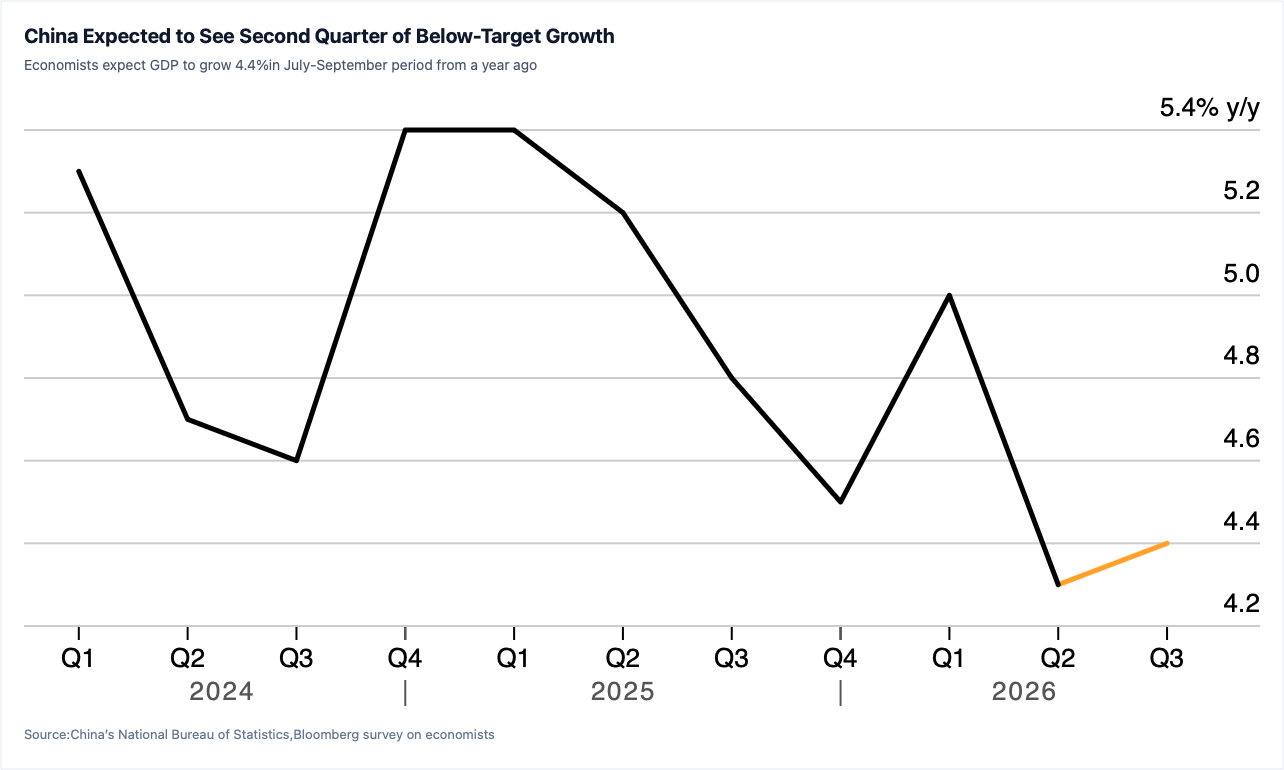
China's economy is headed for a second consecutive quarter of growth below the official annual target of 4.5% to 5%, as recent stimulus measures arrived too late to make an immediate impact. Economists polled by Bloomberg estimate third-quarter GDP rose 4.4% year-on-year, a slight improvement from 4.3% in the second quarter, driven largely by surging exports and accelerated industrial output amid the global artificial intelligence investment boom.
Despite resilient exports, domestic demand and investment remain severely subdued. With the boost from trade-in subsidies fading and car sales slumping significantly, September retail sales are projected to inch up just 0.5% from a year ago, marking one of the weakest readings in modern history, while fixed-asset investment is expected to contract by 7.3% over the first nine months due to the ongoing property depression and private-sector pessimism.
To stabilize growth, Beijing has accelerated public bond sales for major infrastructure projects since late September, alongside rolling out mortgage subsidies, expanding central bank funding for technology and infrastructure, and granting $82 billion in additional spending power for provinces. However, economists warn that without a decisive policy shift toward boosting household incomes and consumption, these incremental steps will only do just enough to secure the full-year target, with the IMF projecting growth to slow further to 4% in 2027 amid rising trade protectionism and weak domestic demand.