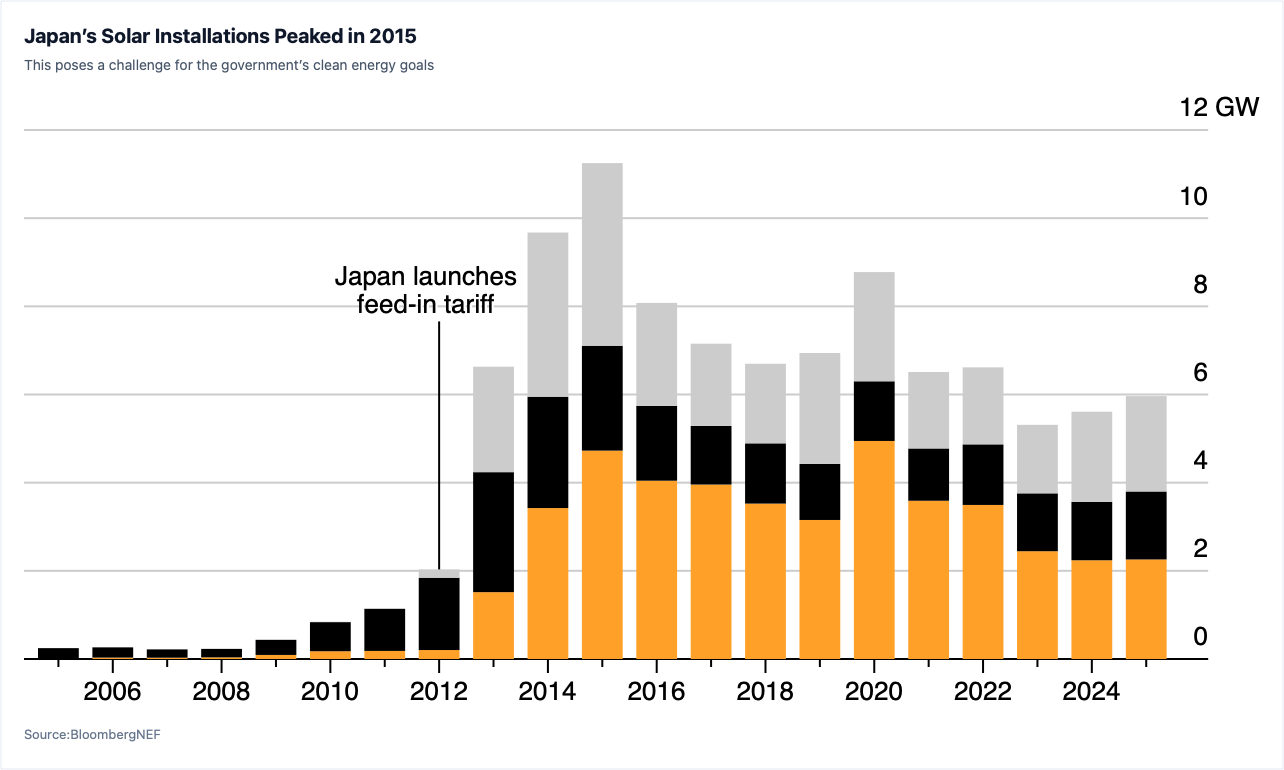
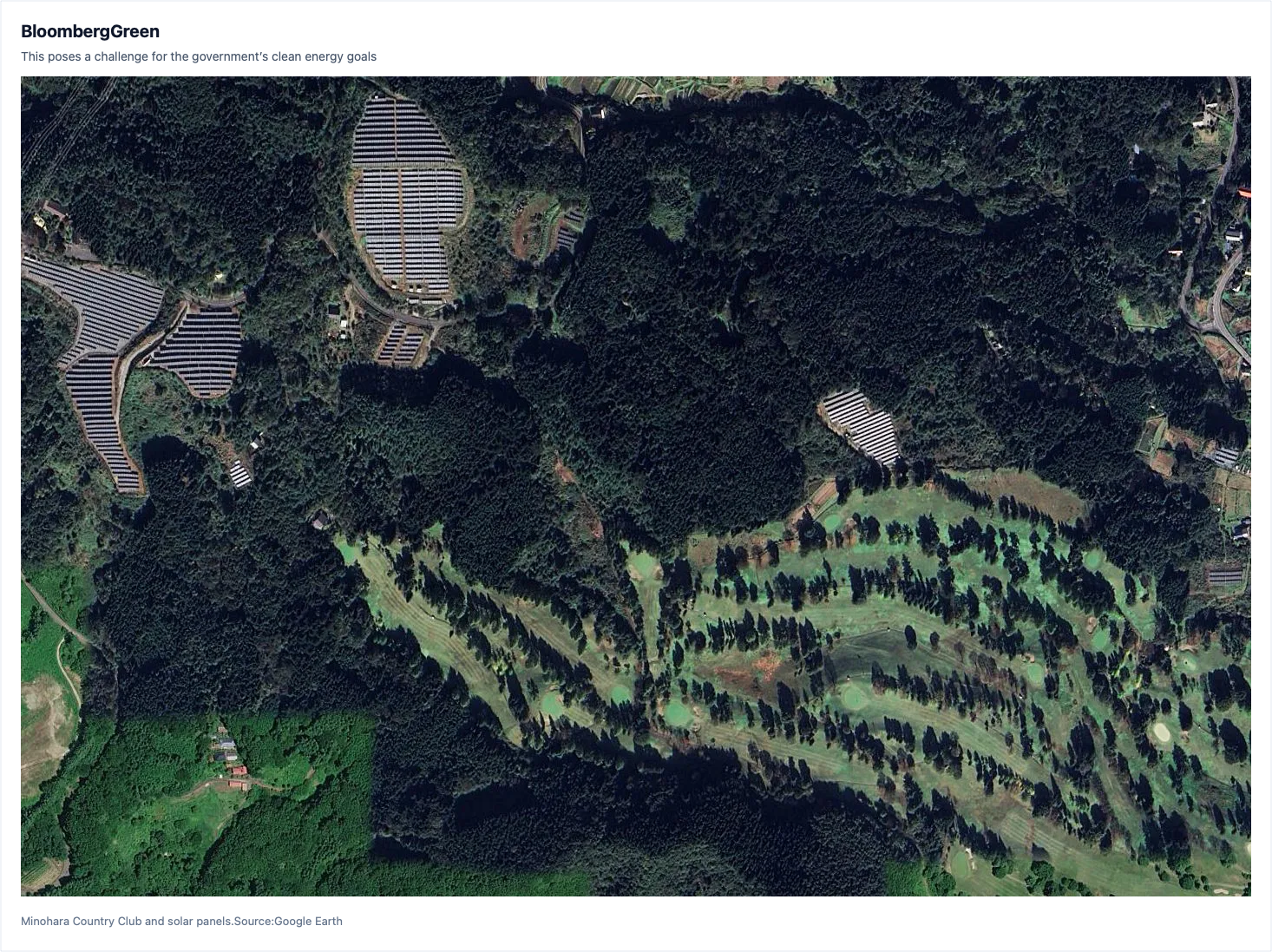
2011年福岛核灾后,日本政府曾透过优渥的固定收购电价补贴推动太阳能热潮,但随后补贴调降,加上地方居民对水土保持与景观破坏的抗议,让建设进度明显放缓。面对政府设定2040年太阳能发电占比达29%及2050年实现净零碳排的挑战目标,收购像群马县蓑原乡村俱乐部这类因少子化与高尔夫热潮消退而亏损经营的球场,成为业者维持大型专案推进的可行策略。
利用旧球场开发太阳能不仅能有效降低大规模砍伐树木引发的环境争议,目前日本亦有至少1吉瓦的太阳能建置计划位于球场土地。然而,高尔夫球场数量终究有限,开发商已开始转向废弃农地或小型场域,政府与产业亦著眼于未来钙钛矿等新一代太阳能电池的普及,但在新技术商业化前,废弃高尔夫球场仍是日本现阶段推进大型太阳能专案的最佳管道。
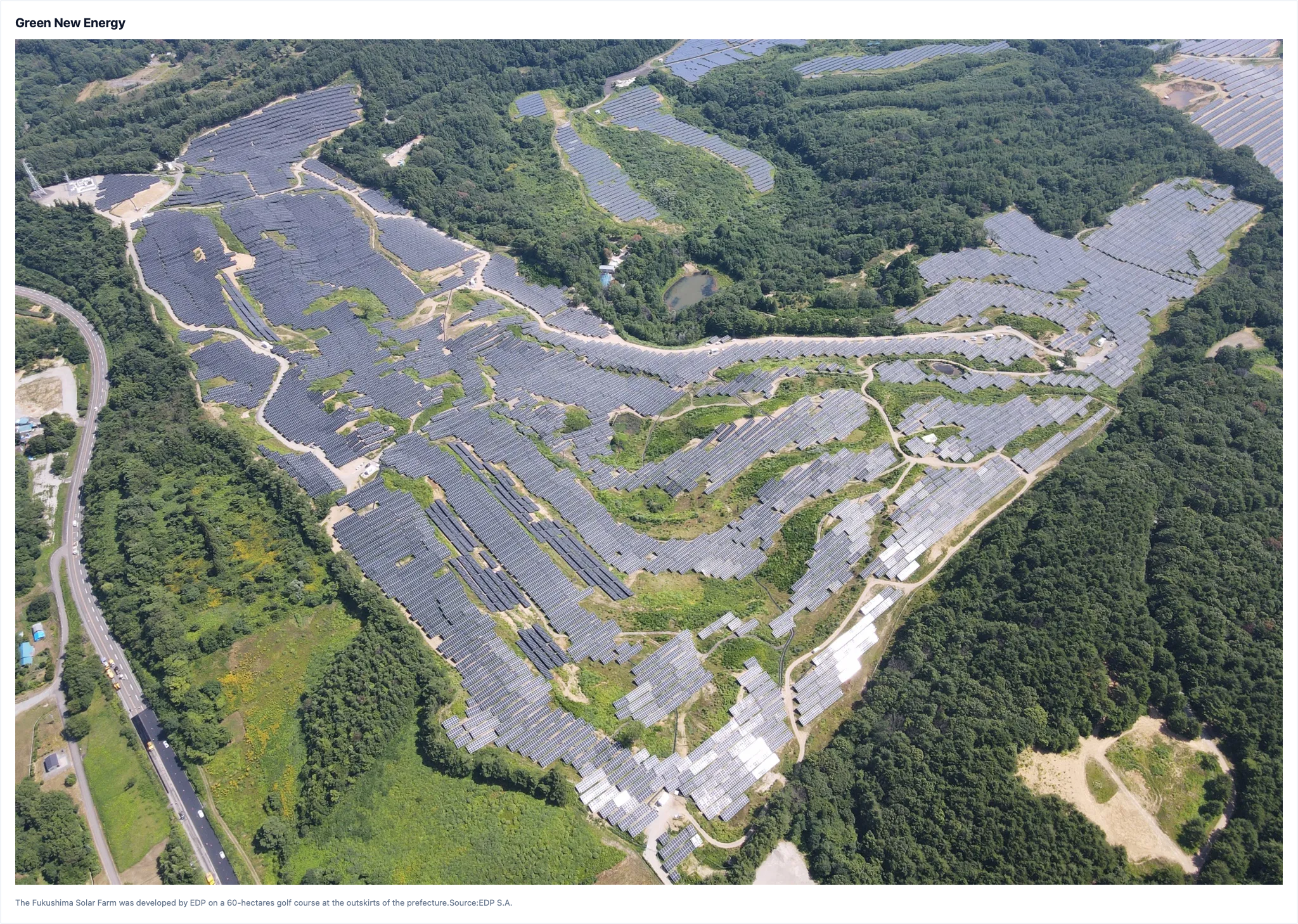
In densely populated and mountainous Japan, utility-scale solar developers are facing a critical land shortage, turning to golf courses built during the 1980s bubble economy as valuable tracts of open land. Approximately 9% of the country's utility-scale solar capacity is now sited on former golf courses, which provide ideal conditions for mega-solar projects due to their relatively flat terrain, excellent sunlight exposure, and convenient grid access.
Following the 2011 Fukushima nuclear disaster, Japan experienced an initial solar boom supported by generous feed-in tariffs, but installation growth slowed as subsidies were cut and local concerns over deforestation and landslides increased. With the government aiming for solar to supply 29% of national electricity by 2040 and targeting net-zero emissions by 2050, acquiring unprofitable golf courses—such as Gunma Prefecture's Minohara Country Club amid shifting demographics—has emerged as a key strategy to sustain large-scale buildouts.
Repurposing golf courses allows developers to scale clean energy capacity while avoiding the major environmental backlash associated with clearing natural forests, with at least 1 gigawatt of solar projects currently announced or underway on such sites. Nevertheless, available courses remain finite, prompting companies to explore abandoned farmland and bet on emerging technologies like perovskite solar cells, though golf courses remain the most viable short-term solution for major solar installations in Japan.