面对大型语言模型存在的逻辑漏洞与潜在错误,商学院开始反思教学定位,普遍认为未来的商业领袖核心竞争力将在于监督与验证 AI 的产出,而非亲自进行基础产制。为此,部分顶尖院校开始强调思考过程而非仅看最终答案,要求学生针对 AI 提供的推论进行质疑、比较与辩护;然而,教育专家也指出,若缺乏扎实的基本功与实作练习,学生将难以培养出足以辨识「AI 劣质产出」所必需的深厚专业素养。
在具体的教学策略上,各商学院对 AI 的整合程度呈现明显分歧,从维持无科技环境到全盘拥抱皆有。同时,学生写作能力与批判性思维的退化成为教育界普遍面临的重大挑战;多数教授逐渐意识到,单纯开放 AI 工具往往会促使学生寻求捷径,因此当前教学设计的关键,在于如何精心架构人机互动的鹰架,既融合适度的人工智慧辅助,又能引导学生深入探索并维持严谨的学术要求。
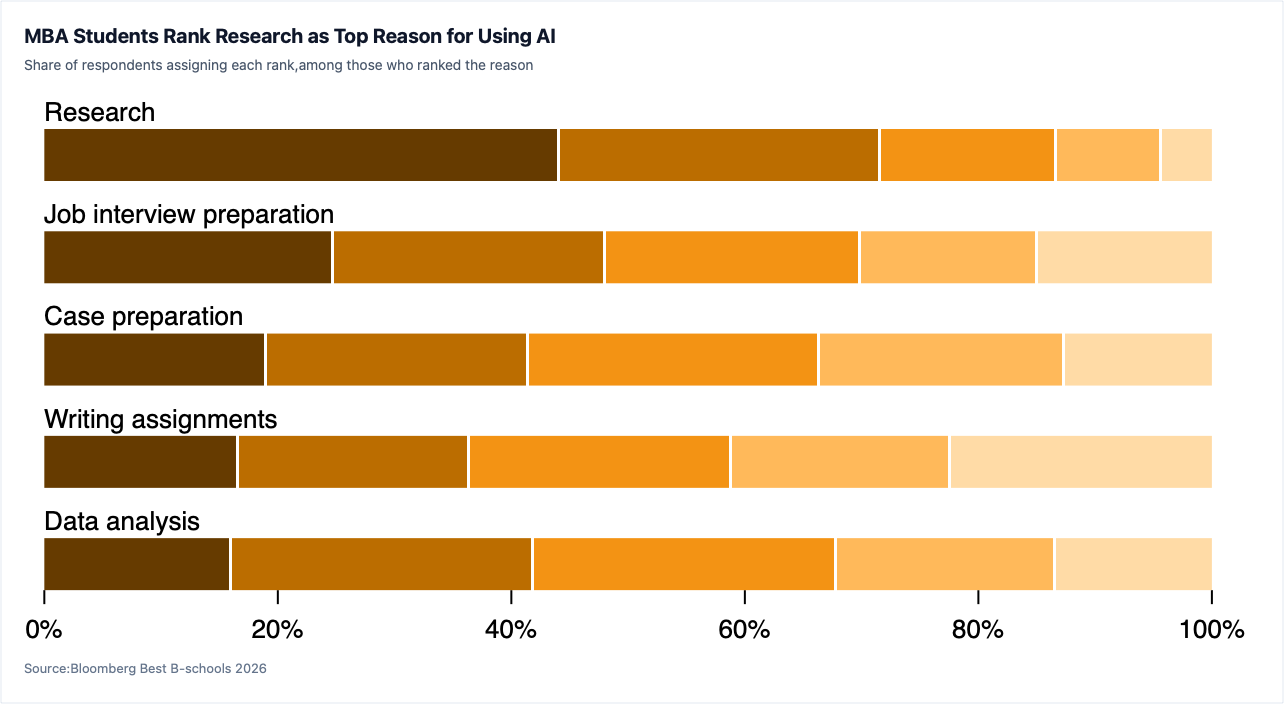
Since the emergence of generative AI, leading business schools—spearheaded by early adopters like Wharton—have aggressively integrated the technology into their curricula, utilizing it for case analyses, virtual tutoring, and career coaching. While AI drastically accelerates data processing and reshapes post-graduation workplace realities, its rapid adoption has simultaneously triggered deep concerns over cognitive offloading, threatening to diminish students' independent thinking and render traditional assessment methods obsolete.
Given that large language models remain prone to ungrounded conclusions and logical fallacies, business educators increasingly believe future graduates must focus on specifying and critically verifying AI-generated models rather than pure production. Consequently, forward-looking institutions are shifting their evaluations toward the analytical process, prompting students to scrutinize and defend AI outputs; nevertheless, experts caution that without hands-on mastery of fundamental coursework, students cannot develop the domain expertise required to detect flawed AI content.
Across institutions, pedagogical responses diverge sharply, ranging from strict classroom technology bans to fully AI-infused curricula. Amid widespread alarm over the decline of student writing and critical thinking, faculty members are recognizing that unmonitored AI access often encourages lazy shortcuts; the evolving challenge now lies in architecting deliberate instructional scaffolding that balances innovative machine assistance with traditional rigor, ultimately fostering curiosity and deep intellectual inquiry.