研究者认为,BDC贷款利率的异常攀升并非单纯反映信用风险的增加。银行内部的信用评估并未出现明显恶化,且银行对BDC贷款的违约损失率估计反而更低。真正的原因在于银行对BDC融资市场的高度集中垄断——前三大银行占据约一半市场份额,前十大银行占超过八成,加上BDC几乎从不更换银行合作伙伴,使得银行在重新谈判信贷额度时拥有极强的议价能力。
文章进一步指出,债券市场同样对BDC收取了高于同评级借款人的利差,且时间点与银行融资成本上升几乎一致,这使得因果方向难以判断。可能是市场对BDC集中持有中端杠杆贷款的风险重新定价,也可能是银行的垄断性挤压效应蔓延至债券市场。无论哪种解释,BDC以专业债务融资能力为核心商业模式,却在自身融资成本上付出了过高代价,这一发现颇具讽刺意味。
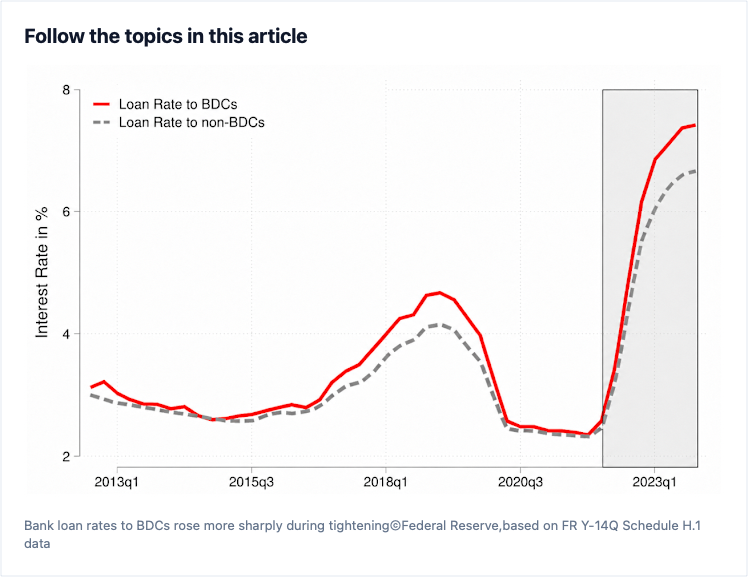
Business Development Companies (BDCs) represent roughly a quarter of middle-market private credit assets, with about half of the median BDC's total assets financed by debt. A new study by Federal Reserve economists Sharjil Haque and Jessie Wang examines BDC bank borrowing from a monetary policy transmission perspective, finding that BDC loan rates spike disproportionately during Fed tightening cycles compared to non-BDC borrowers with similar internal credit assessments.
The researchers argue that the BDC premium is not primarily driven by credit risk concerns. Banks' own internal assessments did not deteriorate, and loss-given-default estimates for BDC loans were actually lower. Instead, the key driver appears to be the extreme concentration of the bank lending market for BDCs—the top three banks control roughly half the market, and BDCs rarely switch banking relationships—giving incumbent banks outsized bargaining power during credit line renegotiations, particularly when BDC funding demand rises during monetary tightening.
The article also notes that bond markets imposed similarly elevated spreads on BDCs at roughly the same time bank funding costs jumped, complicating the causal narrative. This could reflect market-wide repricing of the concentration risk embedded in BDC portfolios, or it could represent a spillover from banks' monopsony pricing power into public debt markets. Either way, the finding is ironic given that BDCs' entire business model rests on their supposed expertise in structuring and negotiating debt financing, yet they appear to overpay on their own borrowing costs due to a lack of competitive shopping among bank lenders.