科技设备进口的高速增长凸显了人工智慧领域的激烈投资竞争,这已成为推动美国经济增长的核心引擎。与此同时,由于伊朗冲突推升对美国石油产品的全球需求,加上企业积极调整供应链,近几个月贸易逆差剧烈波动。尽管部分关税此前被最高法院推翻,川普政府仍透过其他授权加征关税,包括对数十亿美元加拿大商品征收50%关税并引发报复。
经通膨调整后,7月份商品贸易逆差扩大至1064亿美元,预期将显著拖累第三季GDP增速,亚特兰大联准银行的预测模型显示净出口恐拉低第三季GDP达1.34个百分点。从国别来看,美国对墨西哥的商品贸易逆差创下历史新高,对主要半导体供应地台湾以及受惠于供应链转移的越南逆差亦显著扩大,而对加拿大的贸易逆差则有所收窄。
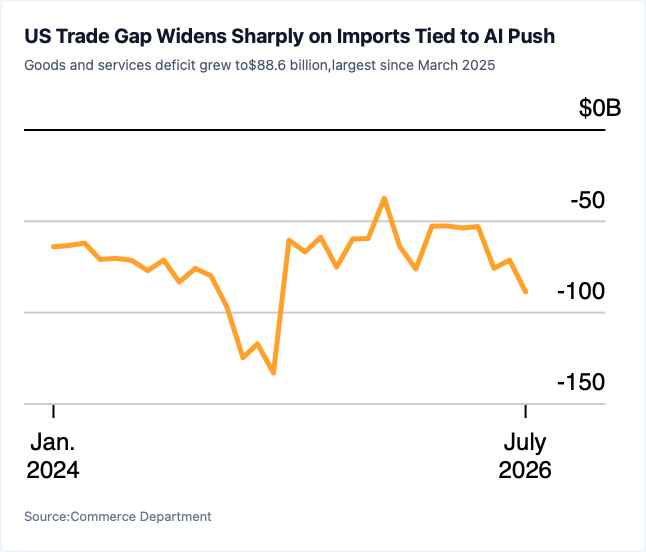
The US trade deficit widened sharply by 24.4% in July to $88.6 billion, marking the largest gap since March 2025. Total imports increased by 2.8% while exports dropped by 2.1%. Driven by the investment boom in artificial intelligence, imports of capital goods surged 11.4%—the biggest advance since 1993—with inbound shipments of computer accessories rising by a record $6.6 billion alongside higher imports of semiconductors and telecommunications equipment.
The surge in technology imports highlights how investments in AI have become a critical growth engine for the US economy amid supply-chain realignments and geopolitical turbulence. Trade balances have fluctuated recently as the Iran war boosted global demand for US petroleum products, even as the Trump administration applied new trade duties, such as a 50% tariff on billions of dollars of Canadian goods following collapsed trade negotiations.
On an inflation-adjusted basis, the merchandise trade shortfall reached $106.4 billion in July, which economists expect will drag down third-quarter GDP growth, with the Atlanta Fed's GDPNow model estimating a 1.34 percentage point subtraction from net exports. Bilateral deficits reached a record high with Mexico and widened substantially with key tech suppliers Taiwan and Vietnam, while the deficit with Canada narrowed.