另一方面,年轻美国人可能正扮演「矿坑中的金丝雀」角色——他们已率先感受到 AI 的实际冲击。Stanford 研究人员本周重新发布的一项研究指出,目前仍难以找到 AI 造成「大规模、经济全面性失业」的证据,但研究同时确认了先前的发现:在 AI 影响最深的职业中,22至25岁年轻人的就业成长率显著低于 AI 难以介入的领域。本周多则新闻亦指向同一趋势——从价值约28,000美元(约新台币89.6万元)的 AI 职业课程,到家长花费约95,000美元(约新台币304万元)为子女安排间隔年,再到英国年轻人以端咖啡作为实习——人们正日益以行动回应 AI 对就业市场影响将加剧的预期。
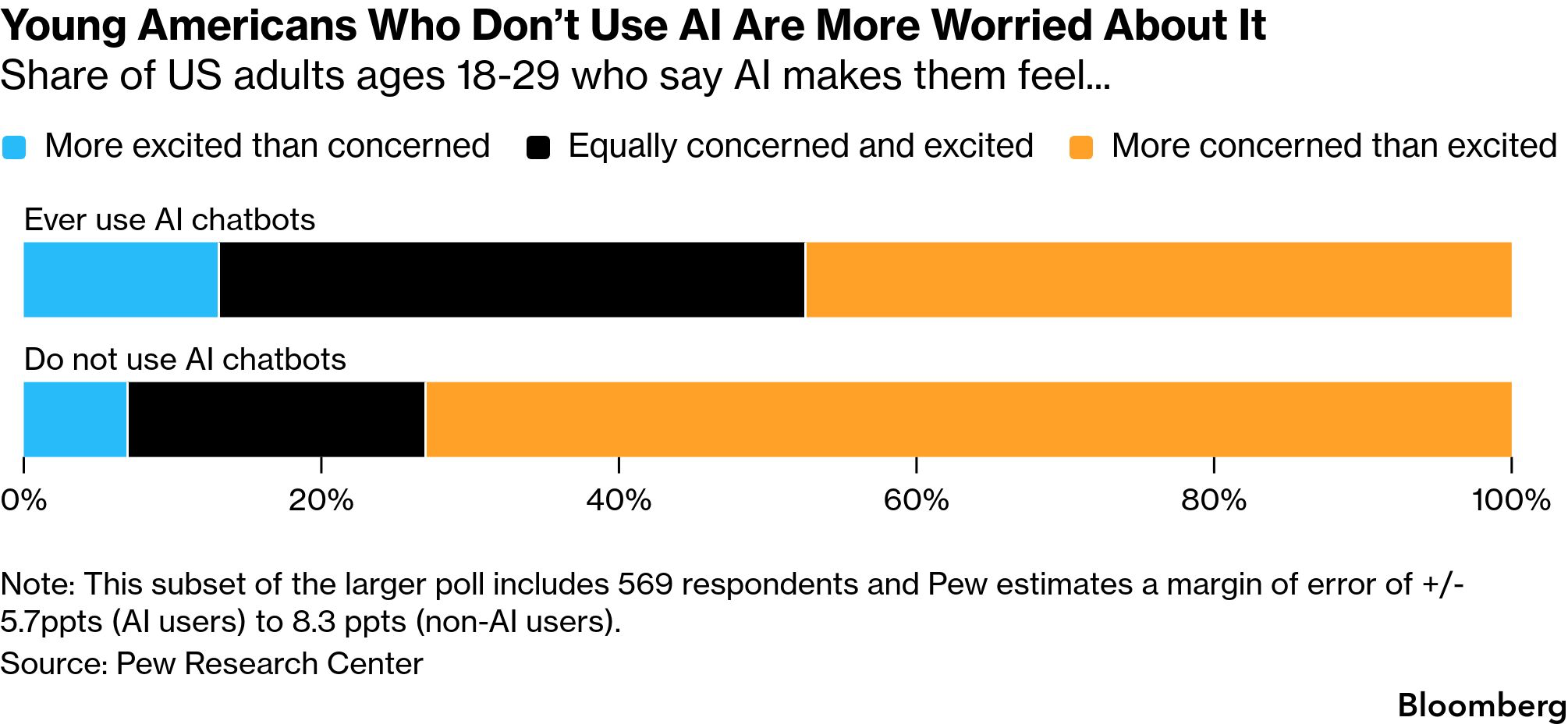
值得关注的最后一个面向是 AI 使用经验与态度之间的关联。多项调查一致显示,实际使用 AI 的人对其抱持更积极的态度。Pew 针对18至29岁美国人依是否使用 AI 进行的分组分析再次印证了此一模式:未使用者的担忧程度明显更高。然而即便在使用 AI 的年轻美国人中,仅有13%表示自己对 AI 感到兴奋多于担忧,凸显出即使在直接受益群体中,乐观情绪依然相当有限。
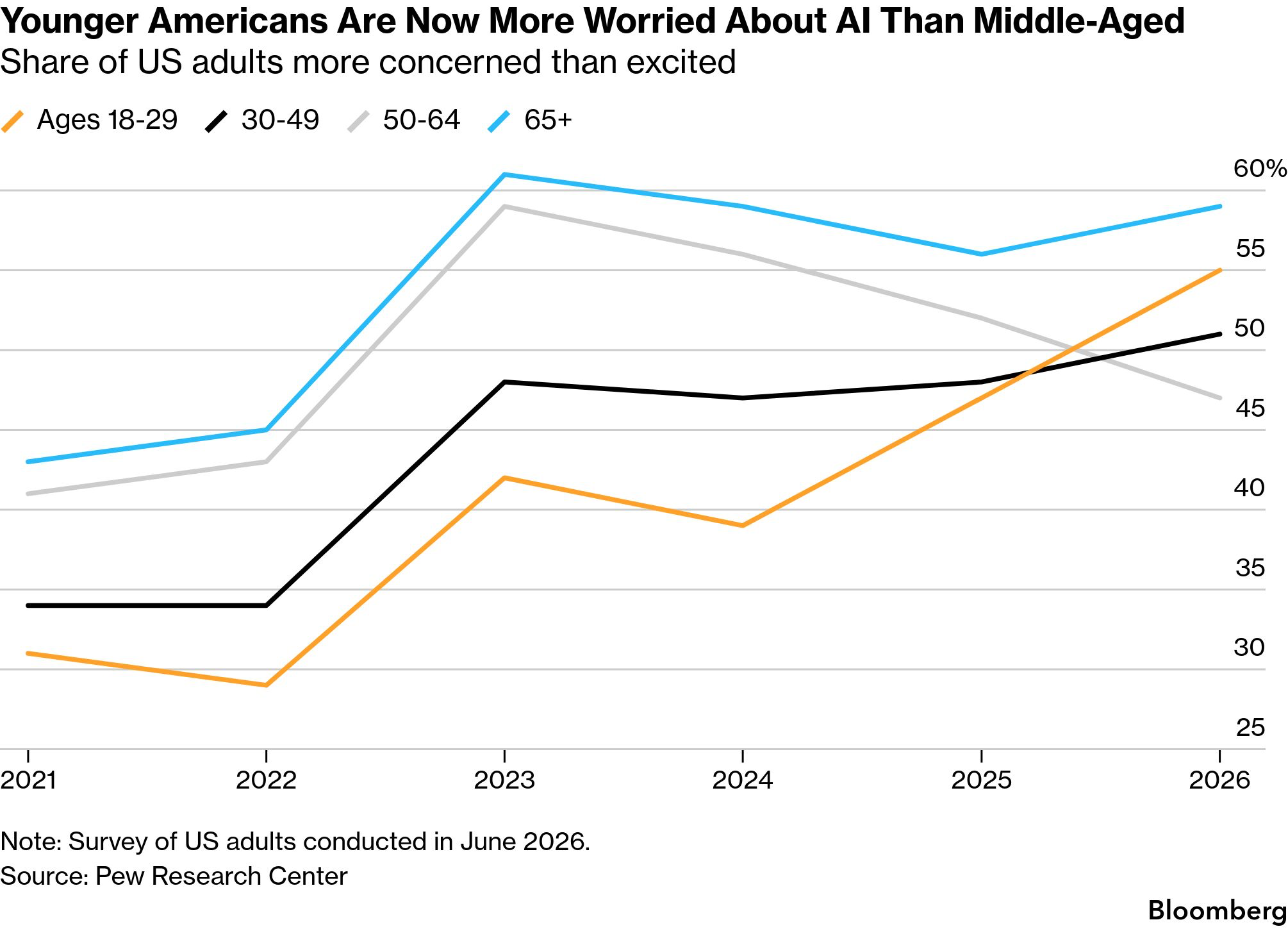
According to new Pew survey data, sentiment among young Americans toward AI has crossed a critical threshold: those under 30 are now more pessimistic than every age group except those 65 and older. This shift is highly atypical—young people are usually more optimistic about new technologies and typically benefit the most from them. Most of the world, including younger generations elsewhere, remains more optimistic about AI than the US. One theory suggests that young Americans are increasingly unhappy as a cohort for a variety of unrelated reasons, and that dissatisfaction is spilling over into their views on AI.
On the other hand, younger Americans may be acting as "canaries in the coal mine," already feeling AI's real-world effects. A study re-released this week by Stanford researchers found it is still hard to identify "widespread, economy-wide job loss" caused by AI, but confirmed a prior finding: job growth for 22- to 25-year-olds in the most AI-exposed occupations is considerably lower than in fields where AI cannot contribute as much. Several headlines this week point in the same direction—from a roughly $28,000 course for an AI job nobody quite understands, to parents paying approximately $95,000 for gap years to give their children an edge, to young people in Britain serving coffee as an internship—suggesting people are increasingly behaving as though AI's so-far-modest effect on the job market is going to worsen.
A final notable dimension is the link between AI usage and attitudes. Multiple surveys consistently show that people who actually use AI are more enthusiastic about it. Pew's breakdown of responses among Americans aged 18–29 by whether they reported using AI reaffirmed this pattern: non-users are considerably more worried. Yet even among younger Americans who use AI, only 13% say they are more excited than concerned, underscoring that optimism remains quite limited even among direct beneficiaries of the technology.