中国激增的出口与偏低汇率引发了欧美等国强烈反弹,包括德国总理梅尔茨在内的多国领导人施压北京允许人民币升值,以遏制冲击本土产业的商品涌入。面对房地产危机与疲软就业造成的内需不足,中国更依赖海外市场推动增长,而各方对于汇率走势究竟是经济失衡的原因还是结果,仍存在剧烈分歧。
中国人民银行发文为其汇率政策辩护,强调实质汇率低估不代表名目汇率有问题,亦不能作为要求特定货币升值的理由,并主张应透过提振内需而非强推升值来实现经济平衡。与此同时,高盛集团经济学家安德鲁·蒂尔顿预测,北京将允许人民币维持每年约3%的温和升值步伐,以兼顾舒缓贸易紧张与维持金融稳定。
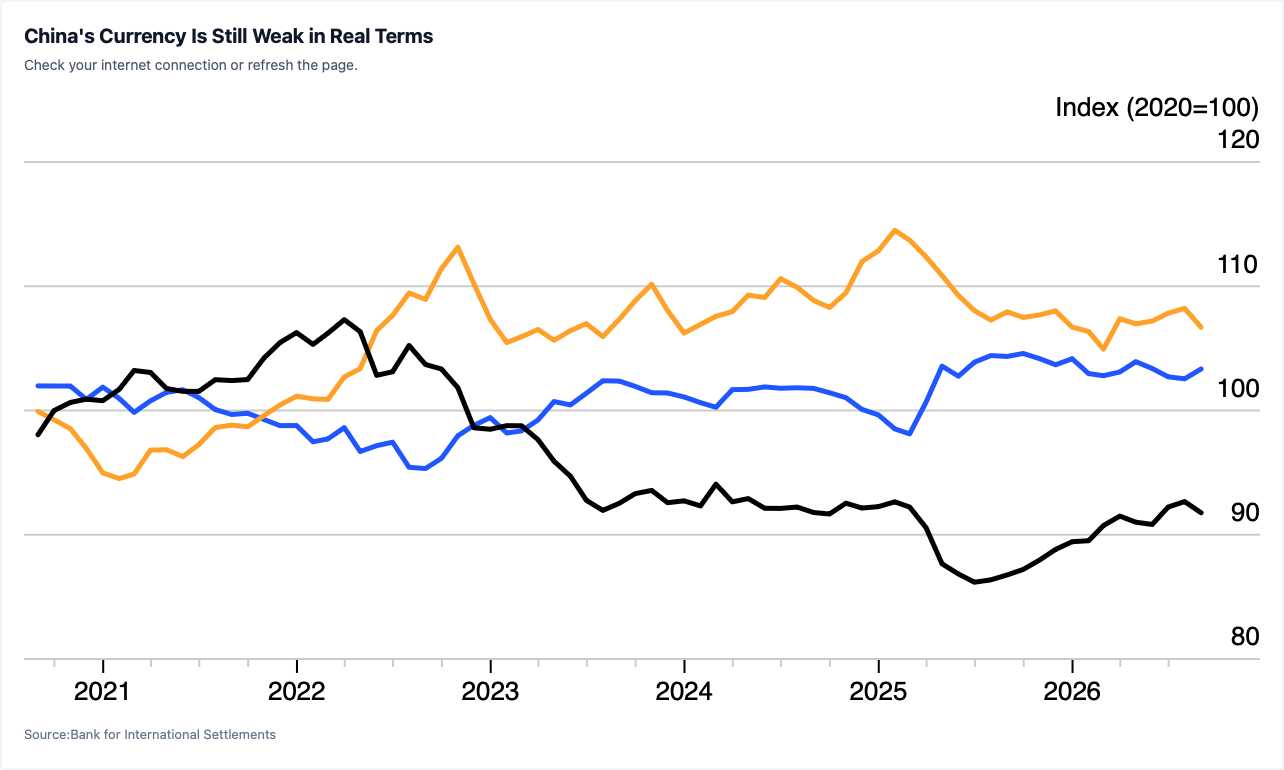
According to Krishna Srinivasan, the IMF's Asia-Pacific director, China's yuan is undervalued in real terms by 17.3% to 25.3% (with a midpoint of 21.3%) due to flagging domestic economic growth and insufficient demand-revival measures. He emphasized that the currency's weakness is a symptom of prolonged domestic imbalances, while China's very low inflation automatically boosts export competitiveness, propelling the nation toward a record trade surplus.
China's surging exports and weak currency have sparked intense pushback from foreign leaders, including German Chancellor Friedrich Merz, who have pressured Beijing to allow currency appreciation to prevent an influx of Chinese goods from hurting local industries. Facing a real estate slump and weak employment that constrain domestic consumption, China has increasingly relied on foreign shipments, fueling debate over whether exchange rates cause or merely reflect these imbalances.
In response, the People's Bank of China defended its exchange-rate management, contending that real undervaluation does not justify nominal appreciation against specific currencies and that policy should focus on expanding domestic demand rather than engineering gains. Meanwhile, Goldman Sachs chief Asia-Pacific economist Andrew Tilton expects Beijing to permit only a measured, gradual appreciation of around 3% annually against the dollar to balance trade tensions and financial stability.