学生主导的国家公民党(NCP)诞生于2024年推翻谢赫·哈西娜的起义,但在2026年2月12日选举前迅速失去动能。起义期间,警方镇压造成数百人死亡,导火索是公务员配额制度引发的就业歧视。尽管NCP最初承诺包容与反歧视,但女性与边缘群体在党内代表性不足,导致核心的Z世代支持者流失。预选民调显示,NCP全国支持率约6%,而孟加拉民族主义党(BNP)与伊斯兰大会党(Jamaat)分别约33%与29%。在18—29岁选民中,NCP仅获12.6%,明显落后于BNP的28.6%和Jamaat的33.6%。
在选举布局上,NCP作为伊斯兰大会党主导联盟的次要伙伴,仅竞逐300个议席中的30席,而Jamaat约在225个选区提名候选人。Awami League被禁参选,客观上为Jamaat腾出空间。同日还将举行政治改革公投,涵盖总理任期限制与司法独立,选举结果将深刻影响改革走向。国际共和研究所等调查显示,BNP与Jamaat势均力敌。相比起义后学生领袖一度进入临时政府、改革对话占据中心位置,NCP未能建立基层组织,其有限的动员能力被成熟政党吸收。
分析人士认为,NCP从运动型组织转向追逐席位的常规政党,牺牲了意识形态与社会联盟建设,过度依赖Jamaat使其成为“弱势小伙伴”,无论胜负都将受损。与斯里兰卡(2022)和尼泊尔(2024)青年起义转化为选举突破形成对比,孟加拉的案例显示街头动员难以直接转化为政治权力。尽管如此,2024年释放的政治能量仍在发散,新的分化组织已出现,显示公民政治空间仍在竞争之中。
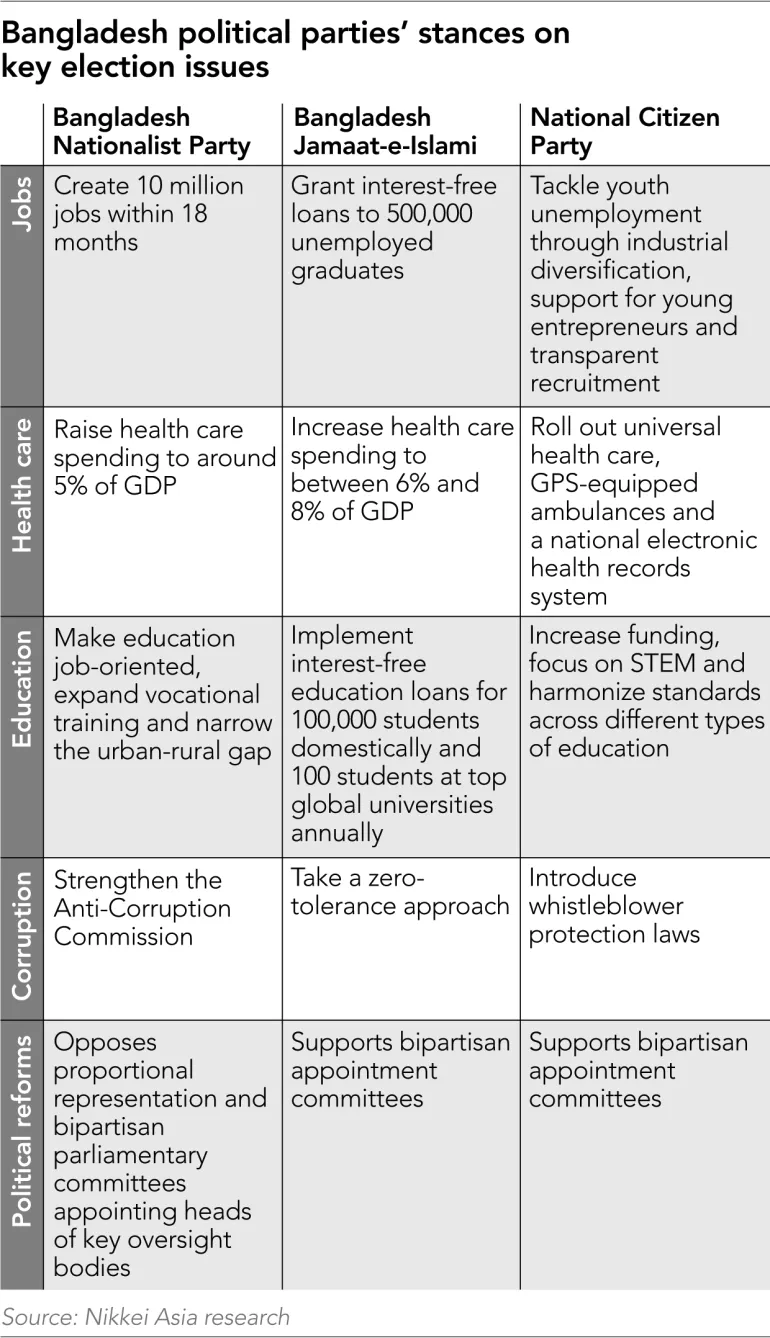
The student-led National Citizen Party (NCP) emerged from the 2024 uprising that toppled Sheikh Hasina but rapidly lost momentum ahead of the Feb. 12, 2026 election. The protests followed deadly police crackdowns that killed hundreds and were sparked by discrimination tied to Bangladesh’s civil service quota system. Although the NCP promised inclusion and antidiscrimination, women and marginalized groups became underrepresented, eroding its Gen Z base. Pre-election polling places NCP support at about 6% nationwide, versus roughly 33% for the Bangladesh Nationalist Party (BNP) and 29% for Jamaat-e-Islami. Among voters aged 18–29, the NCP draws only 12.6%, far behind the BNP’s 28.6% and Jamaat’s 33.6%.
Electorally, the NCP runs as a junior partner in a Jamaat-anchored alliance, contesting just 30 of 300 parliamentary seats, while Jamaat fields candidates in around 225 constituencies. The Awami League is barred from the race, creating space for Jamaat. A same-day referendum on political reforms—covering prime ministerial term limits and judicial independence—raises stakes, as the next government will shape implementation. Surveys, including by the International Republican Institute, show the BNP and Jamaat neck and neck. Despite early prominence in reform talks and interim governance, the NCP failed to build grassroots organization, and its limited mobilization capacity was absorbed by established parties.
Analysts argue the NCP shifted from a movement party to a conventional seat-seeking outfit, sacrificing ideology and coalition-building. Heavy reliance on Jamaat leaves it with little leverage, making outcomes damaging regardless of results. Unlike youth uprisings in Sri Lanka (2022) and Nepal (2024) that translated into electoral gains, Bangladesh illustrates the difficulty of converting street power into votes. Still, political energy from 2024 persists, with splinter groups forming and competing to reclaim a citizen-centered agenda.