欧洲不仅在投资上落后,生产力差距也持续扩大,部分原因在于无法将创新有效转化为各行各业的实际应用,加上严格的人工智慧法规可能进一步扼杀创新。尽管前欧洲央行行长德拉吉呼吁进行史无前例的投资以提升竞争力,但欧洲目前在缩小投资差距上几乎没有任何进展。
然而,美国对人工智慧的巨额投资也伴随著潜在风险,国际清算银行等机构警告,若投资报酬不如预期,可能会引发代价高昂的投资泡沫破裂。尽管专家认为这种投资差距可能只是暂时的现象,但如果欧洲无法在尖端科技领域迎头赶上并改善其僵化的劳动市场,其相对生活水准将持续下降。
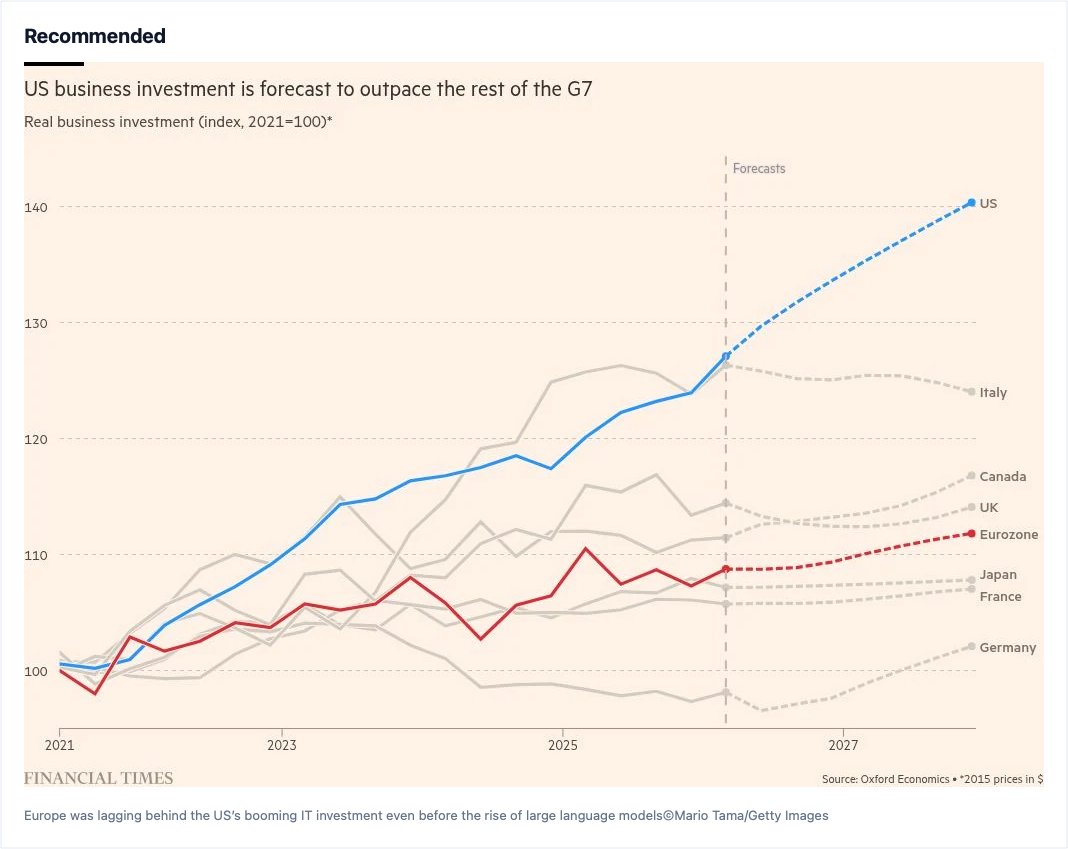
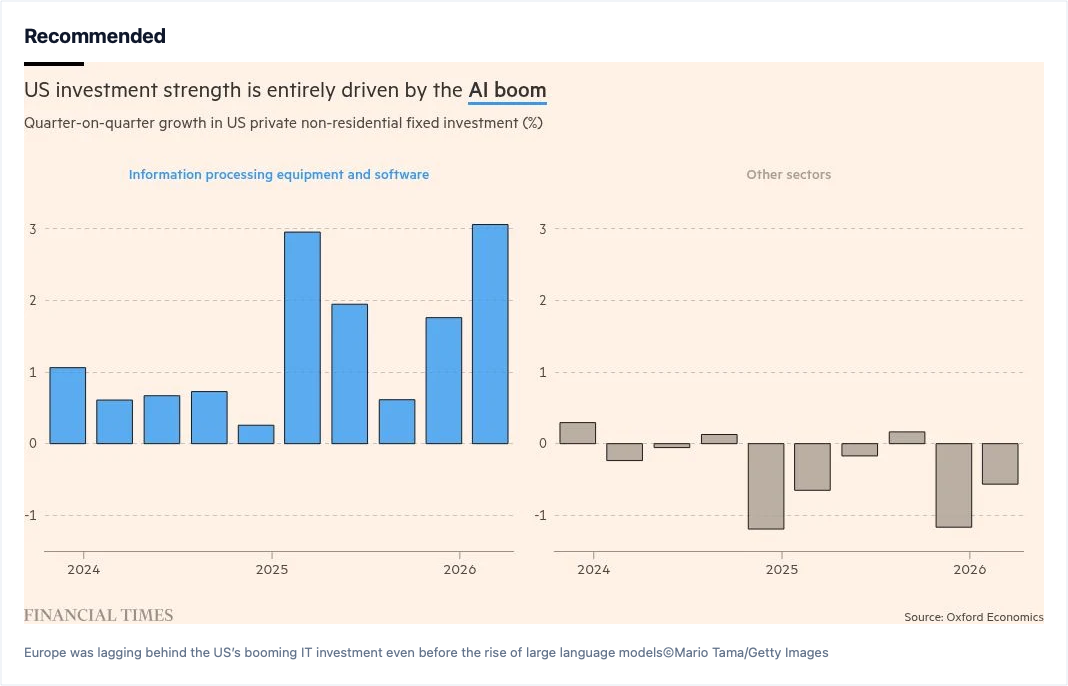
Driven by surging expenditures on artificial intelligence equipment, US business investment is forecast to grow more than three times faster than in Europe, highlighting a widening digital divide between the two economies. Compared to a projected 40 percent real-term increase in the US, the euro area expects only a 12 percent rise, with German investment almost stagnating, leaving Europe facing immense challenges in keeping pace with the American tech boom.
Europe is not only lagging in investment but also suffering from a growing productivity gap, partly because it struggles to connect innovation with practical adoption across different sectors, while strict AI regulations threaten to stifle further advancement. Despite calls from former ECB president Mario Draghi for an unprecedented surge in investment to boost competitiveness, the continent has made little progress in closing this investment gap.
However, the massive US bets on artificial intelligence come with their own risks, as institutions like the Bank for International Settlements warn of a costly investment bust if returns fail to meet expectations. Although experts suggest the vast investment gap might be somewhat temporary, Europe's relative standard of living will continue to decline if it fails to catch up in cutting-edge technology and address its ossified labor markets.