美国政府于1月7日发布的新健康饮食指南既获得喝彩也引发疑虑,因为按其建议进食可能会超过其对特定营养素设定的健康上限;配图用倒金字塔强调多吃肉类、乳制品和蔬菜、少吃谷物,并将黄油与牛脂等动物脂肪标为“健康脂肪”。
指南一方面将每日饱和脂肪摄入上限维持在约20–30克,另一方面封面所示的雪花牛排本身就可能突破该上限;建议的3份全脂乳制品会额外增加约15克,而每加入1汤匙黄油或牛脂烹调又会再增加7克,使超标变得很容易,并与以橄榄、菜籽(canola)或葵花籽油等不饱和脂肪为主的证据取向形成张力。
蛋白质目标被设为每公斤体重1.2–1.6克:以80公斤为例即96–128克/日,大约需要3块去皮鸡胸肉;素食者则可能需要17个鸡蛋、1公斤熟豆类或3.3升牛奶,而世卫组织建议的0.8克/公斤(80公斤为64克)意味着1.6克/公斤主要适用于配合训练的增肌等高需求情形。
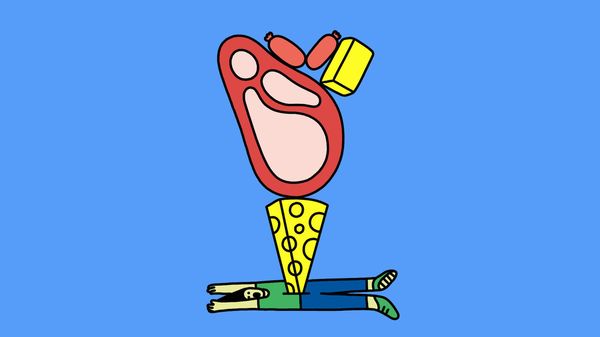
The American government’s new healthy-eating guidelines published on January 7 have drawn both applause and concern because eating as suggested can exceed the healthy limits they set for specific nutrients; an inverted-pyramid graphic urges more meat, dairy and vegetables and fewer grains, and labels animal fats such as butter and beef tallow as “healthy fats.”
The guidelines keep a daily saturated-fat cap of about 20–30g, yet the pictured marbled steak alone could pass that ceiling; three servings of full-fat dairy add roughly 15g more, and each tablespoon of butter or beef tallow adds another 7g, making overshoot easy and creating tension with evidence favoring unsaturated fats like olive, rapeseed (canola) or sunflower oils.
Protein targets are set at 1.2–1.6g per kilogram of body weight: for an 80kg person that is 96–128g/day, roughly three lean chicken-breast fillets; vegetarian equivalents are 17 eggs, 1kg of cooked beans, or 3.3 litres of milk, while the World Health Organisation’s 0.8g/kg (64g at 80kg) implies 1.6g/kg mainly fits higher-demand muscle-building with training.
Source: Do RFK junior’s new dietary guidelines make sense?
Subtitle: We break them down for you
Dateline: 1月 15, 2026 05:53 上午