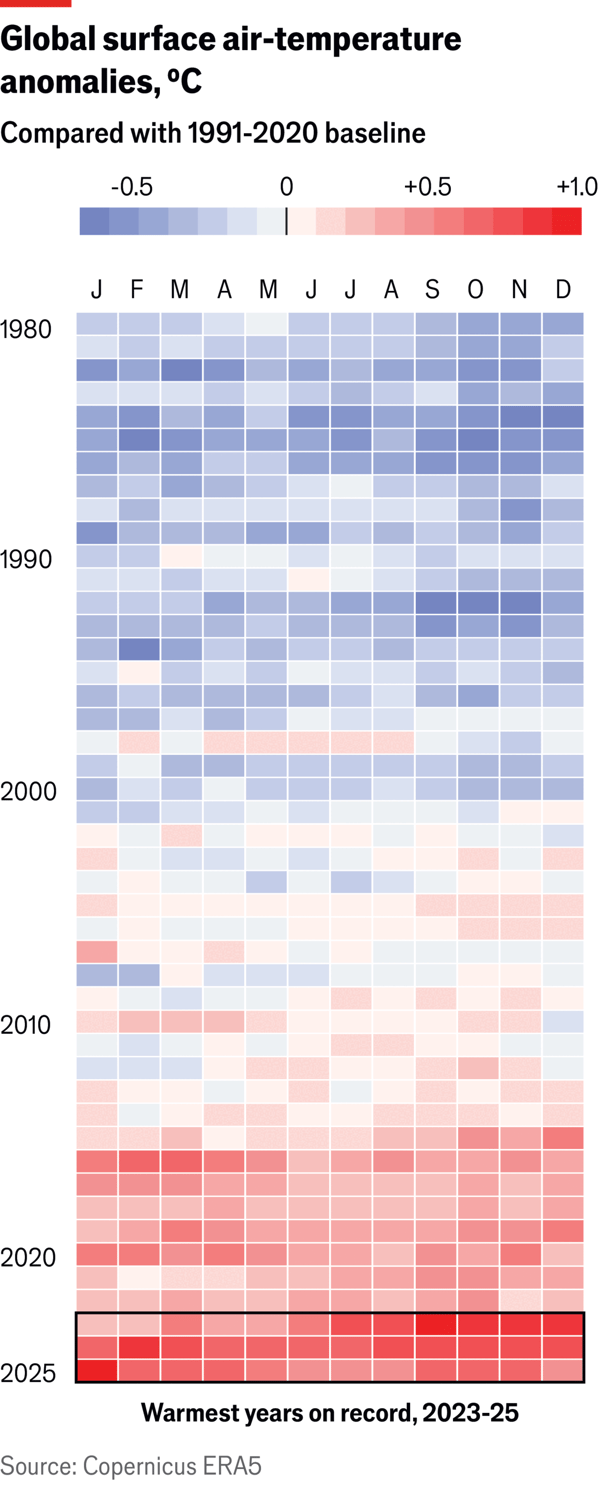
本应相对凉爽的一年却成为有记录以来最热年份之一;欧洲和美国主要气候与天气监测机构在2025年发布的成绩单一致指向全球变暖速度正在加快。过去11年是自有记录以来最暖的11年,其中最近3年位居榜首;2024年在强厄尔尼诺与11年太阳周期峰值叠加下最热,而在厄尔尼诺减弱、拉尼娜取代且太阳转暗的2025年仍成为迄今最热的拉尼娜年。
按世界气象组织数据,上一轮出现拉尼娜的2022年较前工业化平均水平高1.15°C,而2025年高1.44°C,作为拉尼娜年出现显著跃升。对2023—2025年的平均增温,不同数据集给出1.48°C至1.5°C;若温室气体敏感度处于主流估计上沿,联合项目警告全球升温或在本世纪中叶前越过2°C,而超过2°C时的影响与不可逆临界点风险远高于2015年《巴黎协定》确立的1.5°C目标。
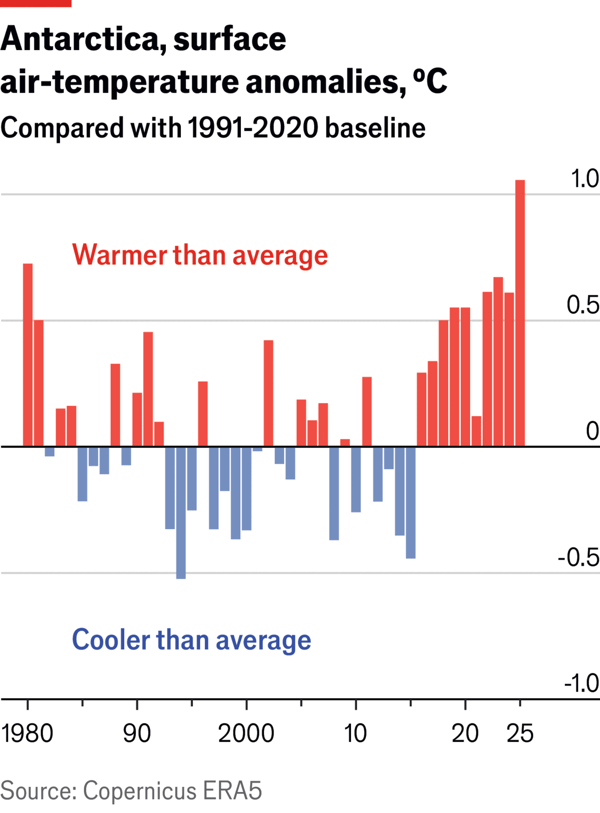
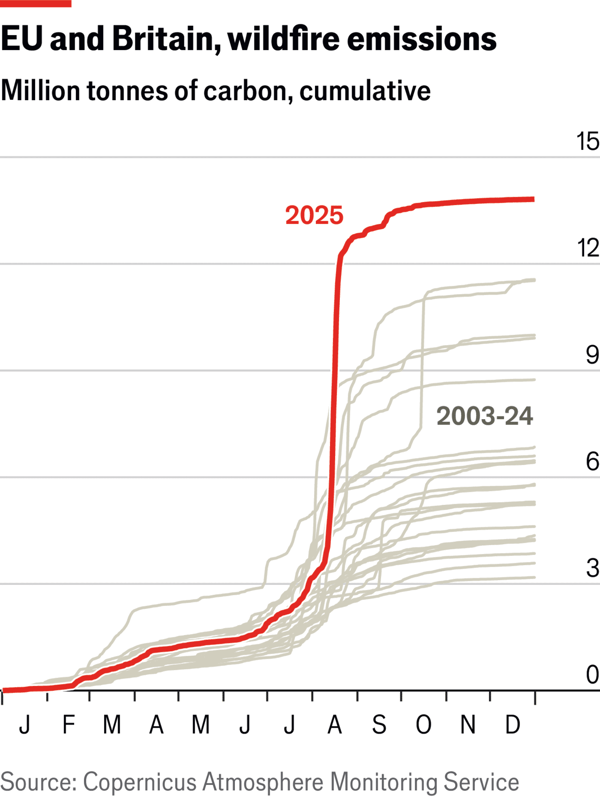
2025年2月两极海冰覆盖降至自20世纪70年代末卫星观测开始以来最低,且南极经历其有记录以来最热一年。欧洲在7月下旬至8月上旬的野火(尤以西班牙与葡萄牙为甚)向大气增加近1400万吨碳,以二氧化碳与吸光的黑碳形式出现,显著高于以往任何一年;将过去30年的变暖速率外推,粗略估计1.5°C里程碑可能在本十年最后一年被跨越,并且预报称今年晚些时候厄尔尼诺可能回归、研究者预计2026年将再次跻身榜单前列。
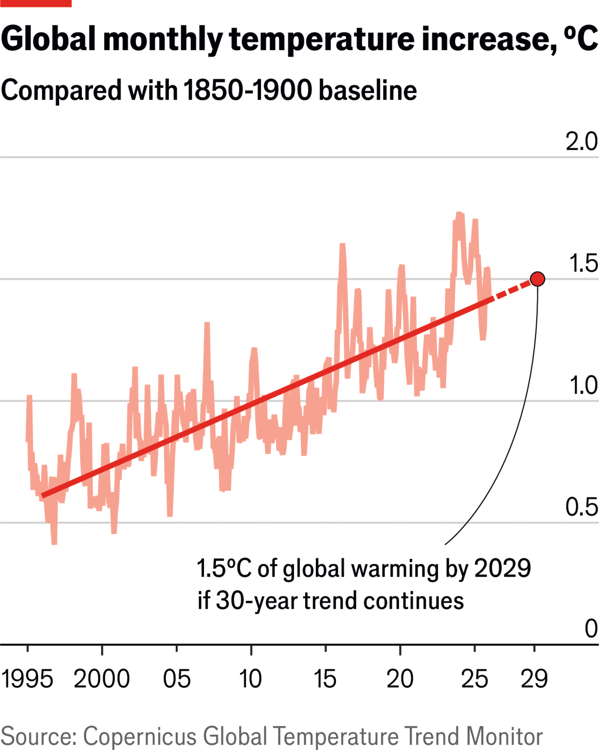
The recent report cards for 2025 suggest that "last year" refers to 2024, noting a significant rise for a Niña year at 1.44°C. We’ll present this as 2025: 1.44°C above preindustrial levels, contrasting with 2022's 1.15°C. The 3-year average from 2023-2025 hovers around 1.48-1.5°C. Milestones show the 1.5°C threshold from the Paris Agreement in 2015; projections indicate we could exceed 2°C by mid-century. Also noting the lowest ice cover since the late 1970s and unprecedented carbon emissions from wildfires in July/August.
A year that should have been relatively cool instead became one of the hottest on record; 2025 report cards from major European and American climate and weather monitors align with faster global warming. The past 11 years are the warmest since records began, with the past three on top; 2024 was hottest amid a strong El Niño and an 11-year solar-cycle peak, yet 2025 still became the hottest La Niña year as El Niño faded and the sun began to dim.
According to the World Meteorological Organisation, the previous La Niña year in 2022 was 1.15°C above the preindustrial average, while 2025 was 1.44°C above it, a notable jump for a La Niña year. Across 2023–2025, average warming sits around 1.48–1.5°C depending on the dataset; if greenhouse-gas sensitivity is at the high end of mainstream estimates, a joint project warns the rise could pass 2°C by mid-century, far beyond the Paris Agreement’s 1.5°C benchmark set in 2015.
Source: Hotter still, and hotter
Subtitle: More worrying news about the climate
Dateline: 1月 15, 2026 05:53 上午