美国公众对国会的评价极低:80%不认可其履职,而25年前其支持率通常高于50%,意味着净评价已转为约4比1的不认可优势。仅有8%的美国人认为议员在诚实与伦理方面表现较高,这一水平与广告从业者相当,仅高于说客和汽车销售员。
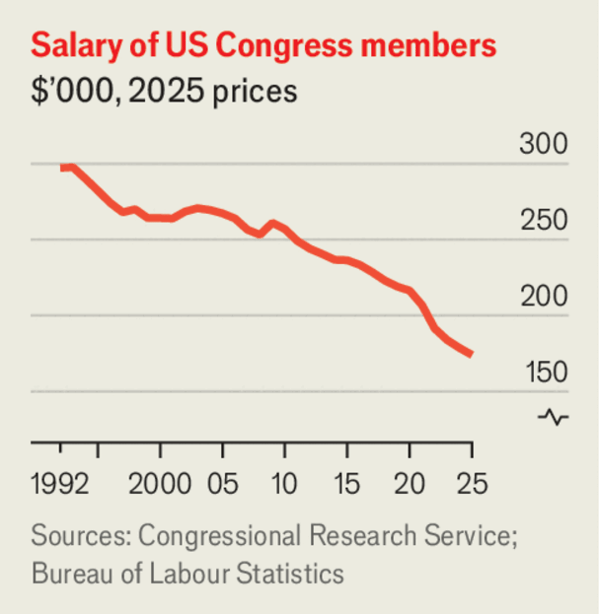
在制度产出上,本届国会通过的法律数量为19世纪中期以来最低之一,并多次以政府停摆或部分停摆方式造成治理失灵。与此同时,议员薪酬已17年未涨、面临的安全威胁却显著上升,且已有60人宣布在中期选举后离任,创下该周期这一阶段的历史最高退出规模。
这些统计共同指向长期恶化趋势:党派极化、社交媒体激励和募款压力相互强化,持续抬高立法瘫痪与职位流失风险,且短期内缺乏“快速修复”。文中主张,若要逆转趋势,国会需重夺对行政部门的制衡职能、限制议员个股交易,并由选民以“雇用立法者而非啦啦队员”的标准重塑激励。
Public sentiment toward Congress is deeply negative: 80% disapprove of its performance, while approval was typically above 50% twenty-five years ago, implying a net shift to roughly a 4:1 disapproval edge. Only 8% of Americans rate members of Congress highly for honesty and ethics, a level comparable to advertisers and above only lobbyists and car salesmen.
On institutional output, this Congress has passed fewer laws than any since the mid-19th century and has repeatedly produced dysfunction through government shutdowns or partial shutdowns. At the same time, congressional pay has been frozen for 17 years while physical threats have risen sharply, and 60 members have already announced post-midterm departures, the largest-ever number at this stage of the cycle.
Taken together, these figures indicate a long-run deterioration: polarization, social-media incentives, and fundraising pressure reinforce each other, raising the risk of legislative paralysis and member attrition with no quick fix in sight. The piece argues that durable improvement requires Congress to reclaim checking power from the executive, ban individual stock trading by members, and for voters to reward lawmakers as legislators rather than performers.
Source: How to improve American legislators’ lot
Subtitle: Doing so would be good for members of Congress, and for democracy
Dateline: 2月 19, 2026 04:18 上午