欧洲领导人将欧洲的工业困境归咎于失衡的全球经济,特别是中国的制造业主导地位。由于这种激烈的竞争,欧洲正在经历逐渐的去工业化,自2018年以来,制造业占增加值输出的比例下降了一个百分点。尽管中国保持着占国内生产总值(GDP)近4%的巨额经常账户顺差,但欧盟实际上并未出现逆差;事实上,在2025年,该集团录得占GDP 1.9%的经常账户顺差,其中德国的顺差超过3.8%。
认为经常账户顺差等同于制造业实力的重商主义观点是一个战略错误,因为顺差与工业停滞可以并存。根据基尔研究所的数据,德国在全球市场份额流失中,只有约三分之一可直接归因于中国的出口,其余三分之二则反映了国内竞争力的下降。通过走强欧元和提高本地消费来纠正全球失衡,并不一定会使欧洲生产商受益,因为这可能会减少出口并增加对进口的依赖。
欧洲政府不应诉诸像全面关税这样的保护主义措施,而应专注于解决其国内的经济问题。这需要降低能源成本、提高劳动力市场的灵活性、整合资本和服务市场,并消除不必要的监管负担。虽然为了防止对中国的依赖而实现供应链多样化是审慎的,但在缺乏内部结构性改革的情况下,树立贸易壁垒只会通过提高生产成本和减缓增长来加剧经济痛苦。
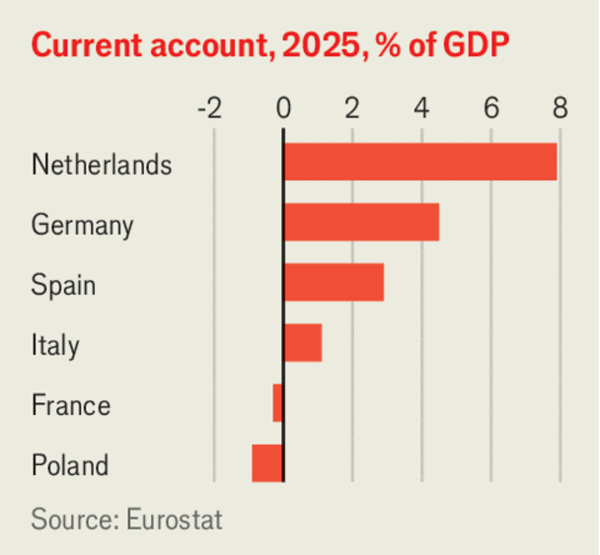
European leaders are blaming the imbalanced global economy, particularly China's manufacturing dominance, for Europe's industrial woes. As a result of this intense competition, Europe is experiencing a gradual deindustrialization, with manufacturing's share of value-added output falling by one percentage point since 2018. Although China maintains a substantial current-account surplus of nearly 4% of GDP, the EU is not actually running a deficit; indeed, in 2025, the bloc recorded a current-account surplus of 1.9% of GDP, with Germany's surplus exceeding 3.8%.
The mercantilist belief that a current-account surplus equals manufacturing strength is a strategic mistake, as surpluses can coexist with industrial stagnation. According to the Kiel Institute, only about one-third of Germany's loss in global market share is directly attributable to Chinese exports, with the remaining two-thirds reflecting a domestic decline in competitiveness. Correcting global imbalances by strengthening the euro and raising local consumption would not necessarily benefit European producers, as it would likely reduce exports and increase import dependency.
Instead of resorting to protectionist measures like blanket tariffs, European governments should focus on resolving their home-grown economic issues. This requires reducing energy costs, increasing labor market flexibility, integrating capital and service markets, and removing unnecessary regulatory burdens. While diversifying supply chains to prevent dependency on China is prudent, erecting trade barriers only worsens economic pain by raising production costs and slowing growth in the absence of internal structural reforms.
Source: Global imbalances have little to do with Europe’s industrial woes
Subtitle: The EU has forgotten that it, like China, is a surplus economy
Dateline: 6月 25, 2026 04:19 上午