这种向创新资产倾斜的趋势使得投资组合面临较高的通膨风险与市场波动。如果人工智慧的资本支出在带来实质收益前导致企业盈利下降,或者半导体等周期性产业面临回调,投资组合将承受重大压力。同时,持续的地缘政治冲突与能源价格波动,也让通膨与各国央行紧缩政策的风险挥之不去。
尽管面临这些风险,完全看空目前的市场动能为时尚早。投资者应保持市场参与,同时透过增加实质资产(如商品、基础设施和房地产)来对抗通膨并提升投资组合的多样性。此外,在股票配置中加入低波动性和高股息收益的标的,也有助于在科技股可能出现的抛售潮中提供更好的保护。
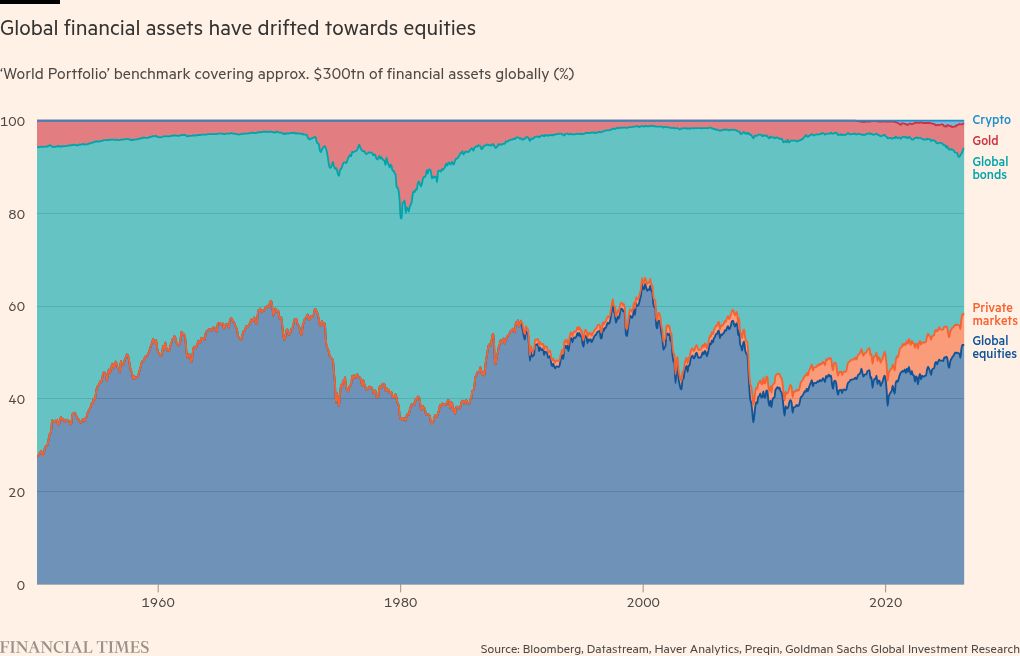
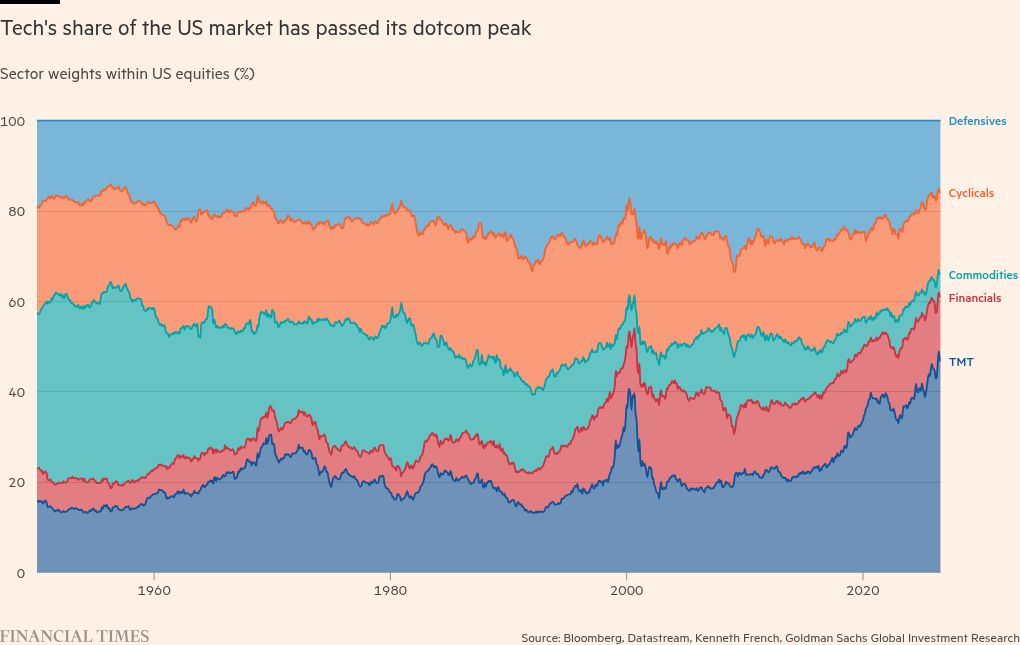
In recent years, the AI-driven tech rally has caused equities to significantly outperform bonds, leaving investor portfolios increasingly unbalanced. This innovation-driven optimism has caused broad global multi-asset portfolios to drift heavily toward equities, particularly concentrating in a small group of megacap tech and semiconductor companies, mirroring past periods of innovation.
This tilt toward innovation assets leaves portfolios highly vulnerable to inflation risks and market volatility. If the AI capital expenditure boom leads to declining profitability before the benefits materialize, or if cyclical sectors like semiconductors face a pullback, portfolios could suffer significantly. Meanwhile, ongoing geopolitical conflicts and energy price fluctuations keep inflation and central bank tightening risks lingering.
Despite these risks, it is too early to bet entirely against current market momentum. Investors should stay invested while enhancing portfolio diversification by adding real assets—such as commodities, infrastructure, and real estate—to hedge against inflation. Additionally, incorporating low-volatility and high-dividend-yield stocks can provide better protection during potential tech-led equity sell-offs.