在实施卫星监控这项惩罚性措施之前,政府也曾尝试过推广机械化设备等激励手段,但同样以失败告终。官方在2010年代后期大力推广如「快乐播种机」(Happy Seeder)等农机,希望让农民无需焚烧残茬即可直接播种小麦。然而,购买机器和柴油的成本高昂,加上小农共用设备时在紧迫的播种期内难以承受等待的时间成本,使得机械化完全无法与直接点火焚烧的速度和简便性竞争,最终导致大量农机闲置,甚至使用机器的农民中仍有一半继续焚烧稻草。
问题的根本原因在于印度农业的政治经济结构,而非技术不足。政府在北印度提供保底收购价、近乎无限量的采购以及抽水和化肥补贴,使种植水稻极具经济吸引力,导致稻米产量远超国内需求,政府库存甚至达到缓冲标准的10倍,同时也产生了大量急需清理的农业废弃物。由于改革农业补贴制度面临巨大的政治阻力(如2020年长达一年的农民抗议),官员们只能不断寻求技术修补;但只要周边地区的水稻种植面积没有真正缩减,任何科技手段都无法彻底改善德里的空气品质。
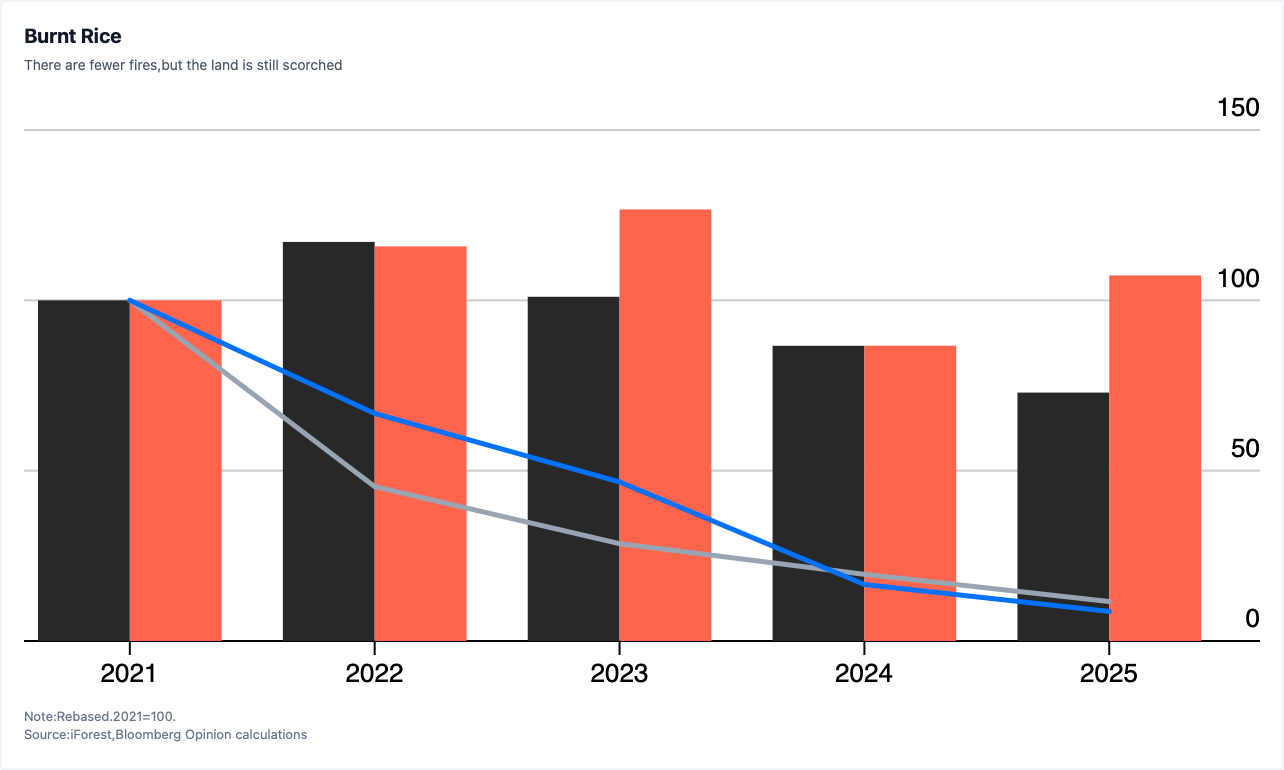
Delhi faces severe winter air pollution largely because farmers in surrounding states burn rice straw after the monsoon harvest to quickly clear fields for winter wheat. Although the Indian government has used NASA’s Terra and Aqua satellites since 2021 to detect illegal fire hotspots and dispatch enforcement crews, this high-tech surveillance has fallen short. Because the satellites only pass over northern India between 10 a.m. and 2 p.m., local officials have tipped off farmers, leading them to shift over 90% of large farm fires to after 3 p.m. to successfully evade detection.
Before turning to the punitive stick of satellite monitoring, authorities tried a technocratic carrot in the late 2010s by promoting mechanized equipment, which also failed. Tractor-drawn machines like the Happy Seeder and Super Seeder were introduced so farmers could sow wheat directly without burning rice residue. However, the high costs of machinery and diesel, combined with the costly delays poorer smallholders faced while waiting to share community equipment during a narrow planting window, meant machines could not compete with the speed and simplicity of dropping a match, leaving many machines unused and half of their users still burning stubble.
The root cause of the crisis lies in the political economy of Indian agriculture rather than a lack of technology. Generous government incentives—including guaranteed floor prices, near-unlimited procurement, and water and fertilizer subsidies—make rice farming in northern India overwhelmingly lucrative, driving record grain surpluses ten times above required buffer levels and generating massive amounts of crop residue. Because overhauling the agricultural system faces formidable political obstacles, as seen in the year-long farmer protests of 2020, officials keep reaching for technological fixes; yet until paddy acreage near the capital actually shrinks, no technology will clear Delhi's skies.