这座国营机场的启用正值全球旅游业自疫情以来最艰难的时期。随著伊朗战争持续导致燃油成本与票价上涨,加上新客机交付延迟,全球航空公司普遍在削减国内运力,缺乏多余飞机投入需求尚未证实的新机场。此外,机场的联外交通也是一大挑战:距离市中心达50公里,规划中的铁路最快要到2027年才能通车,而前往雪梨市中心的接驳巴士不仅耗时约一小时,票价更高达55澳元。相比之下,距离中央商务区仅20分钟车程的雪梨金斯福德·史密斯机场(Sydney Kingsford Smith)对大多数旅客而言仍更为便利,学者也因此认为新机场的客运量预测过于乐观。
尽管开局缓慢,且被部分专家拿来与最终停止商务客运的蒙特娄米拉贝尔机场(Mirabel Airport)或发展受限的墨尔本阿瓦隆机场(Avalon Airport)相比,西雪梨国际机场仍具备长期发展潜力。根据总体规划,到2030年雪梨将有一半人口居住在西区,且大西雪梨地区有40%人口在海外出生,有望带动飞往印度、中国与越南等地的需求。更重要的是,新机场没有主机场的夜间宵禁限制,能让国际航空公司灵活安排航班衔接。机场执行长Simon Hickey表示目前正与多家航空公司洽谈,并呼吁当地居民多加利用;长远来看,随著全球航空旅行需求预计在2050年翻倍,该机场目标在2063年达到每年处理8200万人次旅客,最终成为雪梨的主要航空枢纽。
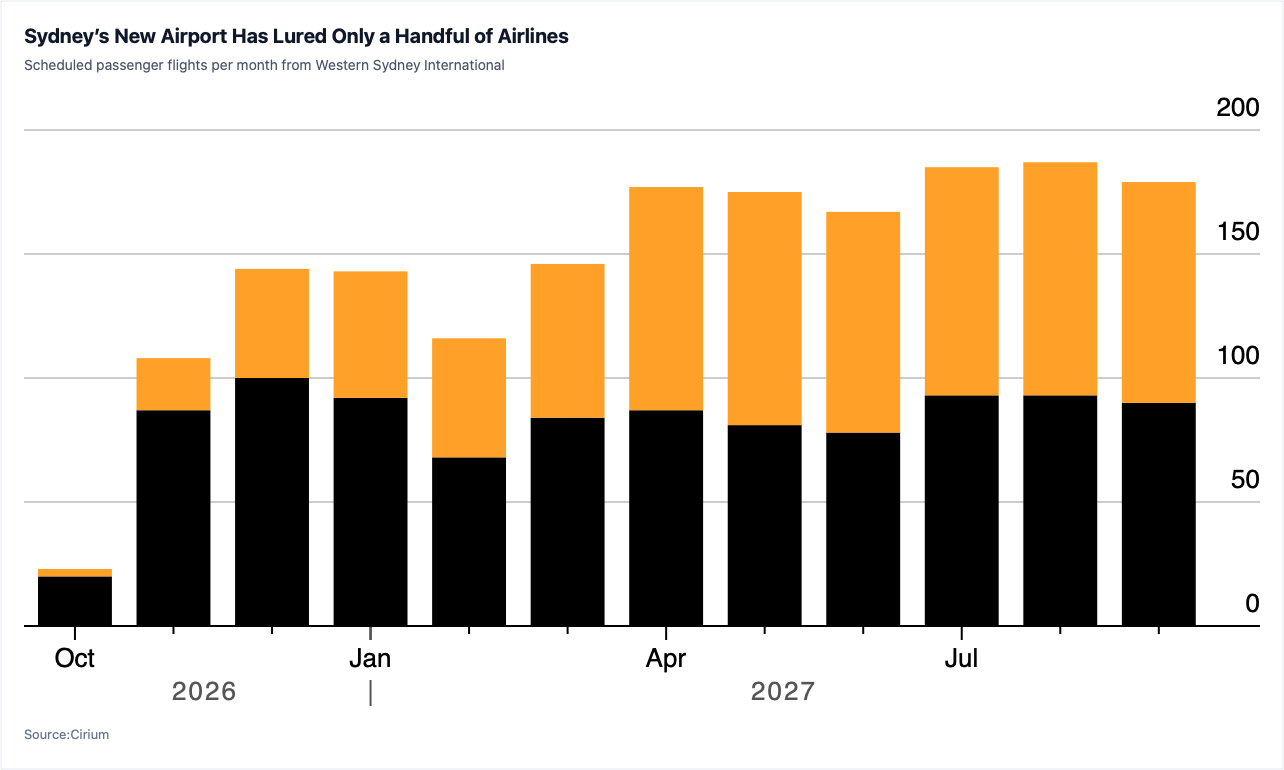
After more than half a century of political procrastination, environmental protests, and funding shortfalls, the A$5.6 billion ($4 billion) Western Sydney International Airport is finally handling its first passenger flight this Sunday with a Jetstar service to the Gold Coast. However, the commercial prospects of Australia's largest aviation infrastructure development in decades are already in question. According to aviation data company Cirium, the facility has attracted only a handful of carriers—including Jetstar, Air New Zealand, Singapore Airlines, Vietjet, and Fiji Airways—and has six or fewer scheduled flights per day for the next 12 months. Dominant carrier Qantas plans to operate little more than one domestic flight a day on average starting next March, while the country's second-largest carrier, Virgin Australia, has no flights scheduled at all.
The government-owned airport is opening as the global travel industry endures its toughest period since the pandemic. With rising fuel costs and fares driven by the ongoing Iran War, alongside struggles to acquire new jets, airlines worldwide are cutting back on domestic capacity and have few spare aircraft to deploy to startups with unproven passenger demand. Compounding these issues are ground transport challenges: located 50 kilometers inland from the city center, the airport's planned rail link will not open until at least 2027, while a shuttle bus to central Sydney takes about an hour and costs A$55. By contrast, Sydney Kingsford Smith Airport is just 20 minutes from the central business district, remaining a much more practical option for most travelers and leading transport experts to view the new airport's passenger forecasts as overly optimistic.
Despite the slow start and unfavorable comparisons by analysts to underperforming hubs like Montreal's Mirabel Airport or Melbourne's Avalon Airport, Western Sydney International holds long-term strategic advantages. According to its master plan, half of Sydney's population will live in the city's west by 2030, and 40% of Greater Western Sydney's residents were born overseas, which should generate demand for routes to countries like India, China, and Vietnam. Crucially, unlike Kingsford Smith, the new airport has no overnight curfew, allowing international carriers to schedule flexible departures that connect with their own hubs. Airport CEO Simon Hickey noted that talks with other airlines are ongoing while urging locals to support the facility; backed by relentless long-term global travel growth expected to double by 2050, the airport aims to handle 82 million passengers annually by 2063 and ultimately become Sydney's primary air-travel hub.