随着十年期美债收益率攀升至5%左右的二十年高位并推高全球借贷成本,发达经济体房地产市场正面临严峻考验。尽管在2022至2023年的加息周期中,全球房价表现出惊人韧性——经通胀调整后富裕国家整体房价比历史峰值仅低4%,澳大利亚甚至略超疫情期高点,葡萄牙房价较2013年欧债危机低谷实际暴涨近200%——但分化已显著加剧:新西兰实际房价较峰值重挫25%,德国房市陷入萧条,自6月以来美国房地产相关股票大幅跑输大盘16个百分点,瑞银更预测明年英国住宅建筑商利润率将跌至2008年金融危机以来的最低水平。
昔日缓冲加息冲击的三大支柱正全面瓦解,其首要隐患在于抵押贷款结构的剧变。与疫情初期大量借款人锁定超低长期固定利率不同,当前新增房贷普遍转向浮动利率:澳大利亚固定利率贷款存量占比已从2022年的近40%暴跌至约5%,加拿大浮动利率贷款占比自2020年以来翻倍,英国平均固定贷款期限亦从2.7年的峰值降至2.4年,使得家庭对持续的高利率愈发脆弱。
第二大支柱超额储蓄已消耗殆尽:旧金山联储研究显示,美国家庭高达2万亿美元的疫情超额储蓄早在2024年年中便被完全耗尽,欧盟家庭存款占GDP比重亦从77%的历史高位回落至67%。最后,供应端的紧缺状况显著缓解:过去五年美国新增住房供应达730万套,远高于此前五年的610万套;新西兰奥克兰在土地松绑政策推动下去年获批住宅达1.6万套。在待售库存激增与议价权倒向买方的背景下,长期单边上涨的房地产神话正走向终结。
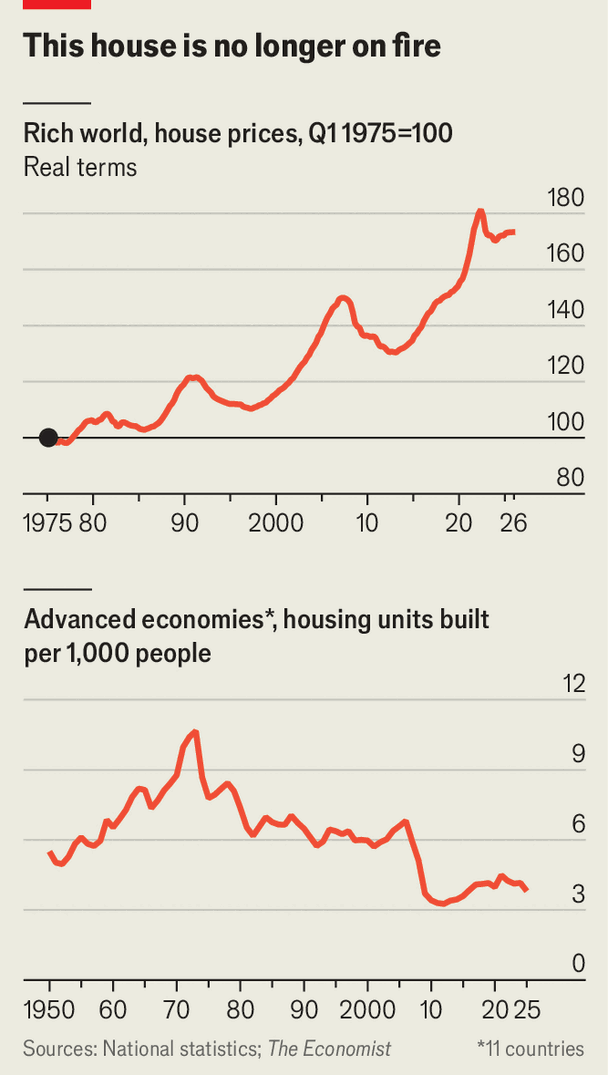
Surging sovereign bond yields, with American ten-year Treasuries hovering around 5% to mark a two-decade peak, pose an escalating menace to rich-world housing markets. While real estate proved remarkably resilient during the 2022-23 monetary tightening—leaving advanced-economy real home values merely 4% below their all-time apex, Australia slightly above pandemic highs, and Portugal nearly 200% above 2013 levels—vulnerabilities are multiplying: New Zealand real values have fallen 25% from their peak, German housing has slumped, US homebuilding equities have lagged the broad index by 16 percentage points since June, and UBS warns British builder margins will plumb post-2008 lows.
The structural insulation that shielded homeowners during the previous rate shock has disintegrated across three critical pillars, beginning with mortgage vulnerability. Households have increasingly turned to variable-rate borrowing rather than locking in long-term rates: in Australia, the share of fixed-rate mortgage stock plummeted from nearly 40% in 2022 to roughly 5%, Canada’s variable-rate share has doubled since 2020, and the average British fixed-rate duration has declined from 2.7 to 2.4 years, leaving borrowers immediately exposed to elevated financing costs.
Concurrently, pandemic-era liquidity buffers have been entirely exhausted: research by the Federal Reserve Bank of San Francisco indicates that American consumers depleted their $2trn excess savings cache by mid-2024, while EU household deposits fell from 77% of GDP to 67%. Furthermore, severe supply shortages are giving way to expanding inventory: over the past five years the United States added 7.3m residential units compared with 6.1m in the preceding period, while Auckland approved 16,000 housing consents last year following planning deregulation. As listed inventory climbs and buyers claw back leverage, property is ceasing to be a one-way speculative bet.
Source: House prices survived the last rise in interest rates. Will they this time?
Subtitle: Supports that shored up the housing market when borrowing costs last rose are gone
Dateline: Sep 24th 2026\n