美以在2026年对伊朗战争中展示了前所未有的打击节奏。2月28日两国执行的攻击架次被认为超过1991年和2003年海湾战争首日约1,300架次的规模。数据分析记录了1,615次攻击和2,875次导弹或无人机发射。随着现代软件和数据系统的发展,两国军队能够在更短时间内识别和生成大量目标,实现“工业化规模”的打击能力。
这一能力依赖复杂的数据整合与决策软件。例如美国军方使用由Palantir开发的Maven Smart System,将卫星、无线电信号、社交媒体和情报数据整合成目标数据库。系统能够评估不同武器的打击效果并预测爆炸范围。研究显示该系统可将类似伊拉克战争规模的作战规划人力需求减少到原来的十分之一,并把原本需要数十人和数十小时的分析压缩到约两分钟。目标生成能力因此从每天约10个提高到300个,理论目标甚至达到3,000个。
以色列也建立了庞大的“目标库”,其中包含数千个潜在目标。尽管最终攻击仍需人工批准,但更高节奏的打击增加了自动化决策的压力。战争同时暴露风险,例如一次误击导致175名平民死亡。人权组织估计战争中伊朗死亡人数已接近1,800人,多数为平民。专家指出,随着计算机生成目标数量增加,保持信息更新与避免平民伤亡将成为越来越困难的挑战。
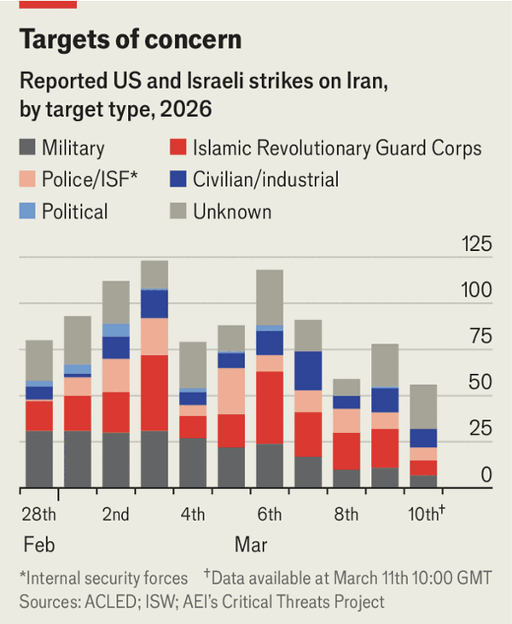
The 2026 war against Iran has demonstrated an unprecedented tempo of American and Israeli air operations. On February 28 the two allies reportedly conducted more offensive sorties than the roughly 1,300 flown on the opening day of either the 1991 or 2003 Gulf wars. Data compiled from the conflict records 1,615 attacks and 2,875 missile and drone launches. Advances in software and data systems allow both militaries to identify, generate and strike targets at a far faster pace, enabling what analysts describe as an industrial scale of targeting.
This capability depends heavily on large data-integration platforms. The U.S. military uses the Maven Smart System, developed largely by Palantir, which fuses satellite imagery, radio-frequency signals, social-media posts and classified intelligence into a single targeting database. The system estimates weapon effectiveness and simulates blast effects. One classified study suggested Maven allows planning for an operation the size of the Iraq war with one tenth of the manpower, reducing analyses that once required dozens of people and many hours to roughly two minutes. Target generation has consequently expanded from about ten per day to roughly 300, with aspirations of reaching 3,000.
Israel has also built vast “target banks” containing thousands of potential objectives. Although human commanders still approve most strikes, the rising speed and scale of operations increase pressure to grant computers more autonomy. The conflict has highlighted risks: one mistaken strike reportedly killed 175 civilians, and human-rights monitors estimate nearly 1,800 people have died in Iran, most of them civilians. Analysts warn that as software generates ever larger numbers of targets, keeping intelligence updated and preventing civilian casualties will become increasingly difficult.