这场整顿正在重塑香港的财富管理和IPO市场格局。私人银行推迟在中国的活动并限制员工出行,中资银行收紧了在港开户要求,大陆客户现须签署资金来源声明。红筹架构上市几近消失,H股上市公司的募资款项也须汇回大陆。部分富豪开始将资产转向欧洲、瑞士和美国,寻求第二税务居民身份甚至第二本护照。2025年香港上市、配售及大宗交易总额超过760亿美元,但资本管控收紧可能令这一蓬勃市场降温。
此次打击的宏观背景是中国地方政府土地出让收入五年间下降48%,税务部门急需从海外财富中补充财政收入,加之疫情解封以来已有130万人移民海外。尽管如此,多数受访的私人银行家、律师和分析师认为,北京的目标并非完全阻止海外投资,而是加强对资本外流的控制和离岸资产的税务追踪。六月份香港仍有24家企业计划上市,筹资可达54亿美元,显示资金总能找到出路,但整体氛围已从炫耀性消费转向更为审慎的态度。
China's sweeping crackdown on capital outflows is sending shockwaves through Hong Kong's financial sector. With a record $807 billion moved offshore last year, Hong Kong had overtaken Switzerland as the world's largest offshore wealth hub. Regulators imposed roughly $330 million in fines on three major brokerages, tightened banking controls, pressured ultra-wealthy individuals and their trust structures, and restricted red-chip IPO applications — marking the most significant overhaul of China's cross-border financial system in a decade. (Key numbers: 8070, 3.3)
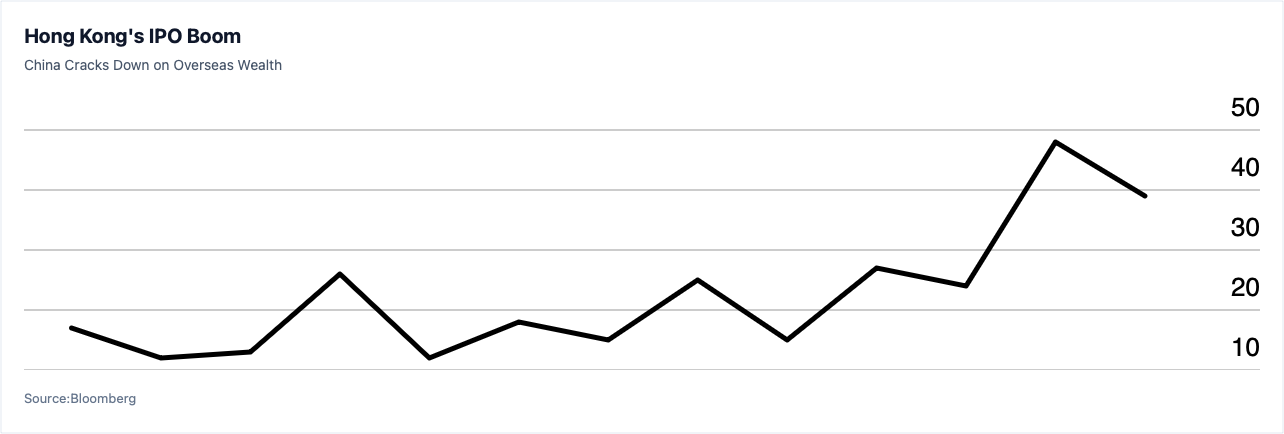
The repercussions are reshaping Hong Kong's wealth management and IPO landscape. Private banks are postponing mainland events, Chinese banks now require clients to sign declarations on the source of their wealth, and red-chip listings have virtually disappeared. Some ultra-high-net-worth individuals are redirecting assets to Europe, Switzerland, and the United States, while seeking second tax residencies or passports. Hong Kong's IPO market — which generated over $76 billion in listings, placements, and block trades in 2025 and minted at least 12 new billionaires since 2023 — faces a potential slowdown as mainland investor participation diminishes.
The crackdown is driven by a sharp fiscal squeeze: local government land-sale revenues fell 48% over five years through 2025, and 1.3 million people have emigrated since pandemic restrictions were lifted, intensifying the need to track offshore wealth. However, most industry professionals interviewed believe Beijing aims to control and monitor capital flows rather than halt overseas investment entirely. June still saw 24 Hong Kong IPOs poised to raise up to $5.4 billion, suggesting money continues to find alternative channels, though the era of conspicuous consumption and unfettered capital movement appears to be giving way to greater caution and compliance.