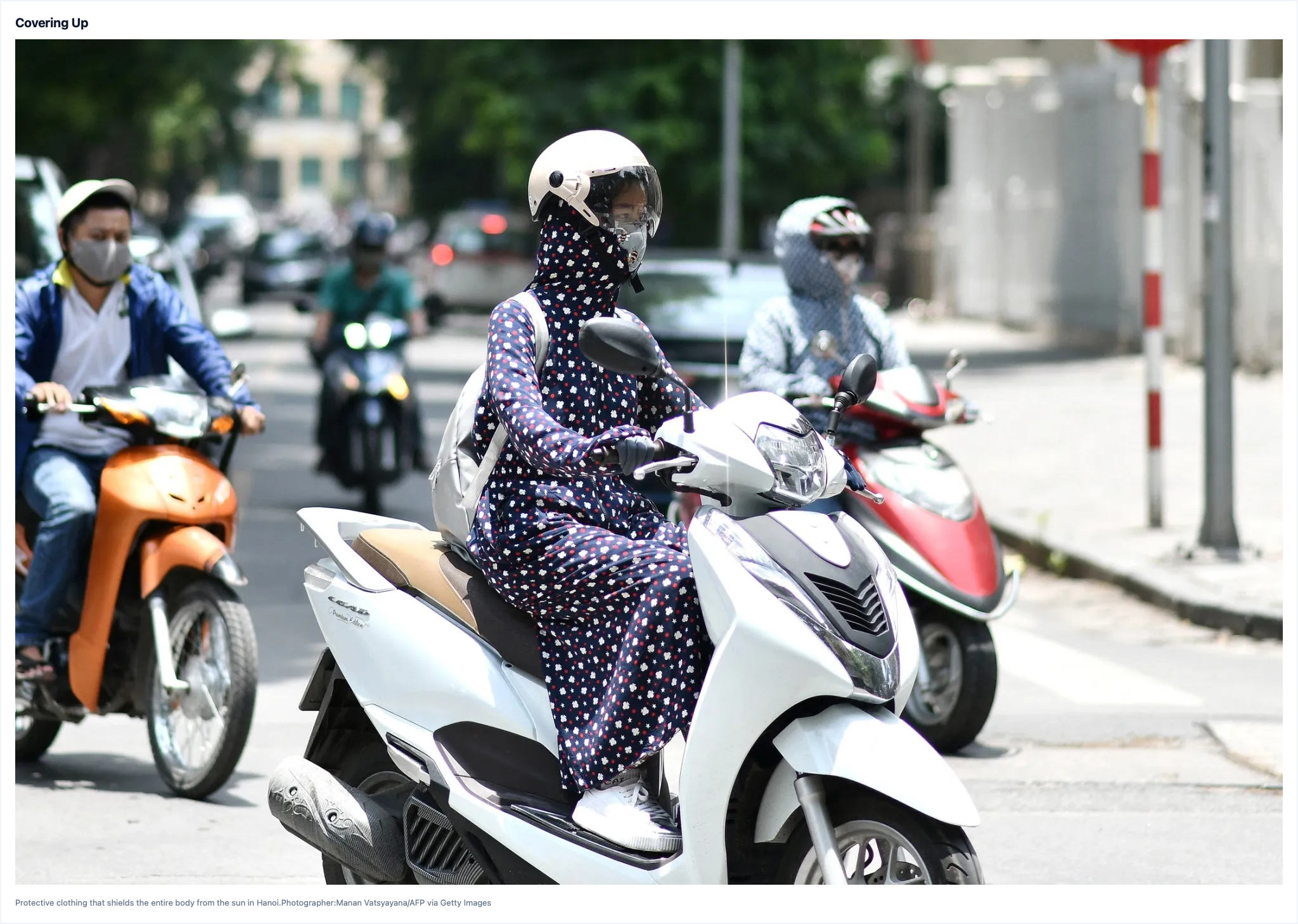
从科学角度来看,人体透过排汗蒸发来调节体温,裸露皮肤似乎更有利散热。然而在干燥炎热地区,衣物能有效遮挡直射阳光,如同树荫或建筑物的遮蔽效果。传统服饰如南亚的库尔塔睡衣采用棉、丝、亚麻等透气面料,既允许空气流通又防止皮肤直接吸收热能。在越南,摩托车骑士从头到脚裹得密不透风,防晒与防热同等重要。此外,亚洲长期以来将白皙肌肤与社会地位挂钩,防晒文化根深蒂固,去年亚太区防晒乳液市场价值达48.7亿美元,紫外线防护服饰占全球市场份额的32%。
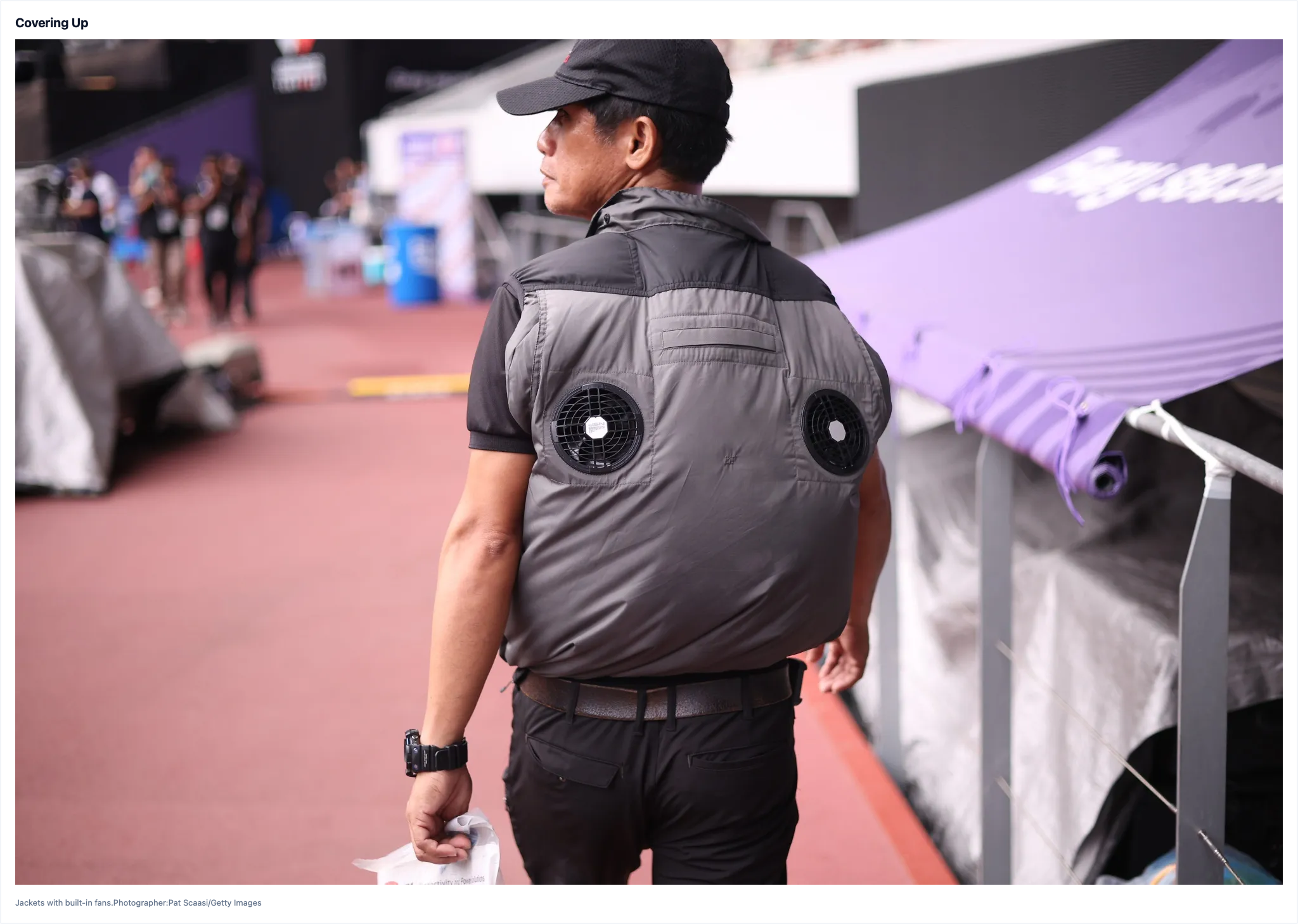
文章也关注了机能性面料的商业崛起与文化舒适度的议题。日本优衣库的Airism和UV防护系列已成为夏季必备品,带动了中国大陆和东南亚的销售增长;无印良品提供逾40种防紫外线产品;甚至巴黎男装周上也出现了内建风扇的夹克。然而穿著选择不仅关乎科学,更涉及文化认同与社会期待——东京都知事推行的「Cool Biz」短裤办公运动就引发了尴尬与争议。文章最后提醒读者,防紫外线(UPF)与凉感降温是两种不同功能,选购夏季衣物时应注意面料特性,而随著全球持续升温,西方世界也开始重新审视「夏天该怎么穿」这个问题。
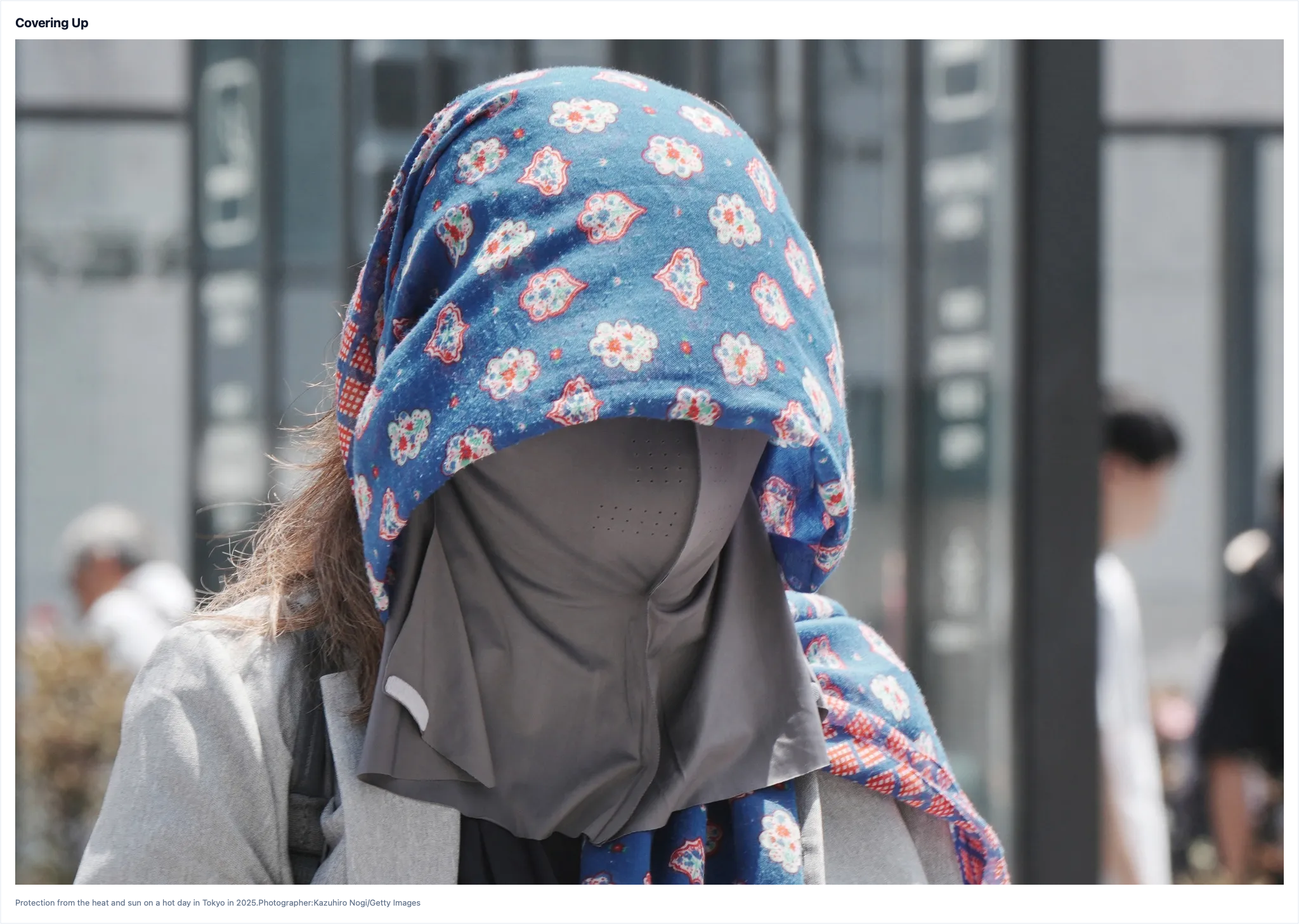
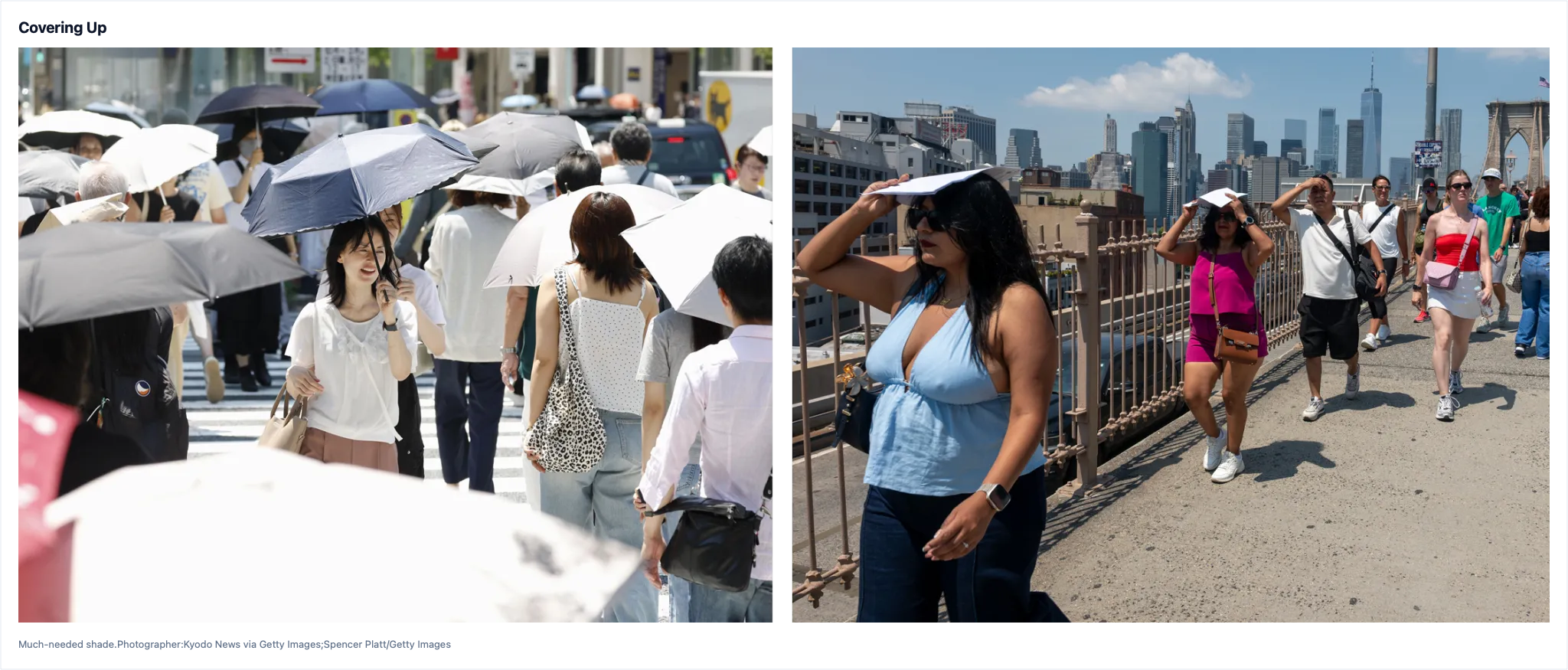
This article examines the contrasting summer dressing philosophies between Western and Asian cultures. While people in the West tend to shed layers as temperatures climb, those across East Asia, Southeast Asia, North Africa, and the Middle East often add more coverage. In Tokyo's sweltering summers, residents equip themselves with UV-cutting jackets, long gloves, parasols, and masks. The piece features writer Jennifer Pastore, an American who has lived in Japan for two decades and gradually adopted the local approach to sun protection, illustrating how practical experience can shift deeply held cultural habits. (Key numbers: 35, 94)
The science behind covering up is nuanced. In dry heat, fabric acts as effective shade against direct sunlight, and traditional garments from hot regions—made of breathable cotton, silk, or linen—facilitate airflow between skin and cloth while blocking solar radiation. In humid climates like Vietnam and Japan, sun protection and the cultural premium on fair, unblemished skin drive the practice. Asia's lotion sun-protection market was worth $4.87 billion last year, and the region commands 32% of global UV-protective clothing sales. The association between tanned skin and outdoor labor persists across much of Asia, in stark contrast to the Western ideal linking a tan with leisure and health.
The article also highlights the booming market for performance fabrics and cooling technologies. Uniqlo's Airism and UV-protection lines have become summer staples driving sales growth across Asia, while even high fashion has embraced fan-equipped jackets on the Paris runway. Yet clothing choices remain deeply cultural: Tokyo's "Cool Biz" campaign encouraging office shorts has sparked social discomfort, revealing how dress codes intertwine with class signaling and modesty norms. The piece concludes with practical advice—distinguishing between UV-cutting and cooling properties in fabrics—and notes that as global temperatures continue to rise, Western brands like Patagonia are increasingly investing in sun-protective apparel, suggesting a potential convergence of East and West in how humanity dresses for an overheating planet. (Key numbers: 40)