作为中国最早设定的四个经济特区(SEZ)之一,汕头的发展轨迹与深圳、珠海和厦门形成了鲜明对比。这座拥有560万人口的沿海城市曾是港口贸易枢纽,也是李嘉诚和马化腾等商业巨头的故乡,如今却陷入了严重的经济停滞。2025年,汕头的人均 GDP 仅为54,000元人民币(约8,000美元),与中国最贫困的甘肃省相当,远低于全国100,000元以及深圳214,000元人民币的水平。2025年该市经济增长率仅为0.1%,被当地人戏称为“特别经济落后区”。
汕头落后的根本原因在于其产业结构的滞后以及严重的房地产危机。1980年汕头 GDP 曾是深圳的四倍,而如今深圳的经济规模已是汕头的十倍。汕头长期依赖玩具制造和纺织等低利润、劳动密集型产业,这些行业占据了2024年当地大企业的一半。随着全球需求放缓,2025年汕头玩具出口下降8.6%,服装出口下降18.3%,整体出口下降9.1%,这在中国创下1.2万亿美元贸易顺差的年份显得格外突兀。同时,固定资产房地产投资在2025年暴跌了38.8%,导致市中心商业街区大面积荒废。
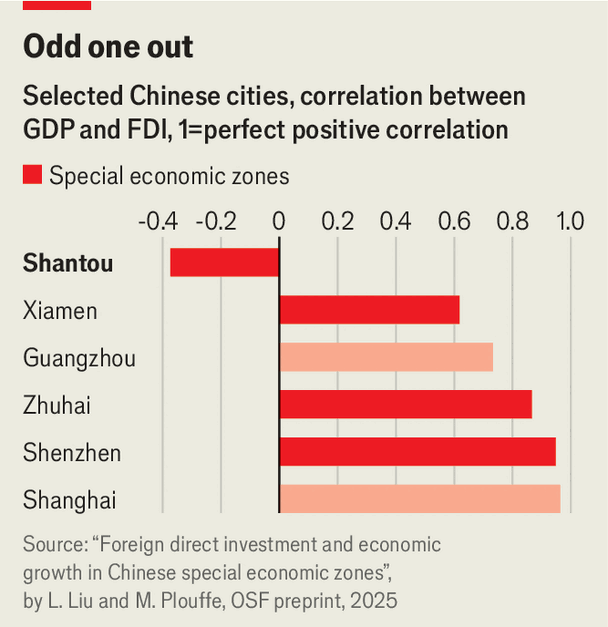
深层次的体制与文化阻碍也是导致汕头吸引力缺失的关键因素。长期以来,该市严重的官僚腐败和索贿行为令企业望而生畏;2000年中央调查组入住的酒店遭遇疑为人为纵火的火灾,凸显出当地治理环境的恶劣。此外,潮汕方言的孤立性以及排斥外地人的本土文化(将非本地人称为“外省仔”)导致了严重的人才和外资流失。在1996至2017年间,汕头仅吸引了67亿美元的外商直接投资(FDI),而深圳则高达850亿美元。虽然2025年旅游业收入增长了23.9%,但单一的文旅回暖无法掩盖其制度性失灵对经济发展的长期制约。
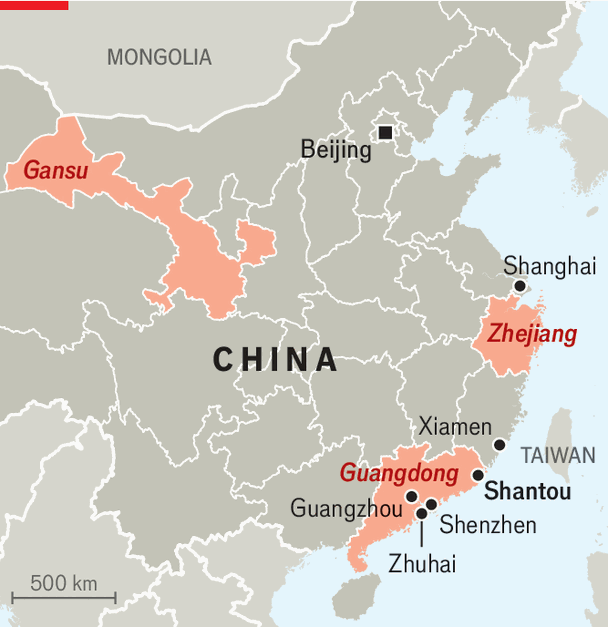
As one of China's original four Special Economic Zones (SEZs) established in the late 1970s, Shantou demonstrates a starkly divergent growth trajectory compared to Shenzhen, Zhuhai, and Xiamen. Despite its history as a major trading port and origin for prominent business figures like Li Ka-shing and Pony Ma, the city of 5.6 million people experiences severe economic stagnation. In 2025, Shantou's GDP per person stood at 54,000 yuan (,000)—matching Gansu, China's poorest province, and falling far below the national average of 100,000 yuan and Shenzhen's 214,000 yuan. Annual economic growth slowed to 0.1% in 2025, earning the city the local moniker of a "special economically backward zone."
Structural weaknesses in industry and real estate underpin Shantou's economic underperformance. While Shantou's GDP was four times larger than Shenzhen's in 1980, Shenzhen's economy is now ten times the size of Shantou's. Shantou remained concentrated in low-margin, labor-intensive sectors such as toy manufacturing and textiles, which accounted for nearly half of its large firms in 2024. In 2025, toy exports declined by 8.6% and garment exports fell by 18.3%, contributing to a 9.1% contraction in overall exports despite China's record .2 trillion national trade surplus. Concurrently, fixed-asset real estate investment dropped by 38.8% in 2025, leaving commercial districts underutilized.
Institutional and cultural factors have further restricted foreign capital and talent retention. High levels of local corruption, highlighted by a fatal 2000 arson attack on central government investigators, damaged the city's business reputation. Additionally, local linguistic isolation and cultural insularity toward non-locals deterred outside workers and businesses. Between 1996 and 2017, Shantou attracted just .7 billion in foreign direct investment (FDI) compared to billion in Shenzhen. Although tourism revenue grew by 23.9% in 2025 following historical district restorations, targeted tourism cannot offset systemic institutional barriers to broad-based economic modernizing.
Source: Shantou was once at the forefront of reforms. Now it is a backwater
Subtitle: [[IMAGE]]
Dateline: Jul 23rd 2026